 VN
 EN
07/10/2026, 02:00
Investment
Capital flows in emerging market upgrades: Which stocks to pick?
Foreign investors sold off heavily on September 21, 2026, causing the VN-Index to drop while market liquidity remained weak. Which stocks will open up opportunities to capture the market upgrade capital flow?
A New Chapter for Long-Term Growth
The continued net selling by foreign investors is not an unusual factor amidst the milestone of Vietnam's stock market being upgraded from Frontier to Secondary Emerging status according to FTSE Russell standards.
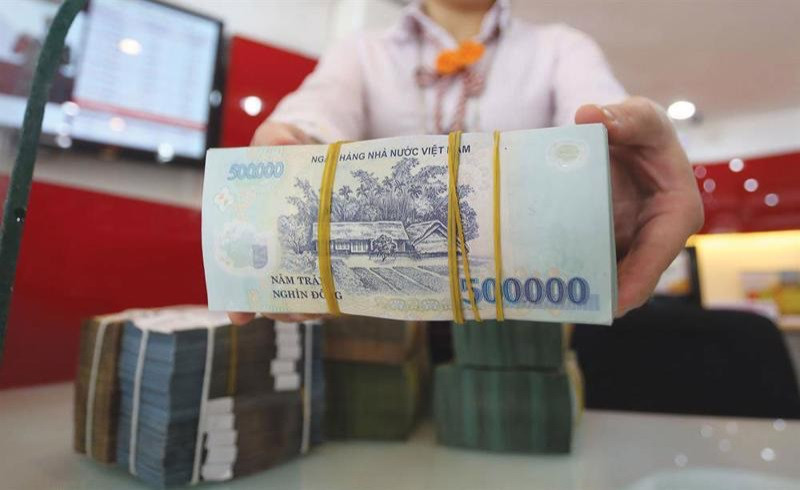
Upgrading is a long-term milestone for the Vietnamese stock market, bringing it on par with many regional and global emerging markets, making it especially attractive to global investment flows in the future. (Illustration: HDB)
Previously, numerous institutions and financial experts continuously emphasized: The market does not necessarily react positively right at the moment of the upgrade announcement; instead, many investment funds may have already begun evaluating and disbursing capital beforehand.
Along with this, the corporate outlook narrative and the criteria needed for the market to continuously improve—ensuring it meets maintenance requirements and international institutional investor standards—require even greater focus.
In this context, the market upgrade opens a new chapter, creating a landmark for Vietnam to enter an era of deep integration with global capital flows. This is an inevitable, long-term trajectory rather than a story confined to a single trading session.
Analysts at Agriseco calculate that the Vietnamese market could attract $7 billion to $9 billion in foreign capital disbursement over the next 1 to 2 years, including $2 billion to $3 billion in mandatory passive funds. This is expected to become one of the main driving forces guiding the market in the upcoming phase. Note that all FTSE evaluations regarding allocation processes explicitly state a 4-phase disbursement roadmap. Accordingly, multi-billion-dollar capital expectations are usually viewed by analysts over a timeframe of at least 12 months.
Assessing the overall market, the VN-Index is currently trading at quite an attractive price level with a P/E of around 12.3x, lower than the 10-year average of 15.2x. This presents an opportunity to disburse capital and accumulate stocks benefiting from the upgrade event and potential foreign net buying in the period ahead.
5 Investment Stocks to Capture the Market Upgrade Capital Trend
According to Agriseco Research, the 5 recommended stocks for the upgrade wave meet priority criteria, including high market capitalization, good liquidity, growing business results, inclusion in FTSE GEIS reference fund disbursements, and technical charts showing price upside potential.
- HDB (HDBank): Increased foreign disbursement in recent sessions serves as a supporting catalyst for a trend reversal. Technical analysis indicates that HDB has broken out of its downtrend and maintains levels above MA20, MA50, and MA200. Accordingly, the near-term support target is at 26,800 - 27,000 VND/share. Agriseco believes that if it breaks above 28,000 VND/share with improved liquidity, HDB's price could head toward 30,000 - 31,000 VND/share. Therefore, the analysis team recommends an Accumulative Buy around 27,500 - 28,300 VND/share. Cut loss if the closing price falls below 26,300 VND/share.
Regarding business prospects, HDB is a bank stock with significant advantages in driving credit growth, expected to reach a credit limit ceiling above 35% in 2026. The bank also set an ambitious pre-tax profit goal exceeding 30,100 billion VND, up 41% year-on-year. In the first 6 months of 2026, HDBank recorded a pre-tax profit of 7,095 billion VND, bringing cumulative 6-month profit to 13,202 billion VND, up 31% over the same period last year. Total assets reached 1.045 quadrillion VND, up 12.3% from the beginning of the year, officially placing HDBank among the banks with assets exceeding one quadrillion VND in Vietnam.
Given cash flow dynamics and institutional appetite, HDB also possesses a compelling fundamental story, including expectations surrounding HDS's IPO plan and prospects of lifting its foreign ownership limit to 49%.
- SSI (SSI Securities): From a technical perspective, SSI has exited its short-term downtrend channel and holds above the MA20 and MA50. According to Agriseco, the 21,000 - 23,000 VND/share range acts as resistance since it was the main trading band for the stock in Q2 2026. If it breaks through this resistance, the price could swiftly advance toward 24,500 VND/share, and further toward 27,500 VND/share. The trading recommendation is a new buy around 21,000 - 21,500 VND/share, adding positions when the price exceeds 23,000 VND/share. Cut loss if the short-term uptrend breaks and SSI closes back inside the downtrend channel around 20,000 VND/share.
On business fundamentals, SSI currently stands as the securities firm with the largest charter capital in Vietnam. Leveraging its history, platform, and corporate advantages, SSI has established deep relationships with international partners and a broad foreign institutional client base, positioning it well to benefit from service provision during the market upgrade. The company also benefits as a top holding candidate in the FTSE GEIS index.
- VIC (Vingroup): The stock surpassed 232,000 VND/share and successfully tested its base over the past 2 weeks. The next price target VIC could aim for is 260,000 VND/share, and further toward 275,000 - 277.000 VND/share. Agriseco recommends an Add Buy around 237,000 - 242,000 VND/share; entering a new position at current levels carries high risk and requires strong position management skills. The 50-day MA at 223,000 VND/share serves as a stop-loss benchmark; cut loss if the closing price drops below this level.
Updated as of the September 21 session, VIC adjusted down 2.57% to 235,000 VND/share, below the recommended Add Buy price zone.
- VIC - Vingroup is a prominent conglomerate stock among the top large-cap entries allocated under the FTSE GEIS index basket once the market officially upgrades. The conglomerate recently recorded a record profit growth of 3,600% in the first 6 months of 2026—off the low base of the previous year's period. Currently, the Group is ranked among the top 30 largest enterprises in Southeast Asia, marking its third consecutive year as the highest-ranked Vietnamese firm on Fortune's 500 Southeast Asia list.
- VPB (VPBank): Technical analysis indicates VPB has broken out of its mid-term downtrend channel, maintaining prices above moving averages with increasing liquidity confirming improved momentum. VPB is testing resistance at 28,000 VND/share, with an expected price target of 33,000 - 33,500 VND/share. Agriseco RS recommends a wait-to-buy in the 26,300 - 26,700 VND/share range, with options to add positions if VPB crosses 28,000 VND/share on improved volume. Cut loss if the stock closes below 25,500 VND/share.
VPB ranks among the top banks with positive earnings performance in the first 6 months of 2026. The lender is targeting a charter capital of 100 trillion VND, leveraging its position to expand credit growth headroom from weak bank transfers alongside its broad financial ecosystem.
- VRE (Vincom Retail): From Agriseco RS's technical perspective, VRE maintains recovery momentum within a short-term uptrend channel, matching foreign net buying activity. The price closes above MA20 and MA50 but still faces resistance at MA200. If it breaks past 28,000 - 28,500 VND, the stock could target 30,000 - 31,000 VND/share. The recommendation is a new buy around 25,500 - 26,300 VND/share, adding positions if it breaks 28,500 VND with expanding volume. Cut loss if the closing price drops below 24,500 VND/share.
VRE is one of two Vin-family stocks (alongside VIC) included in the Large Cap tier allocated within the FTSE GEIS index. Alongside these two, VCB represents the banking sector among large-cap stocks in the basket. For 2026, VRE targets net revenue of 10,132 billion VND and net profit after tax of 5,375 billion VND, holding total assets exceeding 63 trillion VND. According to early-year data, VRE maintains a relatively high foreign trading proportion, with foreign investor volume accounting for roughly 19%.
Ample foreign room and a relatively high free-float ratio give VRE a distinct feature compared to VIC/VHM: when ETF/foreign fund inflows rise, VRE's room capacity to absorb capital remains sizable. This is a key point when evaluating VRE in the context of FTSE and upcoming capital liquidity opportunities.
Author: LE MY - TRUONG DANG
RELATED TOPICS
RECOMMENDED TOPICS