VN
 EN
18/11/2026, 11:00
Business economics
Navigating the dual pressures: What Vietnamese firms must do in the US market
The US market has long been hailed as a land of opportunity with a multi-billion-dollar scale, yet it remains one of the world's most fiercely competitive battlegrounds regarding trade defense measures. The latest developments from the US Department of Commerce (DOC) are sounding a major alarm for Vietnam’s key export sectors—most notably, seafood.
The US market has always been a promised land with a scale of tens of billions of USD, but at the same time, it is one of the world's most fierce arenas regarding trade remedy measures. The latest developments from the US Department of Commerce (DOC) are sounding a major alarm for Vietnam's key export industries, especially seafood.
Tariffs and anti-dumping barriers
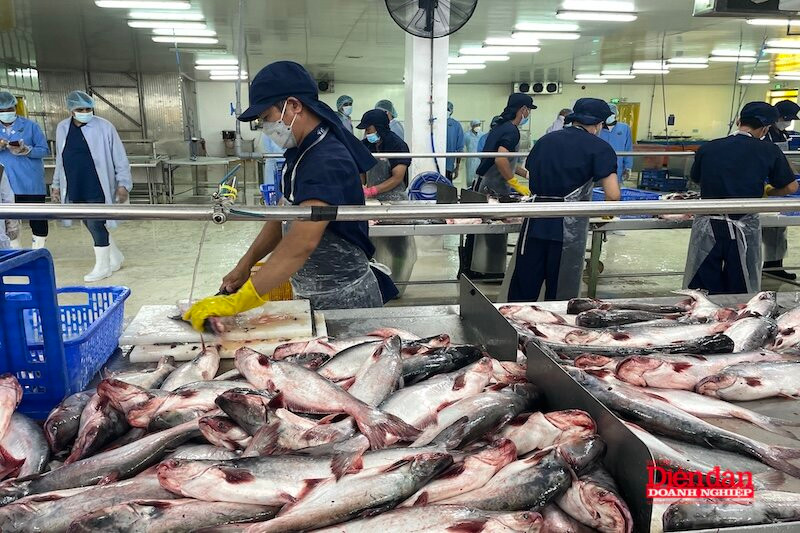
Panga catfish businesses currently face difficulties when exporting to the US not only due to rising raw material prices, but mainly from the pressure of anti-dumping duties (POR21 review period) and additional duties newly announced by the DOC – Photo: Huong Giang
Sharing the reality and pressures at production facilities, Mr. Tran Van Lat – Chairman of the Board of Directors of Loc Kim Chi Seafood Joint Stock Company – expressed deep anxiety looking at input cost figures. Escalating domestic raw material prices have significantly eroded processing enterprises' profit margins. However, the heaviest "blow" causing many pangasius and frozen shrimp processing and export enterprises to hesitate stems from US trade remedy policies.
According to Mr. Lat, pangasius enterprises face difficulties exporting to the US currently not only due to high raw material costs, but mainly from anti-dumping duty pressure (POR21 administrative review period) and additional tariffs newly announced by the DOC. This is a "dual" pressure and the core reason why businesses are cautious and hesitant to risk exporting at this stage.
From the broader perspective of an international trade and investment consultant, Ms. Hoang Diep Truc – General Director of Citizen Pathway Investment Co., Ltd. – assesses that legal risks in the US market are cyclical and continuously expanding in scope. Not only pangasius or brackish water shrimp face intense annual administrative review (POR) anti-dumping duties, but other key export sectors such as textiles and wooden products are also at risk of circumvention investigations, allegations of input material subsidies, and strict origin fraud checks.
According to Ms. Truc, a large portion of Vietnamese manufacturing enterprises have accounting documentation, cost data, and consumption norms that are not yet standardized according to US Generally Accepted Accounting Principles (GAAP). When selected by DOC as mandatory respondents, failing to respond to hundreds-of-pages-long investigation questionnaires on time will lead to being assigned nationwide duty rates based on Adverse Facts Available (AFA) – a tax rate severe enough to destroy competitiveness and push Vietnamese enterprises out of the market.
Risk of supply chain fragmentation
According to Ms. Truc, if anti-dumping tariffs directly strike financial capacity, a newer and more subtle "pincer" is quietly tightening: the trend of fragmented food additive regulations across individual US states. For a long time, Vietnamese enterprises have been accustomed to complying with uniform federal regulations from the US Food and Drug Administration (FDA). However, three major states – California, Texas, and Louisiana – are currently implementing distinct laws with different enforcement timelines, creating a challenging technical "matrix".
Warning about the impact of this fragmentation, the Vietnam Association of Seafood Exporters and Producers (VASEP) noted: While primary frozen products (shrimp, pangasius fillets) are less affected, deep-processed products and value-added items (breaded shrimp and fish, ready-to-eat frozen food, canned seafood with sauce, etc.) will bear the heaviest impact. Different state-by-state penalties and regulations force enterprises to face exponentially surging costs, such as independent testing fees, custom packaging design for each state, complex warehouse management, and the risk of goods being detained if cross-distributed between states.
Faced with dual pressure from trade remedy tariffs and state technical barriers, both experts and specialized agencies affirm: Patchy export mindsets and reactive problem-solving no longer have a place. Therefore, Vietnamese enterprises need a major "surgery" – a comprehensive restructuring of their operating models.
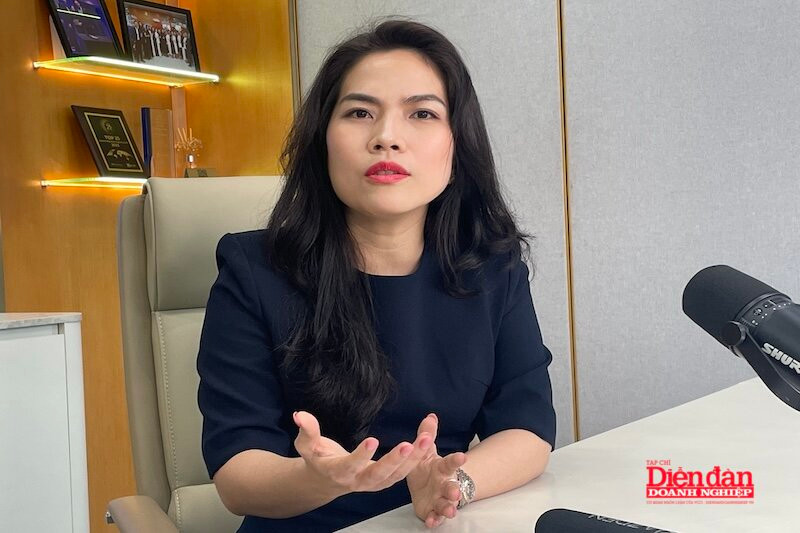
Ms. Hoang Diep Truc – General Director of Citizen Pathway Investment Co., Ltd. – Photo: Huong Giang
Comprehensive restructuring
To resolve risks and build a sustainable foundation for Vietnamese exports into the US, Ms. Hoang Diep Truc, General Director of Citizen Pathway Investment Co., Ltd., believes it is time for Vietnamese enterprises to undergo a comprehensive restructuring to go further. Restructuring is no longer a generic slogan, but an urgent operational transformation. Enterprises must restructure thoroughly from accounting cost recording procedures and clean supply chain traceability to preparing legal files ready for any trade remedy inspection scenarios.
However, to achieve this, enterprise action plans should focus on key solutions, including: digitizing supply chains and linking closely with importers; proactively restructuring legal entities and penetrating deeper into distribution chains. Instead of stopping at borders with FOB contracts that surrender control, capable enterprises should consider establishing representative offices, branches, or direct distribution joint ventures in the US. A local legal entity presence not only helps enterprises resolve local customs clearance and quarantine issues state-by-state, but also serves as a legal "shield" to proactively hire attorneys to confront the DOC during anti-dumping investigations.
According to Ms. Truc, the US market has never been easy, but the door will never close on enterprises willing to look directly at their limitations, proactively restructure, and professionalize according to international standards. Turning barrier pressure into standardization momentum is the golden key for Vietnamese goods to firmly establish their position in the world's largest consumer market.
Author: HUONG GIANG
RELATED TOPICS
RECOMMENDED TOPICS