 VN
 EN
08/10/2026, 02:00
Legal environment
Proposal for a market-based petroleum pricing mechanism: How to ensure fairness?
Empowerment of petroleum businesses to set prices is expected to enhance market orientation, but it must be accompanied by a mechanism to ensure fair competition among all levels in the distribution chain.
The draft Decree replacing existing Government decrees on petroleum trading is being finalized by the Ministry of Industry and Trade, featuring a notable change: increasing business autonomy in determining petroleum selling prices.
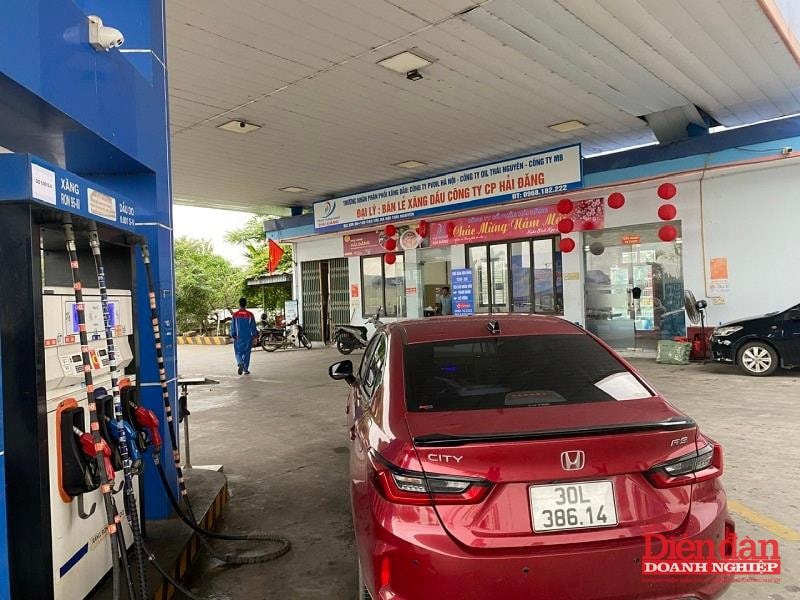
Empowerment of petroleum businesses to set prices is expected to enhance market orientation, but it must be accompanied by a mechanism to ensure fair competition among all levels in the distribution chain. Photo: Nguyen Giang
According to the proposal under consultation, the State will no longer directly announce base prices on a periodic basis as in the current mechanism. Businesses will actively determine and publish selling prices within their distribution systems based on formulas and principles specified in the Decree. The State will perform management, supervision, and intervention functions when the market experiences fluctuations.
This is considered a significant change in the management mechanism of an essential commodity that directly impacts production, business, and daily life. Petroleum prices are expected to reflect market developments more closely, while businesses gain greater initiative in their operations.
However, several opinions also suggest that when pricing authority is shifted more to the market, the issue lies not only in who decides the price. Another crucial requirement is ensuring an equal competitive environment among entities participating in the petroleum supply chain.
At the consultation conference on the draft Decree on September 30, the allocation of costs, profits, and trading rights among traders received significant attention from businesses.
Mr. Nguyen Xuan Thang, Director of Hai Au Phat Petroleum Co., Ltd., expressed support for constructing a market-oriented price formula, but emphasized the need to clarify how operating costs and profits are distributed among key importers/wholesalers, distributors, and retailers.
According to Mr. Thang, if key wholesalers determine wholesale prices and profit margins for downstream stages, discounts for retail stations could fall very low, affecting funds needed to cover transportation, labor costs, and operational maintenance. The enterprise requested that if the profit element remains in the price formula, a more suitable mechanism should be studied instead of concentrating all determination authority on key wholesalers.
Another issue raised was the trading of petroleum among distributors. A representative of Minh Thinh Commercial and Petroleum Co., Ltd. proposed allowing distributors to trade with one another, subject to conditions regarding origin, contracts, invoices, title transfers, and traceability. According to the company, if distributors are not allowed to buy and sell among themselves, they will become heavily dependent on the supply sources and sales conditions set by key wholesalers.

Lawyer Nguyen Trong Hiep – Director of HPVN Law Firm. Photo: Nguyen Giang
Sharing a policy perspective, Lawyer Nguyen Trong Hiep – Director of HPVN Law Firm, noted that gradually allowing petroleum prices to align more closely with market signals is a necessary direction. However, this must be accompanied by a transparent and equal competitive environment among market participants.
"Key wholesalers play a crucial role in ensuring supply and must have corresponding autonomy. But when an entity holds a major advantage in supply sources and wholesale pricing, the management mechanism must be sufficiently transparent so that business autonomy does not undermine the competitiveness of enterprises in downstream stages," analyzed Lawyer Hiep.
According to Lawyer Nguyen Trong Hiep, the goal is not for regulatory authorities to continue intervening deeply into every discount level or profit margin of enterprises. If the State continues to decide commercial relations on behalf of businesses, the objective of operating petroleum prices under a market mechanism will be difficult to achieve.
Instead, the new mechanism needs to establish clear pricing principles, define the responsibilities of each entity, and enhance market monitoring capabilities. When there are signs that a company or group of companies is leveraging its position to impose unfavorable commercial conditions on other entities, competition law tools must effectively fulfill their role.
The data-driven management approach outlined in the draft can support this requirement. In fact, the Ministry of Industry and Trade stated that it will build a national petroleum management system; key wholesalers and distributors must report inventory costs and trading activities; and data from retail outlets, including invoice information, will be submitted to tax authorities and the Ministry of Industry and Trade. Data management is expected to help authorities detect risks, commercial fraud, and unusual market developments early on.
Lawyer Hiep noted that if organized effectively, data will not only serve post-audit purposes but also help regulatory agencies identify anomalies in the supply chain and trading activities. The key is to prevent data reporting requirements from becoming a new layer of administrative burden that increases compliance costs for businesses.
"To bring petroleum prices closer to the market, competition must also be genuine. Businesses need autonomy, but that autonomy must exist within a transparent framework to allow fair competition among all entities. Only then can the new pricing mechanism harness market forces while safeguarding the interests of both enterprises and consumers," emphasized Lawyer Nguyen Trong Hiep.
Author: NGUYEN GIANG - TRUONG DANG
RELATED TOPICS
RECOMMENDED TOPICS