VN
 EN
15/11/2026, 02:00
Business economics
Customs Sub-Department of Region IV: Accompanying import-export enterprises, driving economic development
Administrative reform, technology application, and enhanced dialogue are helping the Customs Sub-Department of Region IV clear trade flows, reduce costs, and facilitate the business community.
A quickly processed customs declaration or a timely resolved obstacle can help businesses reduce costs, ensure production progress, and meet delivery schedules. Therefore, the service quality of the Customs authority is measured by clearance time, information availability, policy guidance, and business support.
The Customs Sub-Department of Region IV manages the jurisdiction across Hung Yen and Ninh Binh provinces, overseeing five subordinate units: customs authorities of Hung Yen, Thai Binh, Ninh Binh, Ha Nam, and Nam Dinh. As the region hosts numerous industrial zones and clusters, promoting procedural reform, digital transformation, dialogue, and policy consultation are top priorities for the Sub-Department.
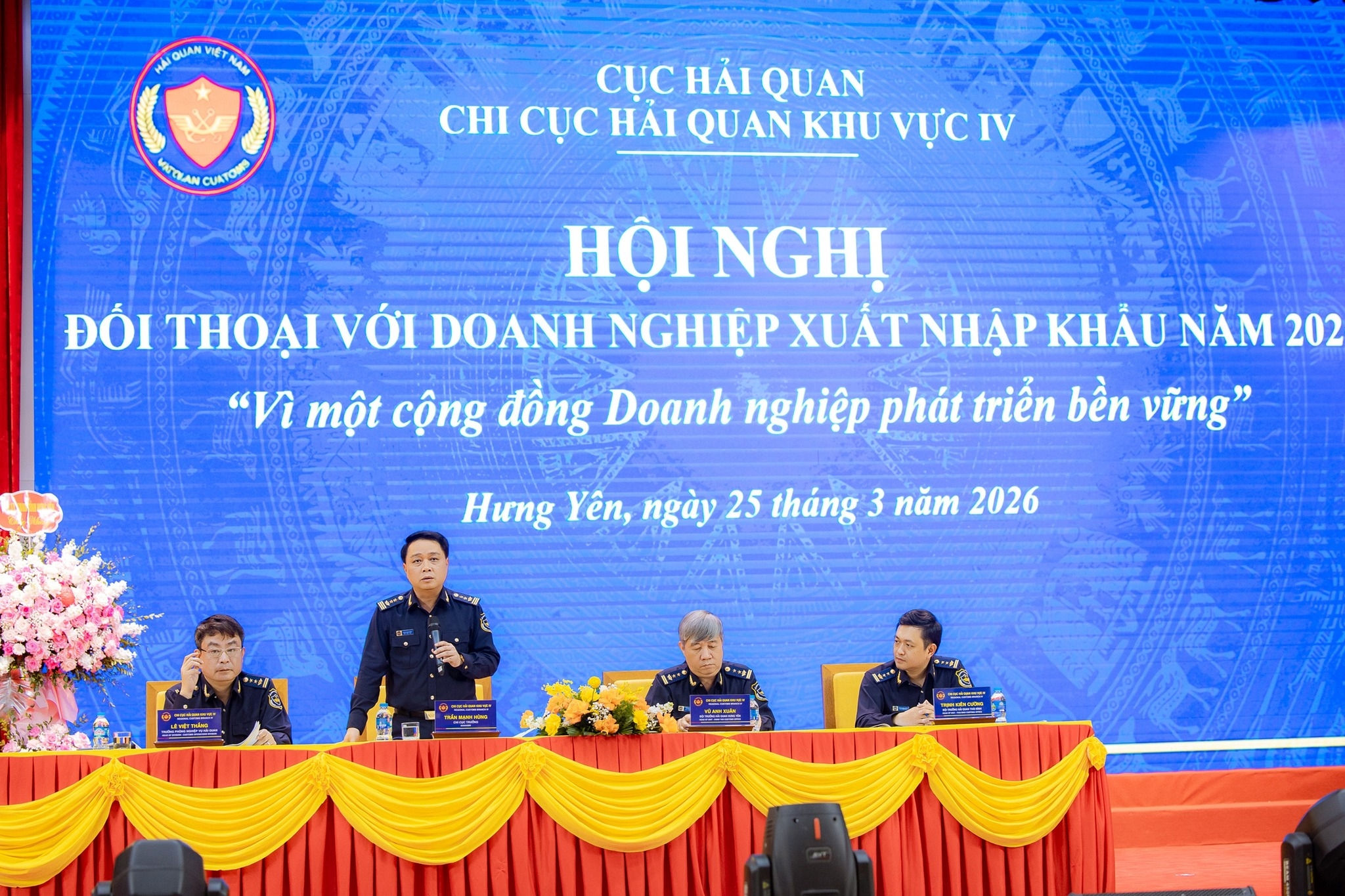
Chief of the Customs Sub-Department of Region IV Tran Manh Hung answering questions for import-export businesses in Hung Yen.
Inter-provincial Scale Reform
According to the leadership of the Customs Sub-Department of Region IV, the unit has recently implemented a comprehensive set of administrative reform solutions, customs modernization, and problem-solving strategies for production and business activities, while nurturing and developing a sustainable revenue source.
In addition, the unit continues to synchronize solutions for modernization and trade facilitation, strengthen the application of information technology and digital transformation, improve risk management efficiency, and focus on supporting and guiding businesses.
The Customs Sub-Department of Region IV places citizens and businesses at the center of its service. Difficulties and obstacles arising during customs procedures must be received, classified, and resolved promptly.
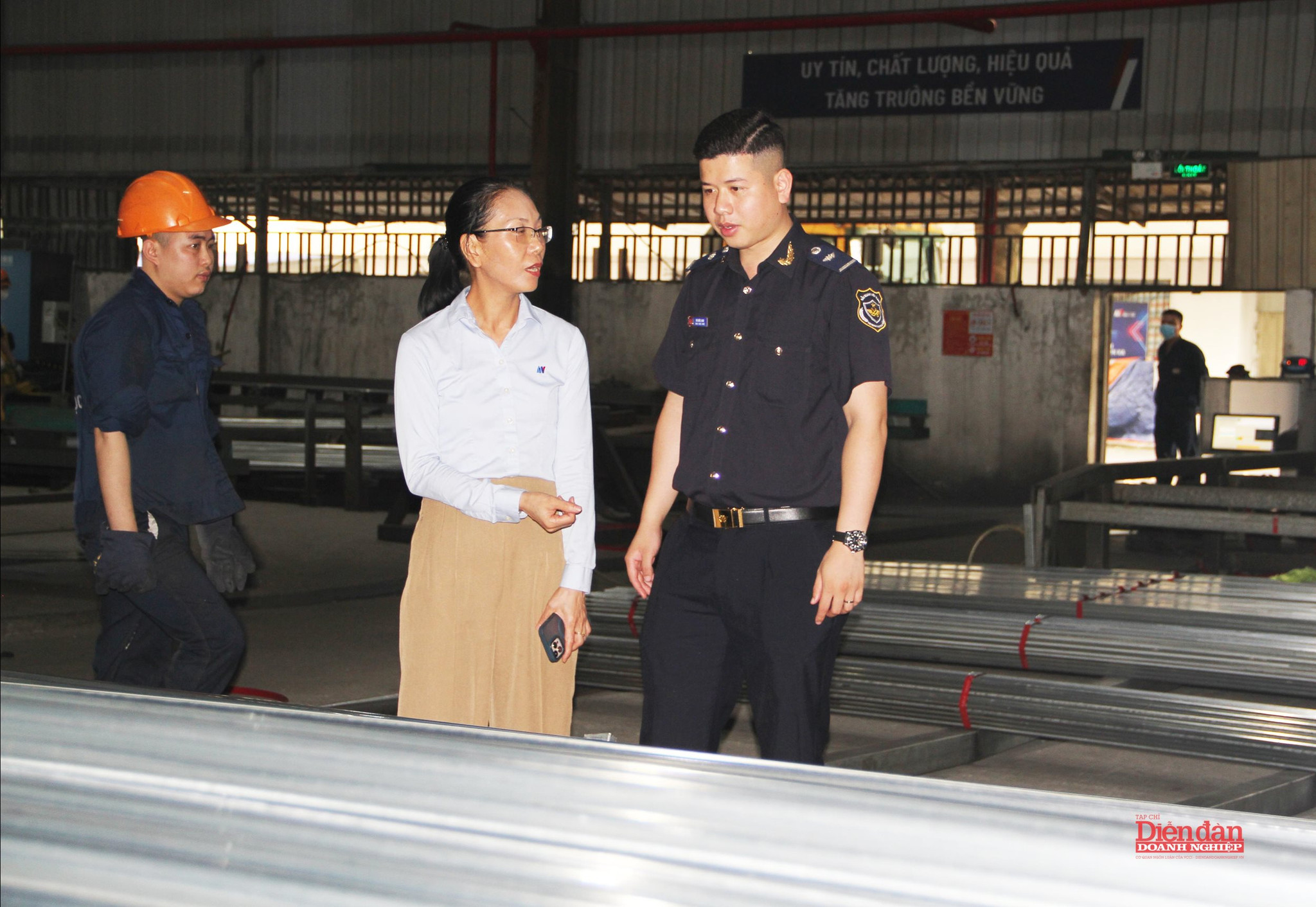
Officers of the Hung Yen Customs Team - Customs Sub-Department of Region IV actively supporting local businesses (Pictured: Minh Ngoc Steel Pipe Co., Ltd. – Pho Noi A Industrial Park)
One of the prominent solutions is the official launch of the AI assistant app, "Customs Procedure Advisory Assistant - Chatbot HQKV4." This tool supports officers, public employees, and the business community with 24/7 lookups for customs procedures, commodity codes (HS codes), import-export tax rates, specialized management policies, and common issues encountered during procedure execution.
Furthermore, the Customs Sub-Department of Region IV regards the Customs–Business partnership as a central focus, maintaining dialogue from the provincial level down to subordinate units. On April 21, 2026, the Sub-Department collaborated with and advised the Ninh Binh Provincial People's Committee to organize a conference with import-export enterprises, creating a forum for businesses to discuss policy, customs procedure, and trade obstacles directly.
These dialogues aim to resolve individual cases while helping Customs authorities identify common bottlenecks, review processes, and recommend improvements to mechanisms and policies.
Thai Binh Customs – A Model from the Grassroots
While the Sub-Department's operation results demonstrate the scale and efficiency of the reform process, activities at Thai Binh Customs clearly reflect how these policies are put into practice.
In the first 6 months of 2026, Thai Binh Customs processed procedures for 625 businesses across 55,850 declarations. Total import-export turnover reached nearly $1.86 billion; state budget revenue reached 193.89 billion VND.
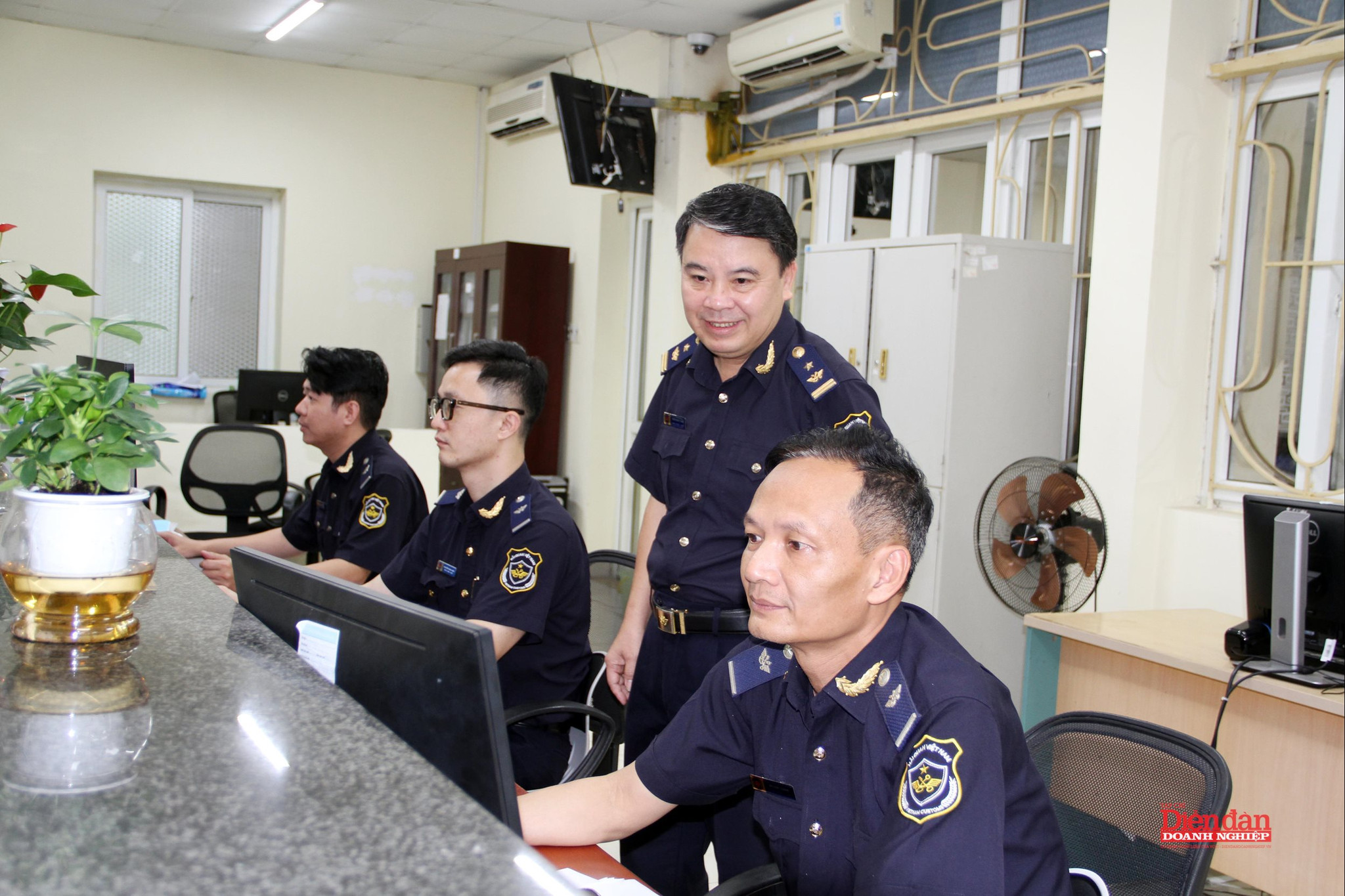
Professional operations at Thai Binh Customs - Customs Sub-Department of Region IV
Imported goods mainly consisted of raw materials for garment production, synthetic fibers, electronic components and equipment, iron and steel, and machinery forming fixed assets for investment projects. Exports focused on garments, toys, and goods produced under processing or export manufacturing contracts and export processing enterprises.
According to Mr. Tran Ngoc Tuan, Deputy Head of the Thai Binh Customs Team, the unit considers procedural reform and digital transformation key solutions to shorten clearance time and cut costs for businesses. Eligible dossiers must be received and processed quickly in compliance with regulations; arising issues must have clear guidance channels to prevent delays or negative impacts on business activities.
Currently, most operational steps are conducted electronically—from receiving and clearing declarations to returning administrative procedure results and processing tax exemption, reduction, and refund files. The internal routing of documents is also gradually being digitized, reducing the use of paper files.
Mr. Le Thanh Hau, Director of the Customs Clearance Department at First Vietnam Animation Technology Co., Ltd., noted that transitioning from manual documentation to electronic declaration has brought obvious efficiency gains.
According to Mr. Hau, clearance procedures have become increasingly convenient. The digitization of customs declarations makes processing fast and transparent, helping businesses shorten preparation time, reduce warehouse and yard storage costs, and proactively manage production and delivery plans.
Alongside digitization, direct interaction and support activities are regularly maintained by Thai Binh Customs. Since the beginning of 2026, the unit has proactively met with businesses headquartered locally that were not yet clearing procedures at the unit to understand the reasons, listen to difficulties, and guide workflows.
Through outreach, several companies have shifted their customs processing back to the unit, including Gel O&J Automobile Joint Stock Company, which contributed over 14.5 billion VND in taxes. This result highlights the effectiveness of proactively reaching out to businesses rather than waiting for issues to arise before offering support.
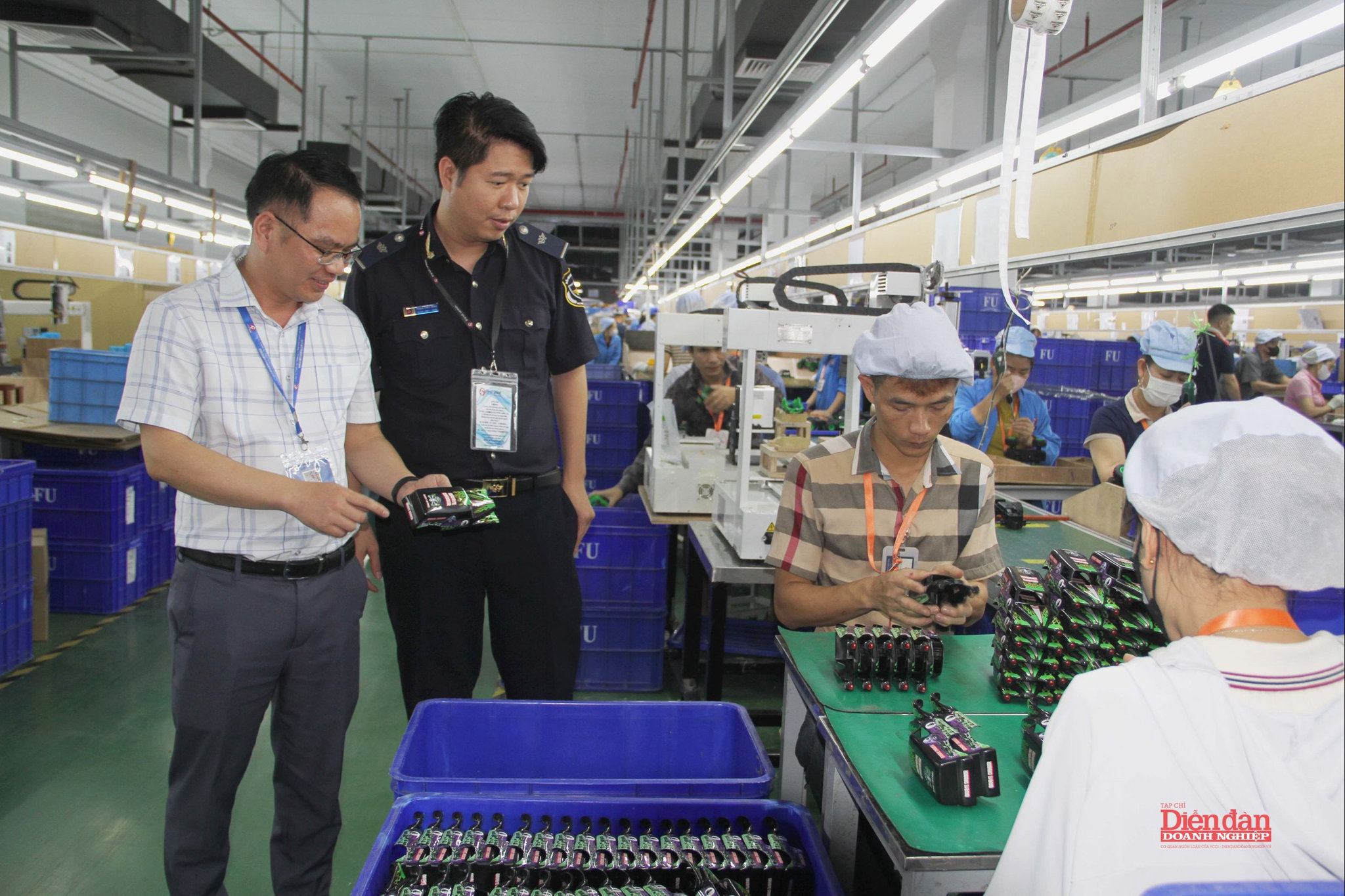
Operations at First Vietnam Animation Technology Co., Ltd. (Lien Ha Thai Industrial Park) receive significant support from Thai Binh Customs forces
On March 7, 2026, the unit organized a customs law dissemination session for over 100 import-export enterprises. Beyond centralized conferences, Customs supports businesses via official letters, phone, Zalo groups, and online channels. According to reports at the time of compilation, the unit had no unresolved business petitions remaining.
Mr. Nguyen Van Toan, Import-Export Department Director at Greenworks Thai Binh Co., Ltd., noted that training courses and policy updates have helped businesses become more proactive during custom declarations.
“Customs authorities regularly organise training sessions, disseminate new policies, guide procedures, and provide timely support when issues arise. Thanks to this, businesses can stay updated on regulations, minimise errors, and cut down document processing time,” Mr. Toan shared.
However, according to Greenworks Thai Binh's representative, the customs data system occasionally still experiences slowness or congestion. The company requested that the Customs sector continue upgrading technology infrastructure, increase data processing capacity, and establish backup plans for system incidents to ensure declaration, receipt, and clearance operations run smoothly.
According to the Customs Sub-Department of Region IV, business feedback serves as an essential foundation for Customs to review workflows, identify bottlenecks, and adjust service approaches. Matters within authority are handled immediately, while system-related or policy issues beyond local jurisdiction are summarized and reported to higher authorities promptly to foster local economic development.
Author: KIM DUNG - VU PHUONG (Dang Truong translates)
RELATED TOPICS
RECOMMENDED TOPICS