 VN
 EN
14/10/2026, 02:00
Investment
VHC faces headwinds
The US imposing an additional 12.5% tariff under Section 301 is a new unfavorable variable for Vinh Hoan Corporation (HoSE: VHC), even though the company previously secured an almost absolute competitive advantage in the US.
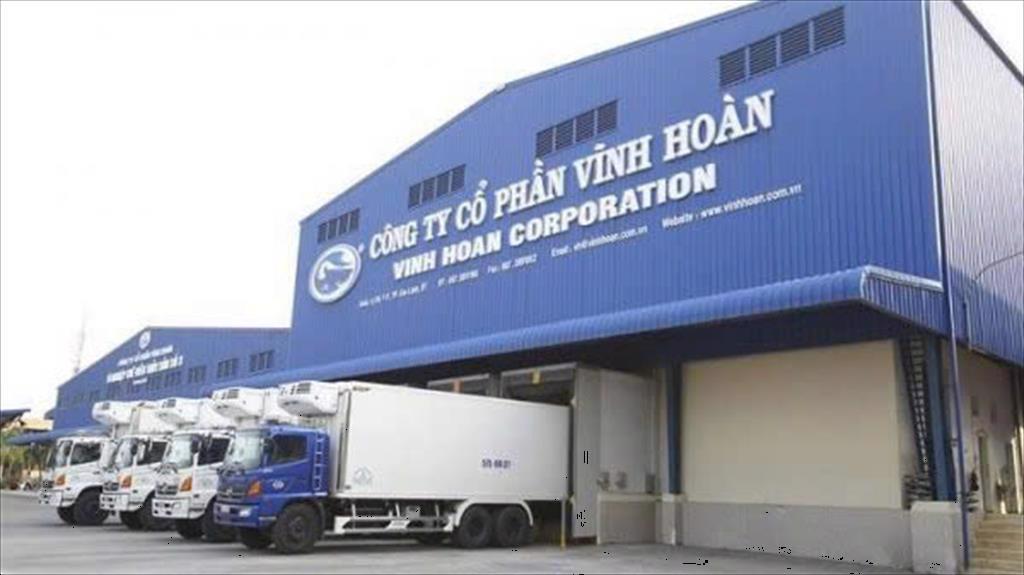
According to its Q2/2026 financial report, VHC recorded positive business results with revenue reaching VND 3,444 billion, up 8% year-over-year.
Export volumes and selling prices in the US—VHC's key market—show signs of decline. This, coupled with the fact that the US has yet to announce its tariff policy on Vietnamese goods regarding the "excess capacity" issue and overall market liquidity remains low, will pose challenges for this enterprise.
Growth momentum from core business
According to its Q2/2026 financial report, VHC recorded positive business results with revenue reaching VND 3,444 billion, up 8% year-over-year. VHC's largest export market remains the US, generating a revenue of VND 1,272 billion, an increase of 10.3% compared to the same period last year. However, VHC's profit after tax stood at VND 493.3 billion, down 8.5% year-over-year. Accumulated for the first half of 2026, VHC recorded a revenue of VND 6,398.98 billion, up 9.6% year-over-year, while profit after tax reached VND 735.24 billion, up 3.9% year-over-year.
In the first six months of this year, enjoying the advantage of a 0% anti-dumping tax in the US market compared to domestic competitors, VHC maintained its position as the leading pangasius exporter to the US. Notably, VHC's export growth was bolstered by strong purchasing power across all its key markets; exports to the US rose by 20%, Europe by 5%, and other markets by 23%.
In the first half of 2026, VHC reported a negative net cash flow from operating activities of VND 220.8 billion, compared to a positive VND 726.4 billion in the same period last year. Additionally, cash flow from investing activities recorded a positive VND 213.2 billion, while cash flow from financing activities was a negative VND 506.8 billion.
Expanding export markets
At the Annual General Meeting of Shareholders (AGM), Ms. Nguyen Ngo Vi Tam, CEO of VHC, shared that the pangasius industry is facing numerous challenges, such as sustained high raw material prices and limited supply. These pressures primarily stem from the escalating prices of fingerlings and animal feed, which will weigh heavily on the company's costs.
Currently, the costs of fingerlings and feed continue to rise, putting pressure on VHC's production costs. Given this context, the company is stepping up its fingerling nursing operations and proactively adjusting its pricing strategy to offset the increased expenses. According to VHC, although farming costs are trending upward, they still remain lower than the cost of purchasing raw fish externally. Therefore, the strategy of raw material self-sufficiency continues to be viewed as the right direction, helping the company optimize costs and laying the foundation to fulfil its targets by year-end.
Regarding consumer markets, China is not a priority, but VHC continues to develop suitable pricing strategies to maintain business operations there. Furthermore, the enterprise is expanding its new customer base and increasing value from existing clients. For the European market in particular, opportunities remain wide open as wild-caught whitefish products become increasingly expensive due to an unstable supply.
Alongside its production and business plans, VHC plans to invest over VND 1,500 billion. This includes expanding and renovating factories, machinery, and equipment for Vinh Hoan Collagen Company; acquiring additional machinery and equipment for the Thanh Ngoc fruit processing plant; investing in a new feed production line at the Feed One aquafeed plant; upgrading the Sa Giang factory; and investing in Hoan Ngoc agricultural food processing, among other initiatives.
Challenges to year-end prospects
DSC Securities notes that VHC is the only pangasius enterprise excluded from the scope of US anti-dumping duties after winning a lawsuit that brought its anti-dumping tax rate to 0%. However, the US's imposition of an additional 12.5% tariff under Section 301, effective July 24, 2026, acts as a new unfavourable variable for VHC, despite the company's prior near-absolute competitive advantage in the US. This development aligns with signals already seen in business data, as VHC's July revenue in the US market only reached VND 323 billion, down 36% month-over-month, reflecting the cautious sentiment among US importers. DSC believes these impacts will become more pronounced in Q3/2026 data when the 12.5% tariff is fully applied. This will present a significant hurdle for VHC in achieving its ambitious profit target of VND 1,600 billion in 2026.
According to DSC, Vietnam is classified in the group subject to the highest tariff rate (a 12.5% tax equivalent to the majority of a 38-country group, rather than the 10% tax applied to some other nations). Consequently, the competitive edge of Vietnamese pangasius against alternative whitefish (such as pollock and tilapia) in the US market may narrow, even though VHC still maintains a relative advantage over other domestic pangasius enterprises that have not been exempted from the tax.
DSC determined VHC's target price using a combined P/E and P/B method with a 50/50 weighting, yielding a target price of VND 59,841/share—equivalent to a 14.9% upside compared to the market price of VND 52,100 on August 11, 2026. This target price corresponds to a P/E of about 8.8x, lower than the 5-year average (10.46x). This reflects the risks from the additional 12.5% tariff under Section 301 officially applied by the US from July 24, 2026 (replacing the temporary 10% reciprocal tariff under Section 122 that expired), which puts direct pressure on VHC's largest consumer market, coupled with a Q2/2026 profit decline of nearly 9% despite improvements in revenue and gross margins. The target price also corresponds to a P/B of about 1.2x, lower than the industry's 5-year average (about 1.7x), reflecting short-term asset quality risks as receivables jumped by nearly 45% and operating cash flow turned negative during the period, plus uncertainties from two other pending Section 301 investigations (regarding excess production capacity and intellectual property) that have yet to reach a final conclusion.
Author: HA PHUONG - TRUONG DANG
RELATED TOPICS
RECOMMENDED TOPICS