VN
VN
 EN
EN
16/07/2026, 02:00
Business economics
ASEAN Perspectives: Returning to the region’s growth foundations
As a fast-growing region hungry for energy imports, ASEAN is vulnerable to high oil and gas prices. But it is equally important not to be too swayed by near-term energy swings and return to the region’s growth foundations.
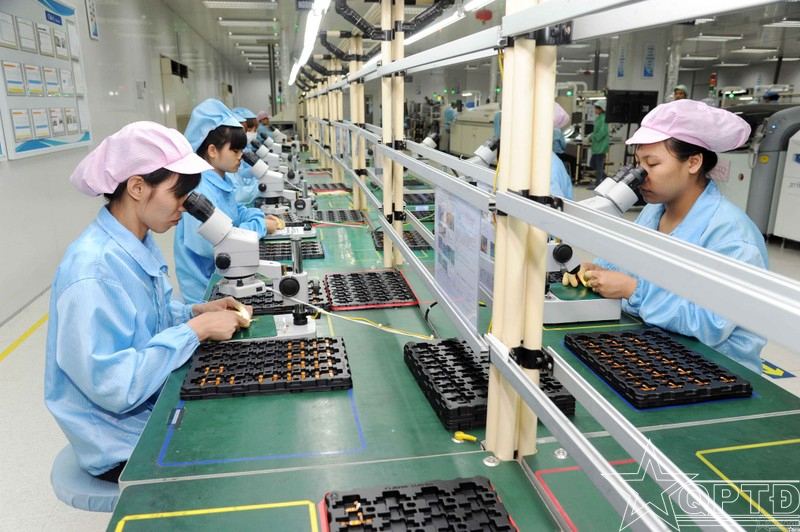
Vietnam has taken a different path, growing impressively in the consumer electronics segment, but also with an ambition to climb up the value chain further.
Déjà vu?
Despite limited trade exposure to the Middle East, key commodities that nobody can underestimate are oil and gas. ASEAN, like many of its Asian peers, is vulnerable to the energy shock. Except for Malaysia, ASEAN’s economies are large net energy importers, with Thailand having the highest energy bill as a percentage of GDP. In particular, the lion’s share of oil and gas imports come from the Middle East. With the exception of Indonesia, the exposure is at least above 50% for the rest, with the Philippines' most vulnerable with its share as high as 80%.
It is still in the early days for getting clarity on where oil prices are heading, though HSBC has updated the base case for Brent oil prices to hit an average of USD80/barrel in 2026. But if history were to provide some guidance, the 2022 Russian-Ukraine conflict serves as a good reminder to us of how sensitive ASEAN is to elevated oil prices.
Recall that back then, Thailand and the Philippines were sensitive to soaring energy prices, pushing their headline inflation above their respective central bank’s target by a wide margin. In particular, Thailand faced the most severe rise in energy prices, up as much as 40% y-o-y.
Pockets of resilience
Despite all the uncertainty, in HSBC’s view, it is also important not to be entirely swayed by the near-term volatility and return to ASEAN’s fundamentals to search for opportunities. After all, robust trade in Asia proves the region’s supply chain resilience and adaptation, defying the tariff headwinds. Many regional economies saw record high trade last year.
The electronics cycle—the focus of this note—merits most of the attention, as it leads the regional export cycle, given its sheer significance for Asia trade. On average, electronics exports account for a third of Asia’s exports, with the exposure as high as almost 60% of GDP in tech-heavy economies like Taiwan. Asia’s semiconductor shipment growth has been sharp, approaching the peak of the 2010 upturn. The trend is set to continue, with semiconductor billing momentum growth pointing to an impressive sub-40% y-o-y.
There are many similarities between current and previous tech cycles: it’s not only a price correction, but also driven by rising volumes. This is clearly reflected in tech-savvy economies, like Korea and Taiwan, both of which have seen their electronics production heating up since 2024, though momentum is pointing to some moderation in recent months.
But HSBC said, the obvious difference in this cycle is it has a unique driver: the AI boom. In many ways, it should be a game changer for Asia's and, more importantly, ASEAN’s trade flows. In fact, 2025 has already validated this point: ASEAN economies saw their electronics export growth range from 15% to 47% on a y-o-y basis, well exceeding their respective 10-year average.
While Korea and Taiwan are widely known for their local tech giants, ASEAN’s tech story is dominated by the long-standing presence of multinational corporations (MNCs) since the 1970s.
Recent US-China trade tensions have pushed the region to embed itself further into the global tech supply chain, strengthening its position in this strategic sector.
But in HSBC’s view, not everyone benefits to the same extent: those economies with an extensive tech supply chain are riding on the tech wave. Electronics exports in Malaysia and Vietnam, measured as a percentage of GDP, highlight the weight of tech exports in their respective economies. Elsewhere, electronics non-oil domestic exports (NODX), despite only accounting for 8% of Singapore’s GDP, also benefits the Lion City for related sectors like precision engineering and wholesale trade services
Somewhat surprisingly, the Philippines has the highest share of electronics exports across the region, partially a reflection of its position as an early developer in the supply chain. However, its domestic value-add – measured as the net trade balance – has been dwindling, compared to peers like Malaysia. Even more strikingly, Thailand has consistently seen a deficit in its electronics trade, which even widened in 2025, despite seeing an almost 50% y-o-y growth in electronics exports. Elsewhere, Indonesia lags behind peers in its electronics landscape.
“The tech beneficiaries – Vietnam, Malaysia and Singapore – stood out in their 2025 GDP performances. While it is not all driven by trade (their domestic resilience cannot be underestimated), the AI-driven tech upcycle has nonetheless been supportive. Growth in all of them in 2025 well exceeded their respective average in the past decade”, said HSBC.
Will the trend be sustained, at least in the near-term? Forward-looking PMI indicators suggest so. After contracting for 28 out of the past 36 months (January 2022 to December 2025), the global electronics PMI has finally returned to expansionary territory, led by industrial demand.
Meanwhile, the gap between new orders and inventory – a useful leading indicator of global production – has shown solid improvements in momentum for industrial electronics.
Author: NGOC ANH
RECOMMENDED TOPICS