VN
VN
 EN
EN
16/07/2026, 02:00
Business economics
Bac Ninh customs supports import-export businesses
By reforming procedures, accelerating digitalisation and dialogue with businesses, Bac Ninh Customs is becoming a reliable partner for enterprises engaged in import-export activities, helping to keep trade flows running smoothly.
One morning at Yen Phong Industrial Park in Bac Ninh Province, a shipment of electronic components was being prepared for export to Europe. Every hour mattered. Yet in less than a minute, the customs declaration was accepted by the system and the goods quickly cleared all procedures. For businesses, that represented a significantly shortened “golden window” of time.
Behind this seamless process lies the strong transformation of Customs Sub-Department Region V in supporting enterprises.
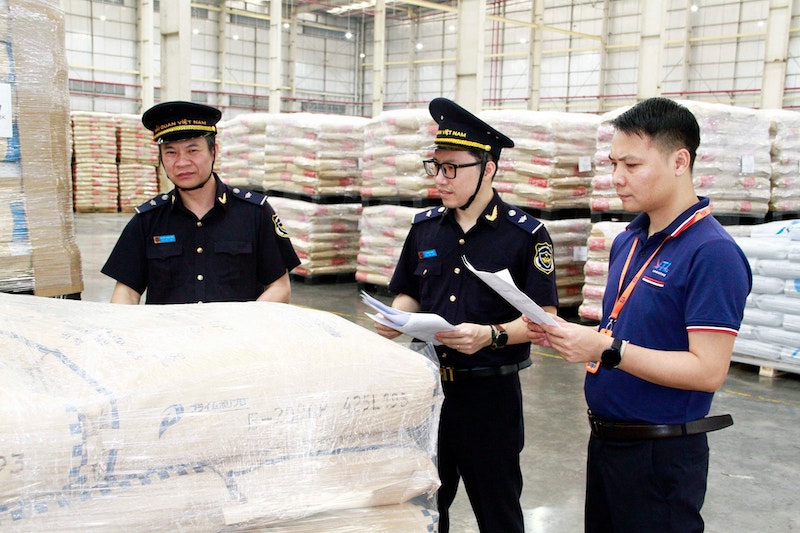
Accelerating customs clearance
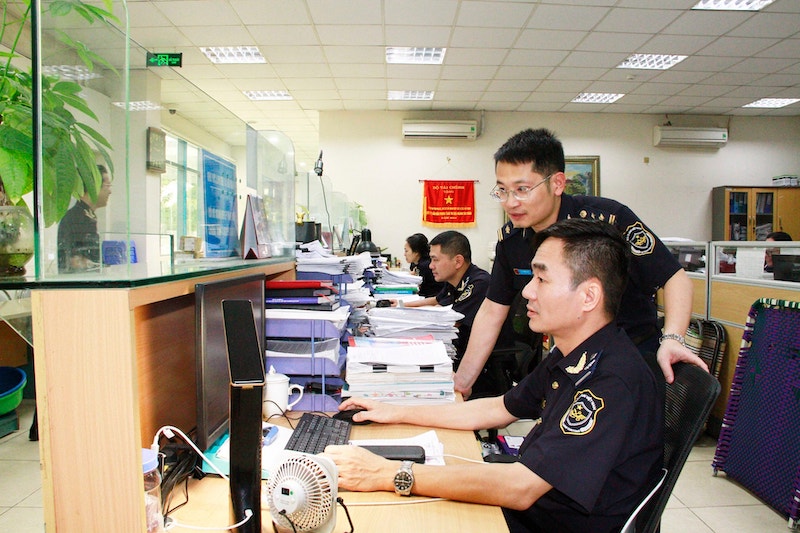
In recent years, Bac Ninh Customs has made a significant shift from a traditional management model to a digitalised and automated platform. In the past, customs procedures were often associated with paper documents, long waiting times and manual inspections. Today, most procedures are processed electronically.
According to Mr Pham Chi Thanh, Director of Customs Sub-Department Region V, 100% of import-export declarations at the unit are now processed through the VNACCS/VCIS automated customs clearance system. Procedures such as declarations, amendments, supplements and receipt of results are all conducted online, minimising direct contact and reducing processing time.
Beyond digitalisation,Customs Sub-Department Region V has also promoted automation by applying a risk management-based cargo classification system. Under this system, around 70% of declarations are assigned to the “green channel”, allowing almost immediate clearance; more than 25% fall into the “yellow channel”; and less than 5% are classified as “red channel” shipments requiring physical inspection.

This has created a breakthrough change: “green channel” declarations can now be processed in under 30 seconds, “yellow channel” cases in less than two minutes, while even “red channel” shipments can be completed within 30 to 60 minutes.
“Behind these figures are reduced costs, shorter processing times and significantly improved competitiveness for businesses,” Mr Pham Chi Thanh said.
At the same time, the implementation of the National Single Window mechanism has enabled data connectivity with ministries and agencies, allowing enterprises to avoid repeatedly submitting multiple documents. According to Mr Truong Hong Dung, Deputy Head of the Tien Son Customs Team under Customs Sub-department Region V, the VASSCM automated supervision system has also significantly reduced manual confirmation procedures at warehouses while enhancing transparency in cargo management.
Another notable point is that 100% of the unit’s state budget revenue collection is now conducted through 24/7 electronic payment methods. This not only facilitates business operations but also helps minimise risks and improve transparency in financial management.
According to the Customs Sub-Department of Region V, these reforms have helped businesses cut logistics costs by 10-20%, while also improving supply chain efficiency and the local investment environment.
Business perspective: Positive changes, yet expectations remain
From the business community’s perspective, the improvements in customs procedures have been clearly noticeable. However, alongside positive feedback, there are still expectations for the system to continue improving.
Mr Dang Van Phu, Head of Northern Operations at c in Tien Son Industrial Park, said customs reforms have had a direct impact on logistics operations, an industry where timing is especially critical.
“The high proportion of green-channel declarations and fast processing times have significantly reduced storage and container detention costs for logistics companies like ours, while also helping us proactively manage transport plans. This is extremely important amid ongoing volatility in global supply chains.”
However, Mr Phu noted that there are still challenges related to data connectivity and synchronisation between enterprises’ internal IT systems and Customs management systems.
Specifically, inventory data on companies’ internal management software is not yet fully compatible with customs supervision systems, resulting in discrepancies that require manual reconciliation and adjustments. This not only increases workloads but also creates potential risks of errors in cargo management. Businesses therefore recommend further upgrading the technology infrastructure toward better connectivity, interoperability and data synchronisation between systems in order to improve accuracy, transparency and efficiency in import-export management.
Sharing the same view, Mr Nguyen Khanh Tan, Deputy Director of ALS Bac Ninh Co., Ltd. in Yen Phong Industrial Park, a warehouse and logistics service operator highly appreciated the application of technology in cargo supervision.
According to Mr Tan, the deployment of automated supervision systems has significantly reduced manual confirmation procedures, improved transparency and strengthened coordination between Customs authorities and warehouse operators.
“This has helped us optimise operations and reduce pressure during peak hours,” he said.
However, Mr Tan also stressed that to maximise efficiency, data synchronisation between systems and inter-agency connectivity still need to be further improved.
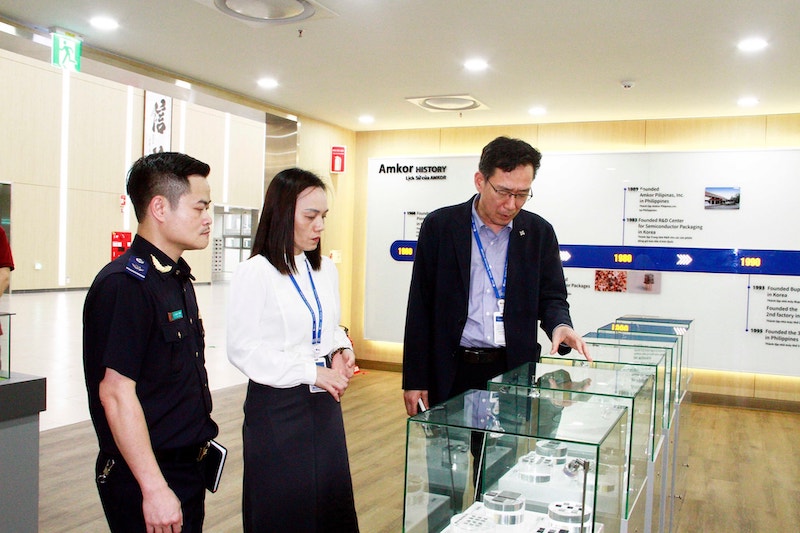
From the perspective of a large-scale FDI enterprise, Mr ChangKyun Seo, Global Import-Export Director of Amkor Vietnam, emphasised the role of Customs in ensuring the stability of production chains.
“For manufacturing enterprises, especially in the high-tech sector, every hour of delay can affect the entire production line. Fast and transparent customs procedures help us maintain stable operations and strengthen investor confidence in Vietnam.”
Mr ChangKyun Seo also expressed his expectation that the Customs sector will continue accelerating the adoption of new technologies such as artificial intelligence and big data analytics to improve risk management and provide better support for businesses.
According to Customs Region V, the sector will continue promoting the development of Digital Customs and Smart Customs through upgrades to IT systems, stronger data connectivity with ministries and agencies, and expanded applications of technologies such as AI and Big Data in risk management.
At the same time, a centralised customs clearance model will be implemented to optimise resources and improve processing efficiency. In particular, the Customs-Business partnership will continue to be strengthened through regular dialogues, direct support activities and the establishment of rapid-response communication channels.
These efforts aim to further facilitate import-export activities and enhance the competitiveness of the local investment environment.
Author: Kim Dung - Vu Phuong (Cam Anh translates)
RECOMMENDED TOPICS