VN
VN
 EN
EN
13/07/2026, 02:00
Business economics
Energy savings unlock competitive advantages in the export market
Industrial sectors in Vietnam currently account for over 50% of the nation's total energy consumption, with the potential for energy savings of up to 30-35%. Energy conservation is one of the solutions that helps reduce costs and increase the competitiveness of products.
 |
|
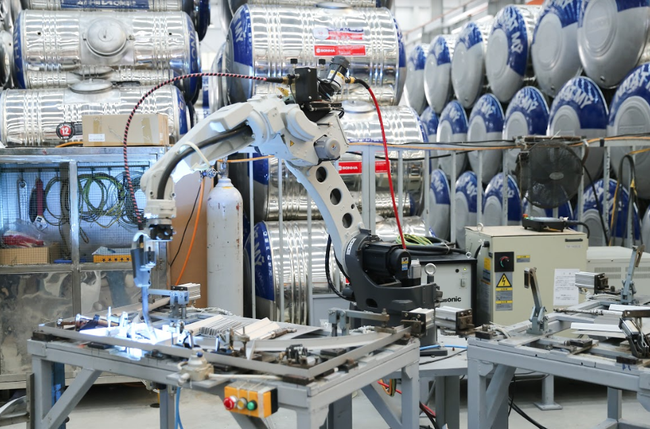
Businesses saving electricity can help increase the competitiveness of their products. Photo: Internet |
Speaking at the seminar "Energy Saving in Industrial Sectors: Technology and Policy Issues," organized by the Industry and Trade Magazine on August 19th, Mr. Dang Hai Dung, Deputy Director of the Department of Energy Efficiency and Sustainable Development, Ministry of Industry and Trade, said that energy accounts for a large proportion of the cost structure of products.
Regarding Europe, in 2026 they will start taxing and directly impacting the production and business of exporting enterprises.
"We are facing challenges posed by overseas markets. This is also a warning to businesses. To save energy or reduce carbon footprint, the technology issue is intertwined with issues related to investment resources, from infrastructure equipment to human resources," Mr. Dang Hai Dung assessed.
The representative of the Department of Energy Efficiency and Sustainable Development also informed that recently, many policies have been issued, especially since 2010 with the Law on Economical and Efficient Use of Energy. To date, Vietnam has approximately 16 circulars, 2 decrees, and 2 Prime Minister's decisions, as well as around 34 technical standards and regulations issued related to energy saving.
In 2019, the Prime Minister also issued Decision 280 with the national target program, aiming to save energy from 7% to about 10% by 2025, and by 2030 we must save about 10% compared to the normal energy consumption scenario.
From a business perspective, Mr. Mach Dinh Khoa, Director of Business Strategy Development and Commercial Operations, Schneider Electric Vietnam Co., Ltd., said that energy saving has a significant impact on businesses.
According to Mr. Khoa, there are two aspects that businesses need to pay attention to regarding energy saving. First, in some industries, electricity costs account for 15 to 20% of the total production cost of each product. With an increasingly competitive market, optimizing production costs, thereby being able to lower the selling price of products or maintain the same selling price, is crucial.
Businesses without energy saving requirements will lead to continued high costs, resulting in a decreased competitive advantage in both domestic and export markets.
On the other hand, standards in major markets like the US, Europe, and Japan are focusing on accounting for and utilizing carbon emissions. Therefore, producing energy-efficient products, through good carbon emission reduction, will be important prerequisites and standards that help businesses gain an advantage when competing in the export market.
Assessing the current situation of energy saving in enterprises, Mr. Nguyen Quoc Dung, Head of the Business Department (Vietnam Electricity Group - EVN), said that enterprises still face many difficulties in implementing energy saving measures.
In particular, many businesses still have limit ations in their awareness of saving electricity, have not truly prioritized it, and even lack sufficient capacity and finances. Additionally, many businesses have not applied or optimized production lines and processes, leading to the continued wasteful use of energy.
"The electricity price policy is being implemented according to Decision 28 of the Prime Minister issued in 2014. Of course, the price depends on the voltage levels. However, we also see that, for the normal hour price of production, it only accounts for about 84 to 92% of the average price and off-peak hours from 52 to 59% of the average price. With such low electricity prices, the issue of saving electricity for production enterprises is somehow not truly prioritized," Mr. Nguyen Quoc Dung said and added that the potential for energy saving in production enterprises is very large.
According to the EVN representative, statistics from international organizations show that it is possible to save from 20 to 30% of energy used in industrial production sectors. According to the assessment of the Ministry of Industry and Trade, it can even reach 30 to 35%. This is a significant figure representing the potential for electricity saving at industrial production enterprises.
The representative of the Department of Energy Efficiency and Sustainable Development said that state management agencies will issue regulations to manage energy consumption, aiming to minimize energy consumption per product unit.
However, on the business side, Mr. Dang Hai Dung said that businesses should grasp the external changes that affect their business. "Because whether we want it or not, when market requirements change, we also have to adapt accordingly. If we approach this proactively and prepare in advance in the production process, we will be more proactive in business," Mr. Dang Hai Dung noted.
Author: Customnews
RECOMMENDED TOPICS