VN
VN
 EN
EN
25/07/2026, 10:00
Culture- travel
French media hail Phu Quoc as a new symbol of Asia’s tourism revival
EnVols, the in-flight magazine of France’s national airline, has recently highlighted Phu Quoc as a new symbol of Asia’s tourism revival, citing its rare ability to balance modern infrastructure with well-preserved local values.
In its latest feature on Vietnam’s largest island, EnVols notes that Phu Quoc has emerged as “one of the most promising destinations of 2026”. This assessment is supported by data from online travel platform Expedia, which shows international search interest in Phu Quoc surging by as much as 53% in just a few months. Notably, the ranking is based on the Smart Travel Health Check criteria - a new benchmark designed to identify destinations that deliver authentic, high-quality and sustainable travel experiences.
Comparing Phu Quoc with other well-known islands across the region, journalist Dorian Dumont points to the island’s core competitive advantage in a compelling observation: “While many Asian destinations have gradually lost their identity amid mass tourism, Phu Quoc has managed to preserve its local charm while simultaneously developing high-end, sustainable infrastructure.”
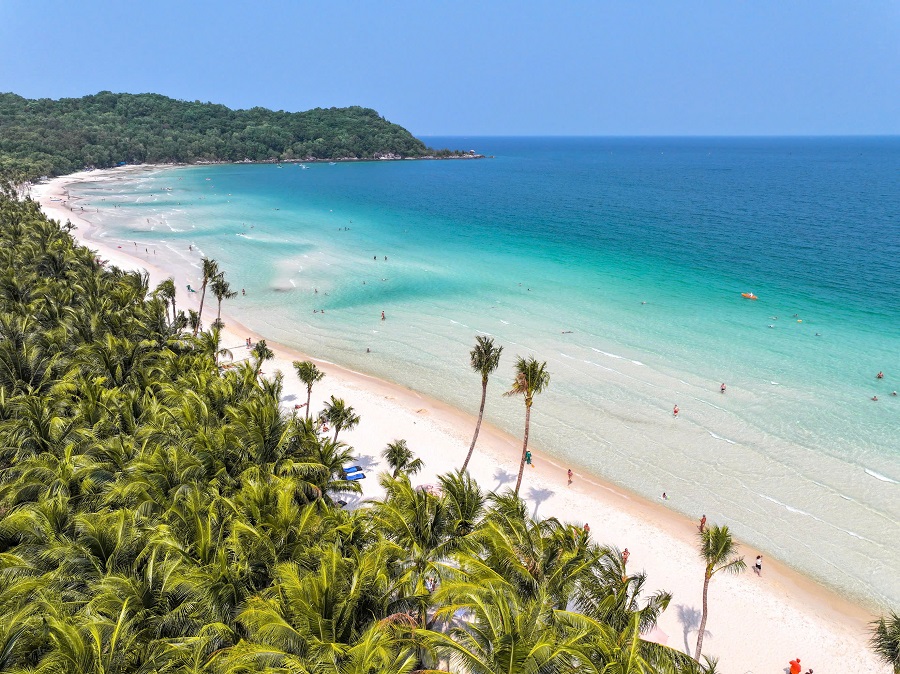
Kem beach, with its pristine, paradise-like beauty, is a major competitive advantage of the Pearl Island. (Photo: Fabl Belek)
According to EnVols, it is this selective development strategy that has enabled Phu Quoc to prioritize long-term value over sheer visitor numbers. In the southern part of the island, high-end resorts such as Premier Village Phu Quoc Resort, New World Phu Quoc Resort and JW Marriott Phu Quoc Emerald Bay are cited as prime examples of a harmonious blend of refined architecture, natural landscapes and local cultural inspiration. These properties appeal to a segment of travelers that EnVols describes as “seeking understated luxury with a close connection to nature”.
Through the characteristically romantic lens of the French press, Phu Quoc emerges as “a tribute to nature”. Often referred to as “Vietnam’s Pearl Island”, it boasts a remarkably diverse ecosystem—from powdery white-sand beaches such as Bai Sao and Bai Kem, frequently ranked among the most beautiful in Asia, to a lush interior of hills, waterfalls and dense forests, ideal for trekking and adventure.
The author places particular emphasis on Phu Quoc National Park - a UNESCO-recognized biosphere reserve as compelling evidence of the island’s ecological value. Within this pristine natural setting, environmentally conscious travelers can observe macaques, hornbills and rare wild orchids, fostering a deeply immersive connection with the local ecosystem.
Yet relying solely on natural beauty is not enough. Phu Quoc’s tourism revival is also driven by a portfolio of distinctive, one-of-a-kind experiences, developed through well-planned and sustainable tourism, entertainment and resort ecosystems. Visitors are often surprised to discover that Phu Quoc is the only destination in the world to host two nightly fireworks shows, staged as part of world-class performances such as Kiss of the Sea and Symphony of the Sea. The island also offers immersive ways to experience nature at its most spectacular, from strolling across the Kiss Bridge to witness the sun momentarily framed between its two spans, to riding the world’s longest three-wire cable car to Hon Thom Island for sweeping views of Phu Quoc’s vast seascape.
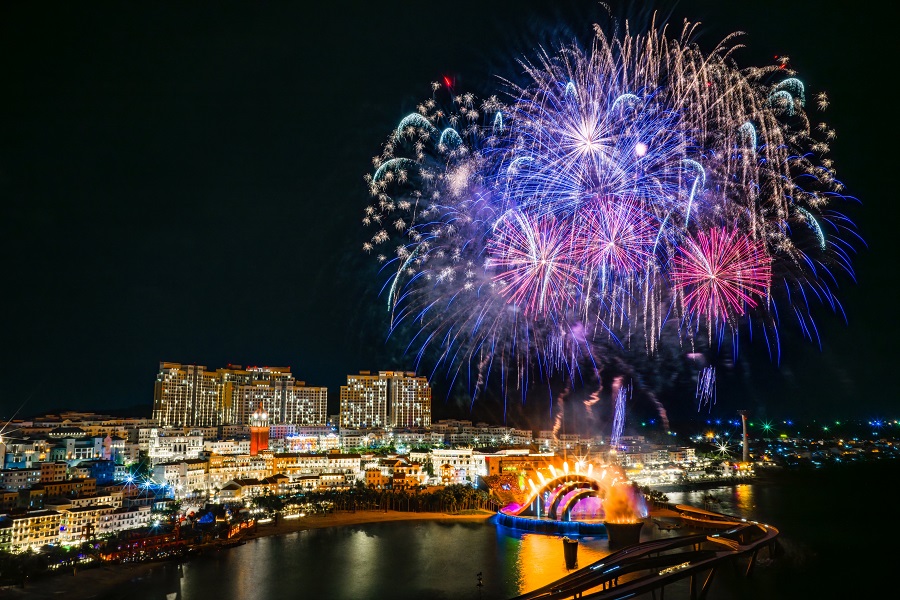
Phu Quoc, featuring two nightly fireworks shows, offers a truly one-of-a-kind experience that no visitor would want to miss
Amid the strong recovery of regional tourism, Phu Quoc stands out as a compelling example of how growth can be balanced with the preservation of identity.
It is precisely this rare equilibrium that has allowed the Pearl Island to move beyond the role of a conventional tropical resort and emerge as a new symbol of Asian tourism in the post-pandemic era - where nature, culture and world-class experiences converge to create lasting appeal for global travelers.
Author: DUONG NAM HOANG
RECOMMENDED TOPICS