VN
VN
 EN
EN
06/07/2026, 02:00
Business economics
Growth linked to microeconomic stability
According to Prime Minister Le Minh Hung, economic growth requires stability and control over important supply-demand and financial balances. Vietnam will not tolerate overheated growth or macroeconomic instability.
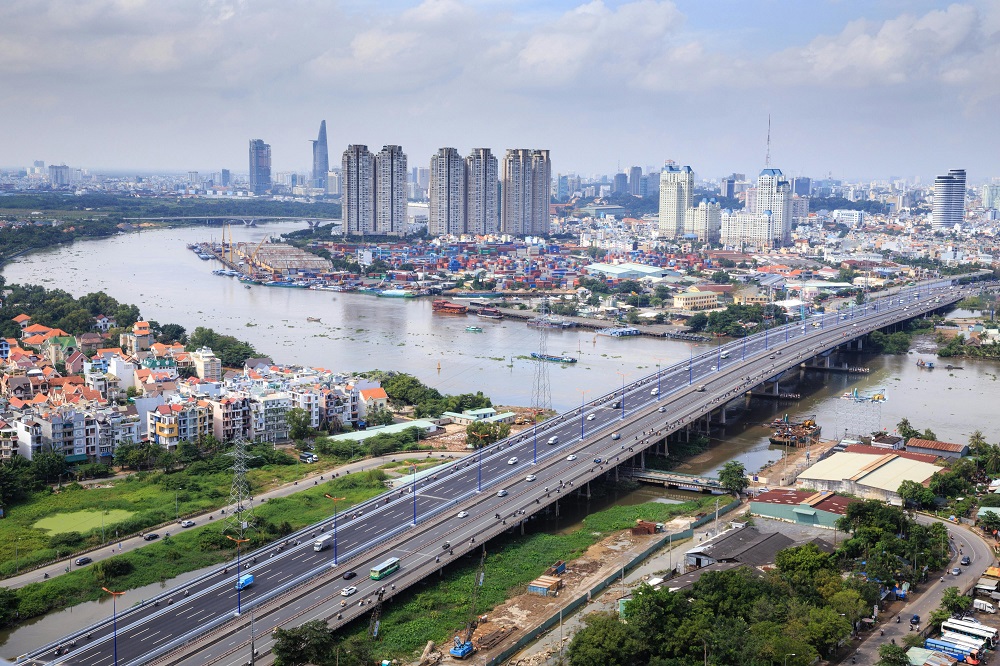
Vietnam aims to achieve double-digit economic growth
The Prime Minister stated that Vietnam aims to achieve double-digit growth this term. "All levels of Government and sectors must work together to raise awareness, think critically, and take action."This is an especially important requirement for achieving this goal," stated Prime Minister Le Minh Hung.
Reinforcing the foundation
The Government leader emphasised the need for maintaining stability and control over key economic balances, including supply and demand for commodities, financial budget, exchange rate, and foreign payments.
“Vietnam will not tolerate quick, high growth at the expense of macroeconomic instability since the cost to the economy in the medium and long term is extremely high. When constructing a house, the foundation must be very sturdy. We want to continue developing, so we must strengthen the foundation," the Prime Minister said.
The Prime Minister concluded that Vietnam must continue to rely on conventional drivers (such as exports, construction, and trade services) before reaping the benefits of science and technology.
He said that the pressure on capital sources will be extremely strong when overall social investment by 2030 has to reach 40% of GDP, equivalent to VND 38.5 million billion, with public investment accounting for just 20% (more than VND 8 million billion). The remaining 80% must come from local firms and FDI. As a result, the Prime Minister feels that these resources cannot be deployed without a transparent and unambiguous legal framework.
He went on to say that the Government is constantly directing ministries and sectors, particularly the Ministry of Finance, the Ministry of Industry and Trade, and the State Bank of Vietnam, to work together to handle petroleum and monetary market difficulties in order to mitigate the impact of external conditions.
This is aimed at proactively regulating to mitigate significant effects on the local market. "2026 is a pivotal year to lay the foundation for the next growth phase," Mr. Le Minh Hung said.
To meet the growth objectives, the Prime Minister stressed the need for institutional breakthroughs, stating that this is the path to creating a clear corridor for the Vietnamese economy to develop.
“Even before the Central Committee's resolution to reform the growth model, the economic driver might still attain better speeds if the institutions were synchronised, similar to renovated, higher-quality highways," the Prime Minister said.
The country needs more large corporations
National Assembly Chairman Tran Thanh Man emphasised the need for growing the private economic sector and building more significant enterprises to achieve double-digit growth in the next time.
Speaking at the group discussion session on the socio-economic development plan, he underlined that the target of double-digit growth in 2026 requires coordinated and clear answers and real outcomes.
He feels that one of the most important objectives is to boost the private sector. If this sector continues to grow at a double-digit rate, the economy will follow suit. In addition, it is important to establish more major private firms capable of undertaking national-scale initiatives.
Citing real-world examples, he stated that many huge projects carried out by private firms have assured progress and quality, but initiatives executed by the State-owned enterprises sometimes take 3-4 years to finish the procedures. As a result, procedures for increasing the efficacy of private resources must be improved on a continuous basis.
In Mr Tran Thanh Man's opinion, a significant shift in the growth model toward science and technology, innovation, and digital transformation in accordance with the Resolution No. 57/NQ-TW. Among these, the use of artificial intelligence plays a key role in improving management efficiency, lawmaking, and data control, as well as in the operations of the National Assembly.
Regarding macroeconomic management, he advised that the Government would be flexible and proactive in responding to external issues like geopolitical conflicts but also ensure strong growth while controlling inflation and pursuing a targeted expansionary fiscal policy.
He also proposed lowering compliance costs, moving heavily from pre-inspection to post-inspection, and establishing procedures to safeguard officials who dare to think and act. Along with this, there will be a drive for decentralisation and delegation of authority in the direction of localities deciding, implementing, and being accountable; the central government holds a key role in creating strategic frameworks, policies, and laws while supervising their implementation.
He indicated that the National Assembly will prioritise significant national projects like the Ninh Thuan nuclear power plant, the North-South high-speed railway, and urban railroads in Hanoi and Ho Chi Minh City above awarding modest amounts of funds.
He highlighted that the objective for 2026 is not to squander a day, not to postpone a week, not to give up a chance in a month, and not to remain inactive in a year. To maintain seamless operations, responsibilities for each authority and locality must be specified, preventing the situation in which authorities take an umbrella in the morning and return it in the evening with no results.
Mrs Nguyen Thi Tuyen, Deputy Secretary of the Government Party Committee, believes that breakthrough solutions, such as effective exploitation of the marine economy, are necessary for double-digit growth. She proposed taking use of the lengthy coastline to construct vocational training programmes and create jobs.
Mr Tao Đuc Thang, Chairman and CEO of Viettel Group, has recommended expanding into overseas markets to continue double-digit growth. In his opinion, Viettel's experience demonstrates that growth from overseas markets accounts for 60-70% of total revenue, allowing the company to increase its scale and sustain long-term development momentum.
The Chairman of the National Assembly agreed with Prime Minister Le Minh Hung's instruction to focus public investment funds on big projects with spillover effects, avoiding dispersion and "give-and-take" mechanisms. He proposed speeding the completion of backlog projects and major constructions to improve investment efficiency.
In response to the requirement for strong growth over the next five years, he advocated changes aimed at "five transformations", which include digitalisation, greening, resource optimisation, smart governance, and benefit harmonisation. Economic growth must be connected to social fairness by concentrating on education, healthcare, vocational training, and job creation.
Author: Minh Dang
RECOMMENDED TOPICS