VN
VN
 EN
EN
26/07/2026, 02:38
Business economics
Hung Yen: Building an Innovation hub of the Red River Delta
Amid the flow of the Fourth Industrial Revolution, innovation is no longer a slogan but has become an imperative for economic breakthrough.
Mr. Nguyen Xuan Hai, Deputy Director of the Hung Yen Department of Science and Technology, said that the department is drafting the project “Building an innovation ecosystem in Hung Yen province for the 2026-2030 period, with a vision to 2045”. This is not only a major reform in governance thinking but also a driving force for survival and a strategic positioning on the national map.
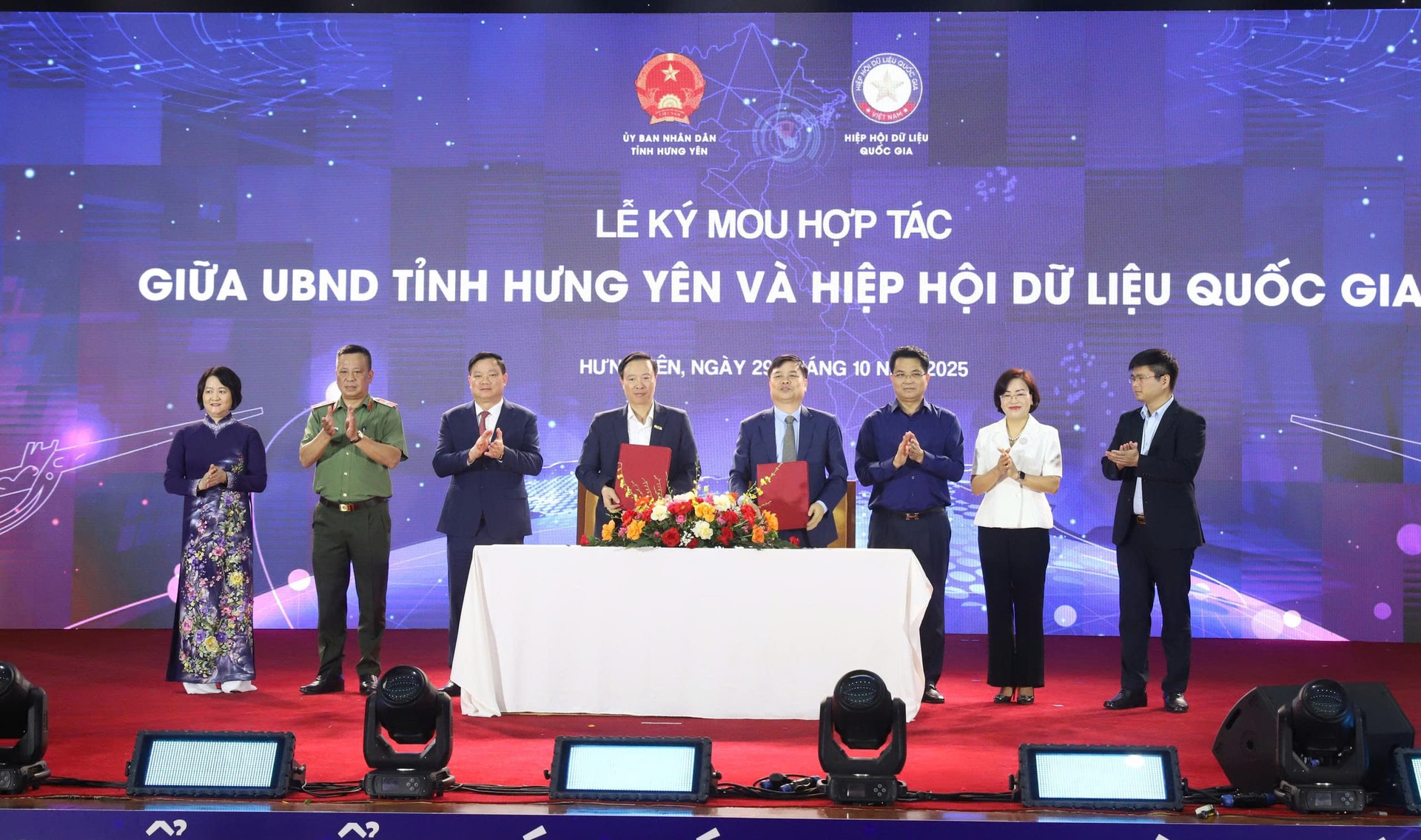
The signing ceremony of the Memorandum of Understanding (MOU) on strategic cooperation between the Hung Yen Provincial People’s Committee and the National Data Association, covering cooperation in training, data standards, and the deployment of pilot models applying artificial intelligence (AI).
The project aims to promote the development of Hung Yen’s innovation ecosystem for the 2026-2030 period by completing policy frameworks and support infrastructure; with a vision to 2045, it targets transforming Hung Yen into an internationally scaled innovation center; and by 2050, it sets the goal for Hung Yen to become a modern industrial province, a smart and civilized city, and one of the most livable places in the Red River Delta.
Opening up new development space
Hung Yen, with its strengths in processing and manufacturing industries, logistics services, high-tech agriculture, and the marine economy, has created a multi-layered innovation ecosystem.
The implementation of the project is based on the perspective of promoting innovation and startup ecosystems across the entire value chain, from science to market. This serves as a foundation for Hung Yen to move beyond being a satellite of Hanoi and become a leading innovation hub in Northern Vietnam.
.jpg)
Vice Chairman of the Hung Yen Provincial People’s Committee Pham Van Nghiem, presents Certificates of Merit from the Provincial Party Standing Committee to individuals with outstanding achievements in 2025, contributing to the advancement of science and technology, innovation, and digital transformation (Source: Hung Yen Newspaper).
The formation of an innovation ecosystem in Hung Yen aims to create a favorable environment for enterprises to innovate technologies, develop new products, promote innovative startups, attract talent, and enhance the province’s competitiveness. At the same time, this ecosystem is closely aligned with the orientation toward high-tech industrial development, digital transformation, the growth of the digital economy, and green growth.
From “Management” to “Facilitation”: A shift in the thinking paradigm
Mr. Hai noted that the most notable highlight of Hung Yen’s innovation project is the strong transformation in its governance model. The provincial government defines its role as the “chief architect.”
The two-tier government model, implemented from July 2025, represents an institutional breakthrough. With more than 1,060 tasks decentralized, it requires commune and ward-level authorities to fundamentally transform their mode of operation from administrative management to service provision and facilitation.
The role of commune and ward authorities in fostering innovation is reflected in their ability to create the most favorable conditions for local startup projects. The issuance of initial land use right certificates for citizens and businesses traditionally considered one of the most challenging tasks has been successfully carried out by several communes and wards from the very first days of operating under the new model. This proactiveness enables investors to quickly secure production sites, shortening the time needed to implement innovative ideas.
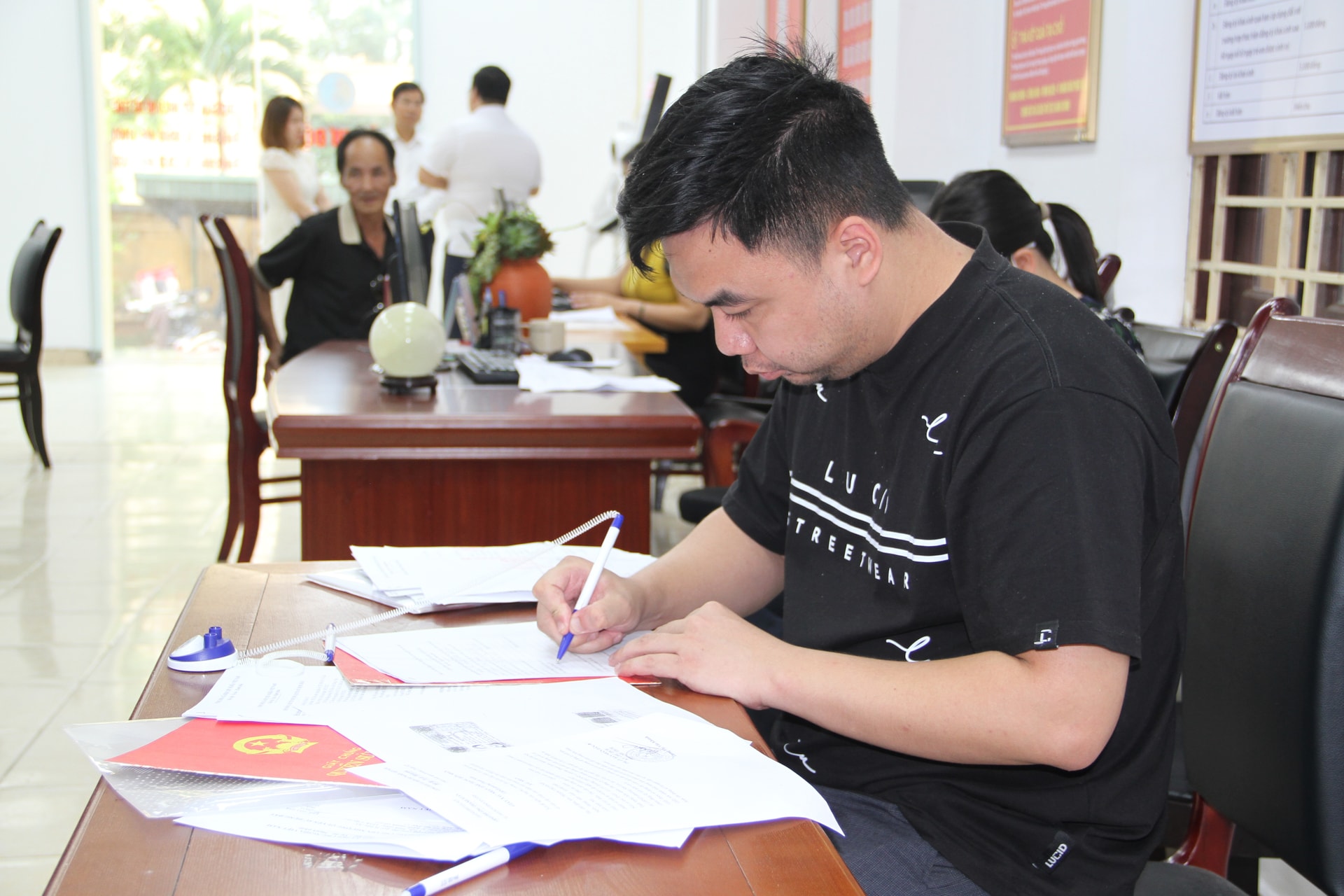
From July 1, 2025 to present, Pho Hien Ward has issued 400 first-time land use right certificates to residents (Photo: Vu Phuong).
At the same time, commune- and ward-level authorities are also at the forefront of applying information technology and digital transformation. With a system of 104 Public Administrative Service Centers at the commune and ward levels, invested in a synchronized manner, citizens and businesses can easily process administrative procedures online.
The spirit of “localities decide, localities act, and localities take responsibility” at the commune and ward levels has created new momentum, fostering innovation initiatives from within the community.
At the same time, the development of innovation in Hung Yen is not solely the responsibility of the science and technology sector, but a collective effort of the entire political system. Departments, agencies, and socio-political organizations all play specific roles, contributing to the overall success of the ecosystem.
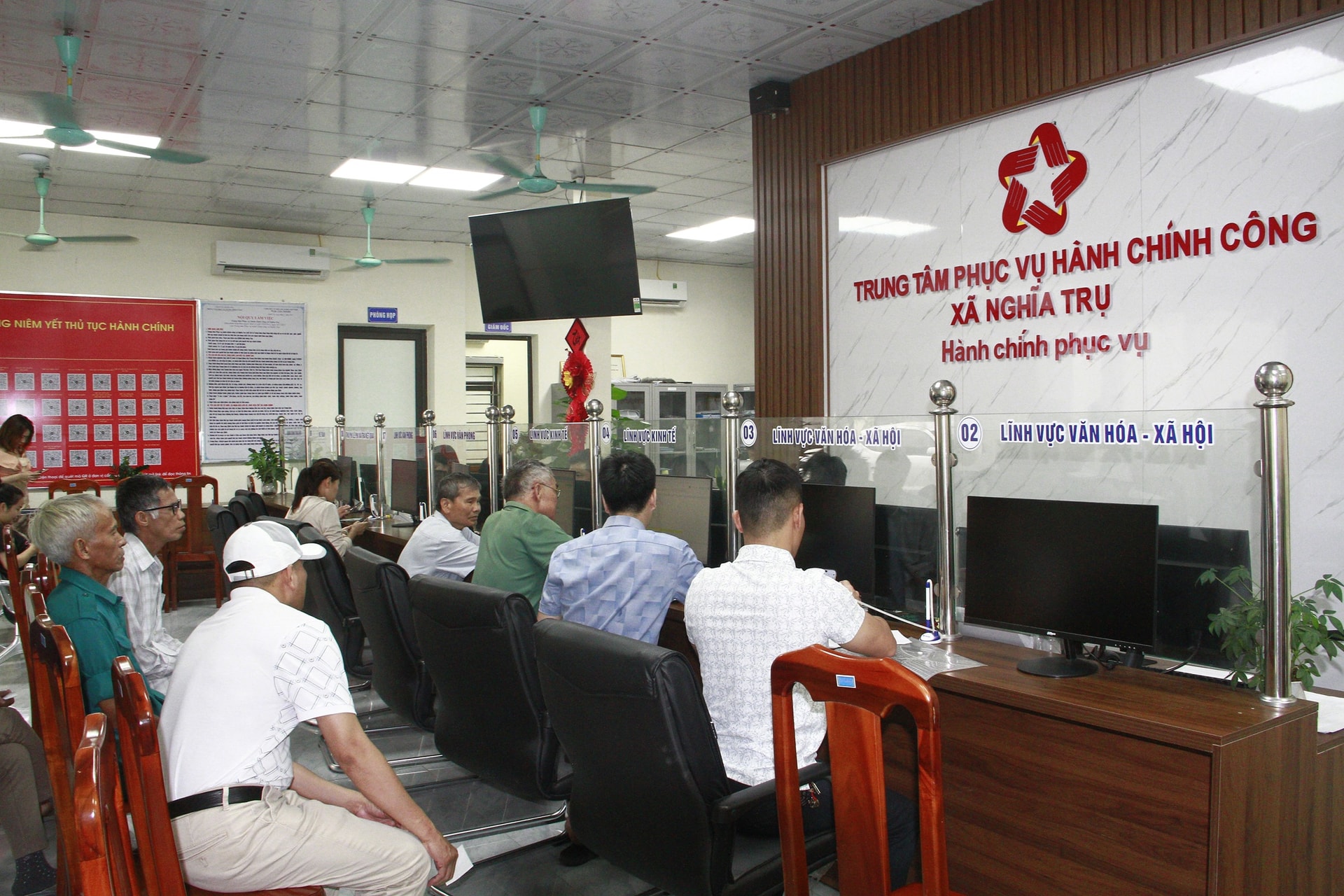
The Public Administrative Service Center of Nghia Tru Commune, Hung Yen Province, receives a large number of residents and businesses coming to carry out administrative procedures every day (Photo: Vu Phuong).
Placing people and science & technology as breakthrough drivers
The province prioritizes budget investment in research, human resource training, and baseline surveys of its potential strengths. The development of university cities and free economic zones with sandbox mechanisms will serve as a magnet to attract top experts, scientists, and business leaders. These will be the “core nuclei” spreading the spirit of innovation throughout the business community and society.
With a solid budget secured from the beginning of 2026 (approximately VND 6,000 billion), the province has translated political will into financial strength through specific support packages:
Resolution No. 773/2025/NQ-HĐND issued by the Provincial People’s Council stands as a clear example of the provincial government’s guiding role. This policy focuses on high-tech sectors such as semiconductors, cybersecurity, and electronic components by offering support covering 50% of infrastructure rental costs in industrial parks and clusters for investors over a period of five years.
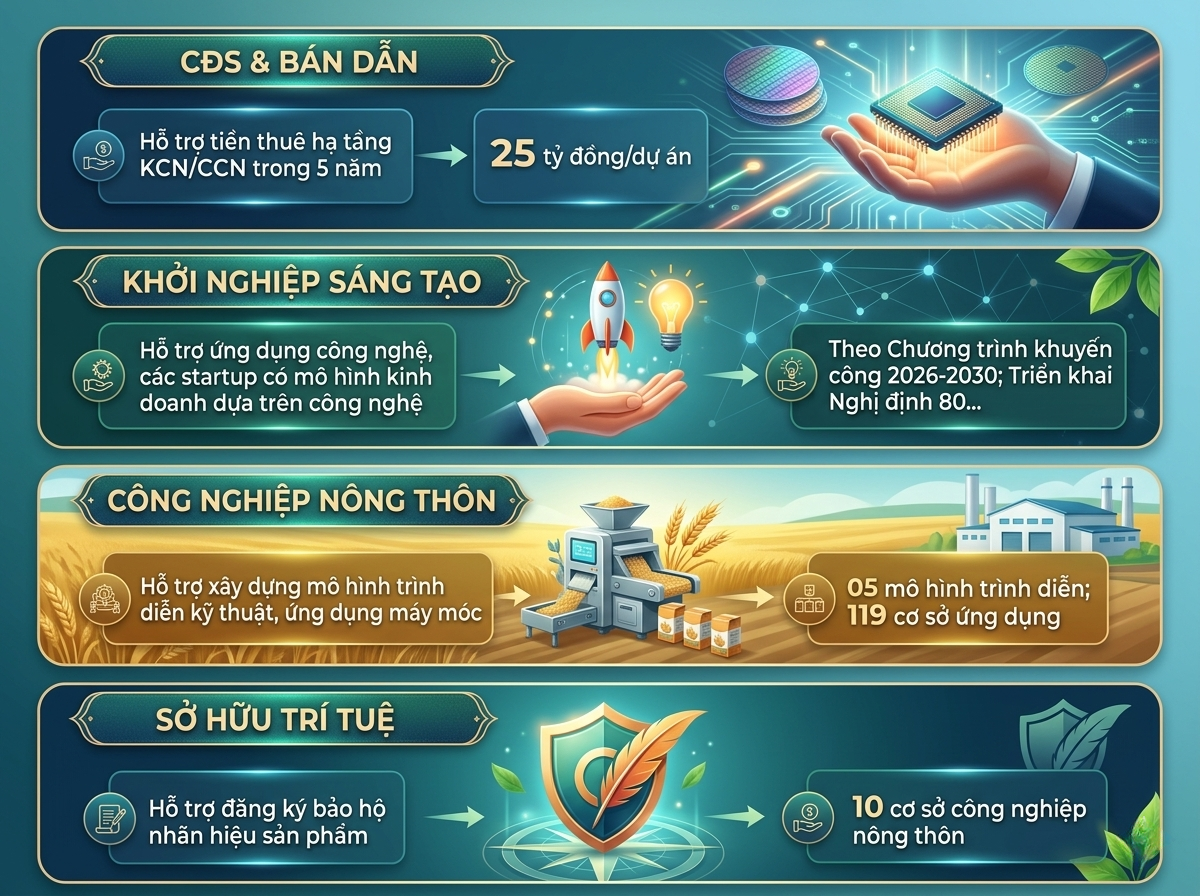
Key investment incentive policies of Hung Yen Province (2025–2030).
The Hung Yen provincial government plays the role of establishing spatial development planning based on science & technology and digital transformation. The province concentrates its resources on breakthrough spearheads such as semiconductor technology, the green economy, and the circular economy.
Mr. Hai emphasized that the Department of Science and Technology serves as the core coordinator, acting as a bridge linking the “State - Scientists - Enterprises”. When businesses are placed at the center of R&D, the ecosystem will operate autonomously and continuously regenerate growth momentum.
A new space for survival: Digital, Green, and Marine
According to Mr. Hai, in the coming period, Hung Yen’s goal of becoming a centrally governed city by 2035 and a smart city by 2045 will be closely tied to three key pillars: the digital economy, the green economy, and the marine economy. The Department of Science and Technology will continue to play a core role, connecting components within the ecosystem to create new “miracles” along the Red River.
Gaining a coastline after the merger with Thai Binh has opened up a new “space for survival” for Hung Yen. The innovation ecosystem for the 2026-2030 period, with a vision to 2045, integrates marine technologies and a sustainable marine economy in conjunction with ensuring national defense and security.
This shift requires the innovation ecosystem to expand its scope from domestic processing and manufacturing industries to areas such as offshore renewable energy, seaport logistics, and high-tech marine agriculture. This is a strategic step to concretize Resolution No. 30-NQ/TW of the Politburo on the development of the Red River Delta region.
At the same time, digital infrastructure is considered the “lifeblood” of the ecosystem. The widespread deployment of 5G, broadband networks, and the development of data centers in Pho Hien and My Hao will transform Hung Yen into a true “smart city.” Within this space, all economic activities will be driven by big data (Big Data) and artificial intelligence (AI), while semiconductor technology, blockchain, and the green economy will be encouraged to experiment through tailored mechanisms (sandbox) and the infrastructure of free economic zones. The province aims for total factor productivity (TFP) to contribute 55% to growth and for the digital economy to account for 35% of GRDP by 2030.
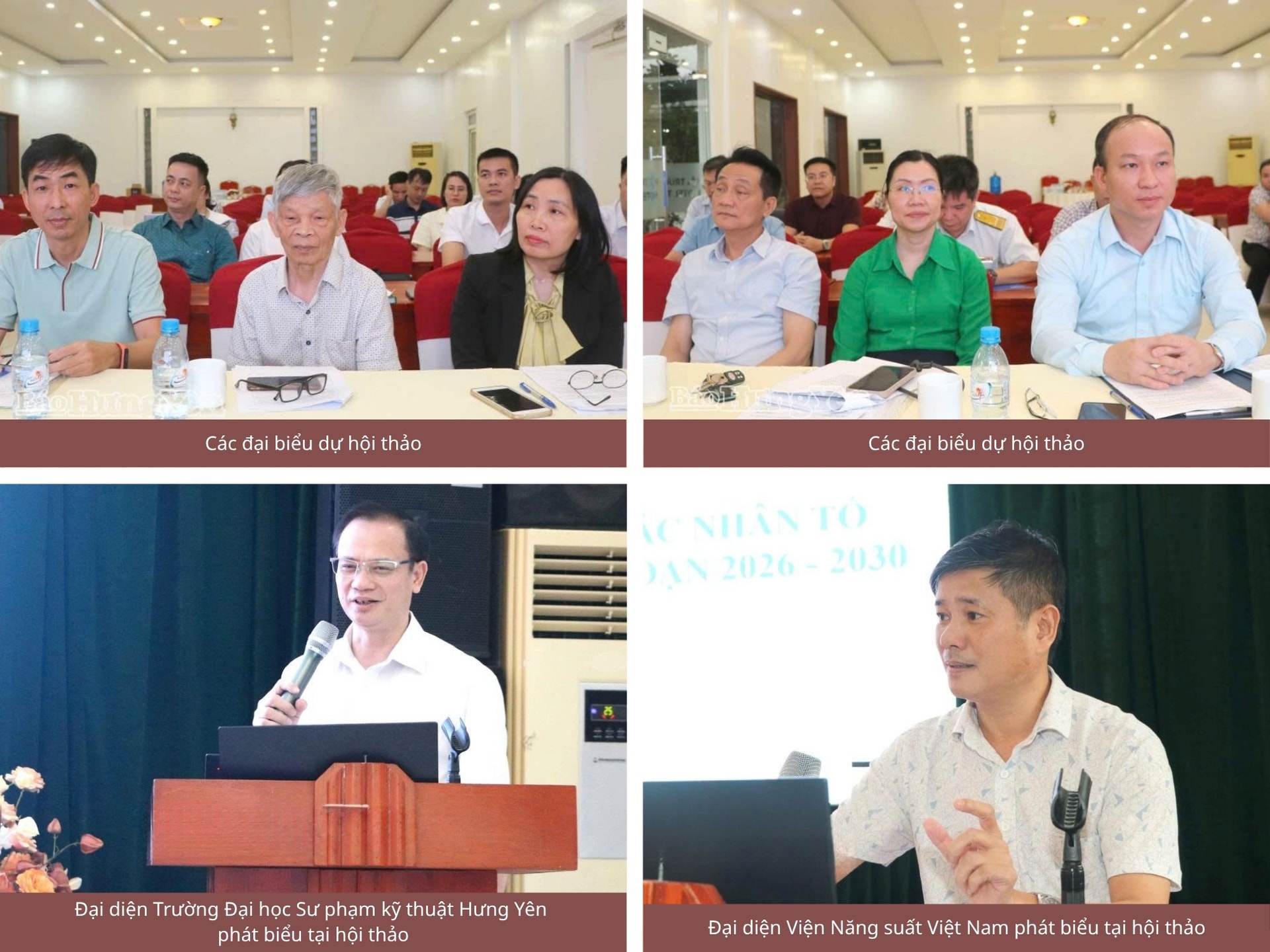
On April 23, the Department of Science and Technology organized a workshop to gather feedback and finalize the draft project “Enhancing the Total Factor Productivity (TFP) Index of Hung Yen Province for the 2026-2030 period”.
The development of the ecosystem is closely aligned with the 10-year Socio-Economic Development Strategy for 2021–2030 and Resolution No. 57-NQ/TW of the Politburo on breakthroughs in national science and technology, innovation, and digital transformation. This requires that the implementation of the project establish a legal corridor and a favorable environment for enterprises to play a central role in research and development (R&D).
Hung Yen’s aspiration: An international innovation hub by 2045
Looking ahead, the targets of GRDP exceeding VND 600 trillion and GRDP per capita surpassing VND 180 million by 2030 are entirely achievable if the innovation ecosystem operates on the right trajectory.
By 2045, Hung Yen aims to become an internationally scaled innovation hub, one of the leading localities in Southeast Asia in terms of the digital and knowledge-based economy. The province will complete the model of a “Smart City - University City - Blue Marine Economic Center”. Hung Yen is expected to make a significant contribution to Vietnam’s goal of entering the world’s top 30 countries in innovation and digital transformation.
The draft project on building Hung Yen’s innovation ecosystem for the 2026-2030 period, with a vision to 2045, is a forward-looking, era-defining master plan. In the new era, Hung Yen aspires to become a “core innovation hub” of Vietnam and the region.
Author: KIM DUNG (THANH TRA translates)
RECOMMENDED TOPICS