VN
VN
 EN
EN
26/07/2026, 02:38
Business economics
National Assembly key to shaping Vietnam’s development institutions, Party chief says
As Vietnam marks the 80th anniversary of its first general election electing the National Assembly (January 6, 1946-2026), the legislature is reaffirmed as a decisive force in shaping development institutions and driving sustainable national growth.
National Assembly plays a decisive role in shaping development-oriented institutions and guiding the country into a new era of growth, said Party General Secretary To Lam on January 6.
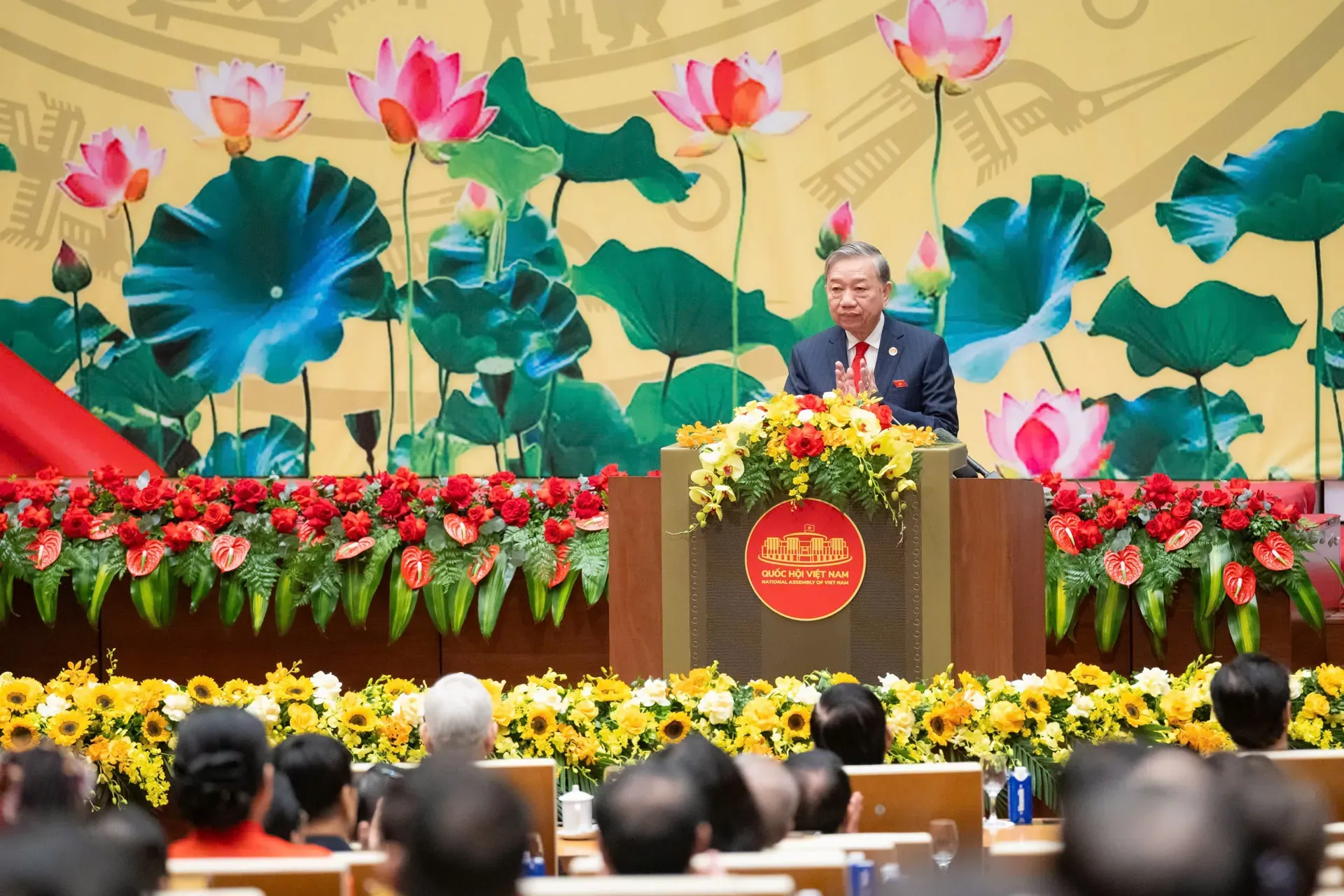
Speaking at the ceremony marking the 80th anniversary of Vietnam’s first general election that elected the National Assembly (January 6, 1946-2026), Lam said the event represented a historic milestone that marked the first major leap forward in Vietnam’s revolutionary democratic institutions and affirmed the people’s right to mastery.
The ceremony was jointly organized by the Central Committee of the Communist Party of Vietnam, the National Assembly, the President, the Government and the Vietnam Fatherland Front Central Committee at Dien Hong Hall, the National Assembly House in Hanoi.
A historic milestone of people’s sovereignty
Addressing the ceremony, the Party chief said the anniversary was not only an occasion to recall a major historical event, but also a moment to review the formation and development of Vietnam’s revolutionary democracy, pay tribute to previous generations and reaffirm the resolve to continue institutional reform for rapid and sustainable national development.
He recalled that 80 years ago, on January 6, 1946, responding to President Ho Chi Minh’s call, Vietnamese citizens aged 18 and above, regardless of gender, social background, ethnicity, religion and political views, directly cast their ballots for the first time to elect representatives to the highest organ of state power.
Despite immense challenges at the time, including a newly won independence, a fragile revolutionary government and threats from both internal and external forces, the general election was held democratically, openly and successfully, with voter turnout reaching 89 percent.
The election resulted in 333 policymakers, reflecting the spirit of great national unity and broad participation across political parties, social strata, ethnic groups and religions in all three regions of the country.
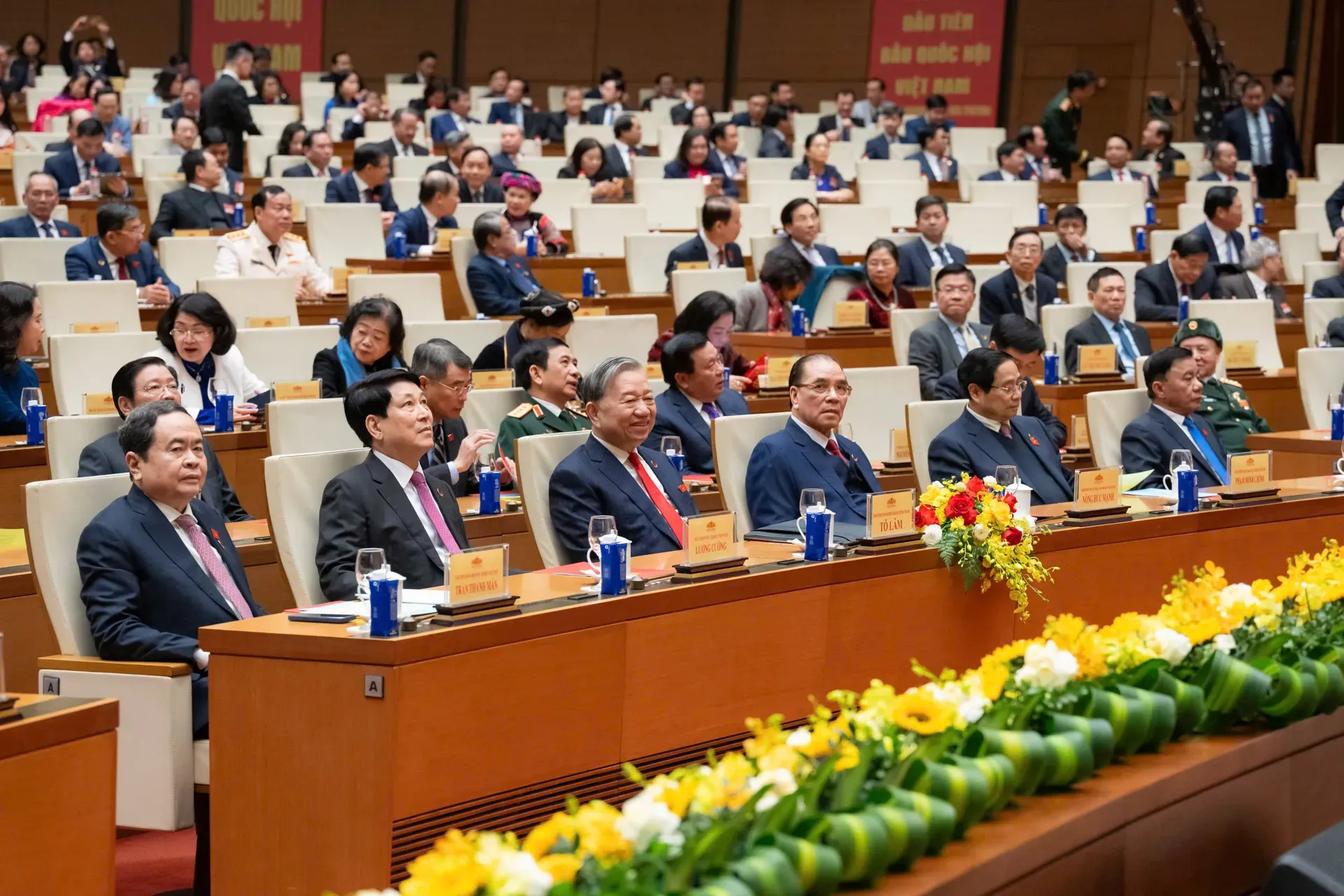
Party General Secretary To Lam and current and former leaders of the Party and the State attend the anniversary ceremony.
According to Lam, the 1946 general election was conducted under the most progressive democratic principles of the time with universal, equal, direct suffrage and secret ballot, becoming a shining milestone that affirmed the principle that state power belongs to the people.
"This demonstrates the sound and creative revolutionary path led by the Communist Party of Vietnam and President Ho Chi Minh," said Lam.
From that historic starting point, after 80 years and 15 terms, the National Assembly has continuously matured and strengthened its position as the center of the nation’s political and legal life, playing a key constitutional role in building and refining Vietnam’s socialist rule-of-law state.
In the field of constitutional and legislative work, the National Assembly has promulgated five constitutions, each associated with major turning points in Vietnam’s revolutionary process and reflecting the country’s level of development and evolving governance mindset.
“The 15th National Assembly’s adoption of a resolution amending and supplementing certain constitutional provisions marked a new step in constitutional history by institutionalizing a two-tier local government model, streamlining the administrative apparatus and enhancing the effectiveness and efficiency of national governance,” said Lam.
The Party leader emphasized that the National Assembly has increasingly demonstrated its role in leading institutional development, proactively translating the Party’s guidelines and policies into law and renewing legislative thinking toward a development-enabling approach.
“The legislature has stepped up the application of digital technologies, digital transformation, and artificial intelligence in lawmaking, helping to build a transparent, stable and coherent legal framework to support national development,” he added.
At the same time, the National Assembly’s supreme oversight activities have continued to be renewed and deepened, focusing on pressing socio-economic issues closely linked to the legitimate aspirations of the people, thereby contributing to improved discipline, accountability, and performance of the state apparatus.
In deciding major national issues, the National Assembly has shown strong political resolve, collective wisdom and a high sense of responsibility, adopting timely and sound decisions on socio-economic development, national defense, security, foreign affairs, organizational reform, and senior state personnel.
“Parliamentary diplomacy has also been expanded in a proactive and effective manner, helping to enhance Vietnam’s international standing and credibility,” said Lam.
Looking toward the goal of becoming a developed, prosperous and happy nation by 2045, Lam stressed that the National Assembly plays an especially critical role in shaping development institutions.
“Without institutional and legal breakthroughs and without a resolute, capable and responsible legislature, these strategic goals would be difficult to achieve,” he said.
He called on the National Assembly to carry forward its 80-year tradition, continue to move one step ahead in institutional reform, boldly address difficult and unprecedented issues and open pathways for innovation and sustainable national development.
The Party chief urged further efforts to build the National Assembly into a truly supreme organ of state power that is democratic, rule-of-law based, modern, professional, transparent and effective.
“We need to renew legislative thinking toward guiding development, improve national governance quality, enhance data-driven decision-making and deepen parliamentary diplomacy,” said Lam.
Ahead of preparations for the 16th National Assembly elections, Lam expressed his expectation that deputies would continue to embody intellectual capacity, political courage, ethical integrity and a spirit of service to the nation and the people, placing national interests above all else.
Responding to the Party chief’s remarks, National Assembly Chairman Tran Thanh Man affirmed that the strategic guidance and expectations articulated by General Secretary To Lam would serve as a long-term compass for the legislature’s activities, reinforcing confidence in the Party’s leadership and the development path chosen by Vietnam.
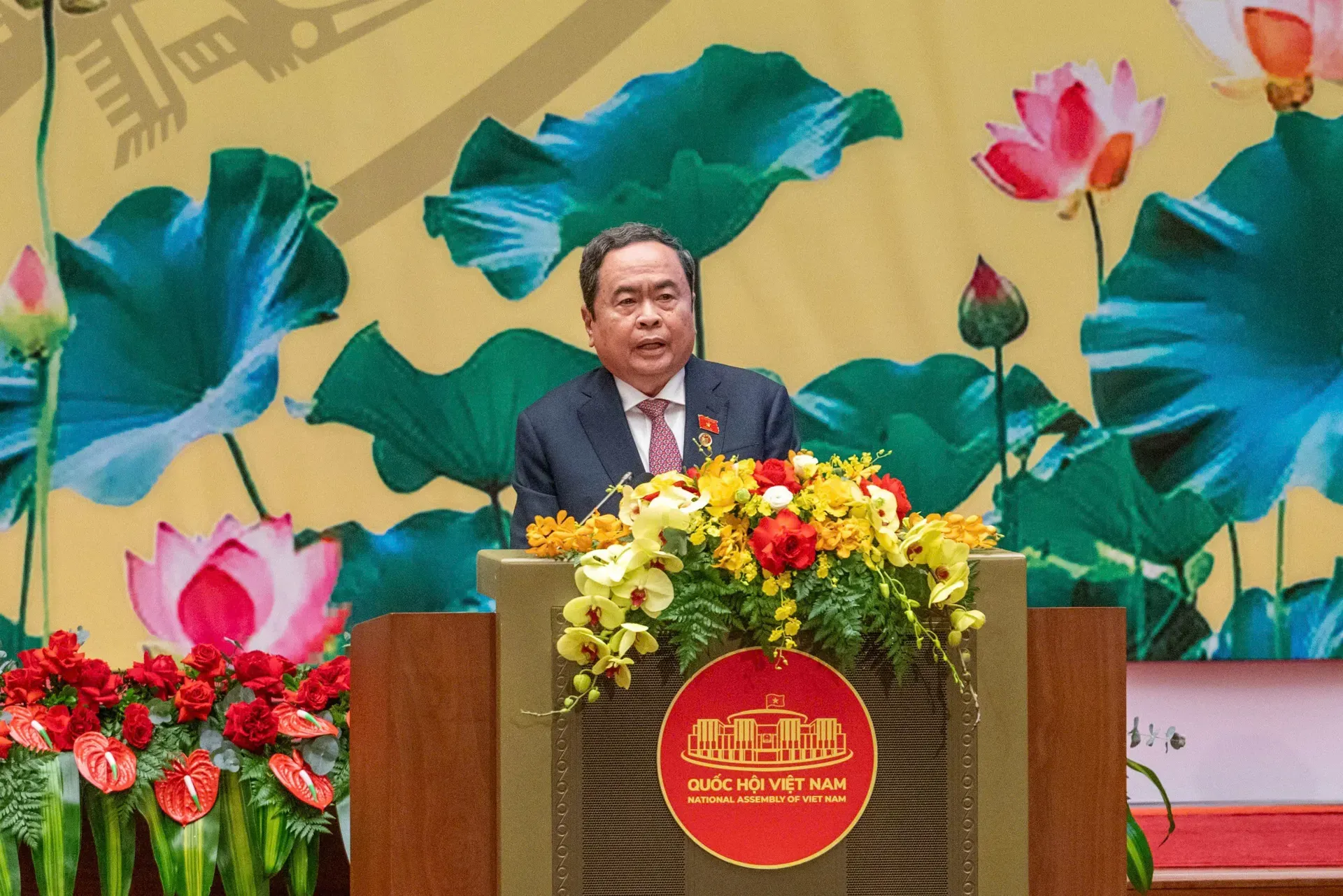
National Assembly Chairman Tran Thanh Man.
National Assembly Chairman Tran Thanh Man, responding to the guidance of Party General Secretary To Lam, said that the strategic guidance and expectations articulated by the Party chief would serve as a long-term compass for the legislature’s activities, reinforcing confidence in the Party’s leadership and the development path chosen by Vietnam.
He cited key speeches delivered at the anniversary ceremony, the opening of the 8th session of the 15th National Assembly, the first Congress of the National Assembly Party Committee for the 2025-2030 term, meetings marking the 80th anniversary of the nation’s founding and the national conference on preparations for the 16th National Assembly and People’s Council elections for the 2026-2031 term.
Man added that the ceremony reaffirmed the confidence of the National Assembly, voters and the public in the leadership of the Communist Party of Vietnam, expressing their determination to the path chosen by the Party, President Ho Chi Minh and the Vietnamese people.
“The National Assembly bodies and deputies would build on the traditions and achievements of previous generations, continue to renew working methods and improve quality, effectiveness, and efficiency to meet the demands of rapid and sustainable national development in the new stage,” said Man.
Author: Hanoitimes
RECOMMENDED TOPICS