VN
VN
 EN
EN
10/07/2026, 02:38
Business economics
Navigating Vietnam’s evolving investment landscape
Vietnam’s investment landscape is entering a pivotal stage. The market is transitioning from retail-driven trading and product-led selling towards a more institutional, advisory-led environment.
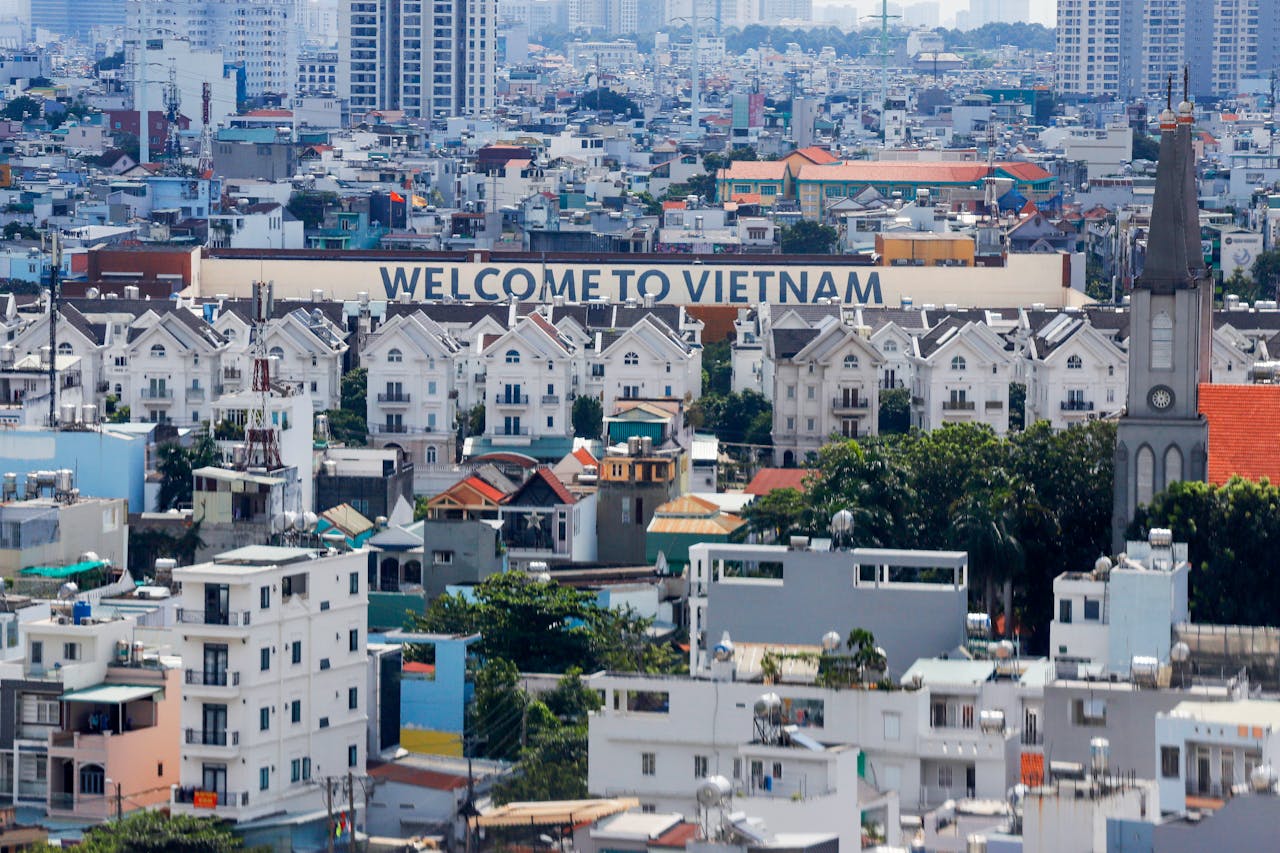
Vietnam’s investment landscape is entering a pivotal stage.
In Vietnamese culture, the Year of the Horse symbolises relentless momentum and sudden breakthroughs. It’s a fitting metaphor for Vietnam’s latest milestone: officially crossing the threshold into an upper-middle-income nation. This achievement isn’t just reflected in World Bank classifications – it’s visible in the skylines of Vietnam’s major cities and in the confidence of a country that is no longer simply “emerging”. It has arrived.
Behind the glass facades and fast-growing urban centres, a new generation of wealth is being created. Strong economic fundamentals, consistent foreign direct investment (FDI), supportive government policies and a rising middle class are combining to reshape Vietnam’s economic story. The question now is not whether Vietnam will continue to grow, but whether its investment market will evolve quickly enough to support the ambitions of its people – and to do so sustainably.
Vietnam’s investment landscape is entering a pivotal stage. The market is transitioning from retail-driven trading and product-led selling towards a more institutional, advisory-led environment. At the same time, regulators and market participants are laying groundwork for deeper financial markets and broader global engagement. In other words, as the “Horse” gallops forward, the ecosystem is being built not just to keep pace, but to lead the charge. From a global bank’s perspective, this is one of the most exciting transitions to be part of.
A market moving into the global spotlight
Vietnam is increasingly a core pillar of the intra-Asia growth story, combining robust economic momentum, a young population and rising foreign investment. The recent FTSE Russell reclassification of Vietnam to Secondary Emerging market status – effective 21 September 2026, with an interim review in March – will likely increase global investor attention, potentially support attracting larger international capital inflows.
The fundamentals are already compelling. In 2025, Vietnam recorded 8.02% GDP growth and attracted US$38.42 billion in FDI, reinforcing its position on the global investment map. Wealth is being generated at a pace rarely seen, with the wealth level of Vietnamese people forecast to increase 125% by 2034. This is not just growth – it is acceleration, and it is changing the expectations of investors.
From local success to global ambition
This momentum is reshaping investor behaviour, particularly among high-net-worth (HNW) individuals. Many are developing global aspirations and seeking diversification, professional portfolio oversight and access to solutions beyond the traditional mix of real estate, gold and direct equity trading.
Modern Vietnamese HNW individuals have evolved from local entrepreneurs into increasingly sophisticated global actors, with rapidly changing family goals. Their investment philosophy is maturing. The traditional reliance on real estate speculation is giving way to a desire for more direct engagement with the core pillars of Vietnam’s growth – especially technology, consumer markets and green infrastructure. This interest is supported by Vietnam’s strong macroeconomic outlook and reinforced by the FTSE Russell reclassification, which signals a market moving closer to global standards.
Equally important is the growing trend towards global diversification, which may be the most significant shift in today’s landscape. Having built substantial wealth within Vietnam, many clients are now focused on expanding internationally. This is where international connectivity becomes more than a slogan – it becomes a practical need. Investors are looking for support across overseas property acquisitions, international education planning and the management of globally diversified portfolios. The ability to connect these needs into one coherent plan is becoming a defining feature of modern wealth management.
The risk no one sees: emotion
Yet rapid growth does not eliminate volatility. In many cases, it amplifies its impact.
Market volatility is inevitable, and in a first-generation wealth market, its psychological effects can be profound. This is the central, unseen risk in Vietnam’s new wealth story. Many investment decisions are made emotionally in response to market events and only later justified with rational explanations. For investors navigating their first major drawdowns or corrections, limited experience with market cycles – and limited exposure to diversification – can lead to reactive, short-term behaviour.
In this context, the greatest danger to new wealth is not necessarily a market crash. It is the emotional reaction to one.
This reality also exposes a structural issue: a traditional, product-led model is no longer fit for purpose. When markets are rising, product selling can look like progress. When markets turn, it often leaves investors without the discipline, framework and guidance needed to stay aligned to long-term goals.
A shift towards advice-led wealth management
Recognising and managing emotional risk is now as important as portfolio construction. This is why raising financial literacy is becoming central to the next phase of Vietnam’s wealth journey – helping investors understand risk-adjusted returns, rebalancing, and the role of asset allocation.
Vietnam’s wealth management market needs a profound transformation to match customers’ evolving expectations and emotional transitions. Investors are no longer simply asking, “What can I buy?” They are increasingly asking, “How do I build something that lasts?”
Central to this transformation is the rise of Discretionary Portfolio Management (DPM). DPM replaces impulsive, transactional “buy-and-sell” habits with professional discipline. By entrusting day-to-day decision-making to skilled experts, investors can move away from the noise of market cycles and towards a relationship-driven model focused on strategic rebalancing and long-term averaging.
This shift changes the conversation in a meaningful way – from the short-term anxiety of “What did you buy me today?” to the steadier, more relevant question: “Are we on track for my medium- and long-term plan?” It places life goals at the centre of the financial engine, where they belong.
Relationship managers as architects, not salespeople
This evolution is also redefining the role of the relationship manager (RM). The RM can no longer be a transactional salesperson. They must become the lead architect of a customer’s aspirations and goals blueprint.
For example, at HSBC, we consider our RMs the human connection point to our global ecosystem. Their role is to connect a customer’s business banking needs, their child’s overseas education account in London, and their long-term investment portfolio into one seamless plan. The aim is to truly understand customers, their families, their ambitions and the outcomes they want to achieve – rather than simply discussing products and services.
With more than 60% of our affluent customers being internationally minded, our mission is to make increasingly complex global ambitions simpler and more achievable.
Fit for Vietnam’s next stage of growth
Vietnam has already proven it is a core component of the global economy, fuelled by undeniable wealth creation across the country. As the market matures, sophisticated customers are demanding top-tier solutions. Meeting this need requires a combination of trust, a seamless digital interface and international connectivity – supported by a curated open-architecture strategy.
This approach has been refined in established financial hubs such as Hong Kong, Singapore and the UAE, and it is increasingly relevant for Vietnam’s evolving landscape. As a global bank, HSBC leverages international best practices and rigorous risk management to support this growth. Our focus is on providing the platform, professional expertise and disciplined frameworks needed to ensure that the wealth being built in Vietnam today is not just a series of short-term gains.
The opportunity in Vietnam is clear: a fast-growing economy, a rising investor class and a market moving steadily towards global integration. The responsibility is equally clear: to help investors navigate volatility, manage behavioural risk and build resilient portfolios aligned to long-term goals.
Vietnam’s “Horse” is moving quickly. The next chapter will be defined not only by how fast wealth is created, but by how well it is managed – and whether today’s success can be transformed into a legacy that is truly trans-generational.
Author: Manpreet Singh, Head of Customers Propositions and Marketing, HSBC Vietnam
RECOMMENDED TOPICS