VN
VN
 EN
EN
26/07/2026, 02:38
Business economics
Proactive scenarios help respond to agricultural export risks
In the first two months of 2026, exports of agricultural, forestry, and fishery products reached 11.3 billion USD, up 17.1% compared with the same period in 2025. However, amid geopolitical fluctuations around the world, particularly the conflict in the Middle East, the Ministry of Agriculture and Environment has developed response scenarios to limit risks and maintain the sector’s growth momentum.
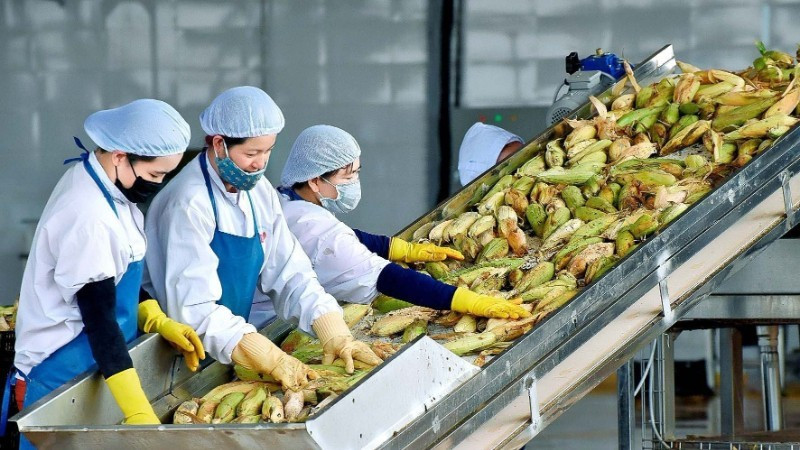
Exports of agricultural, forestry and fishery products continue to grow
According to Tran Gia Long, Deputy Director of the Planning and Finance Department, export turnover of agricultural, forestry and fishery products in February 2026 was estimated at 4.71 billion USD, down 28.4% compared with the previous month but up 1.9% compared with the same period in 2025. Overall, in the first two months of 2026, total export turnover reached 11.3 billion USD, up 17.1% year on year.
Asia continued to be the largest import market for Viet Nam’s agricultural, forestry and fishery products, accounting for 45.5% of the market share; followed by the Americas and Europe with shares of 21% and 15.7%, respectively. In terms of individual markets, China, the US, and Japan were Viet Nam’s three largest partners, with respective market shares of 22.9%, 18.7%, and 7.2%. Compared with the same period last year, exports to China increased by 55.9%, to the US by 9.2%, and to Japan by 9.8%.
Several key commodities continued to maintain positive results. Coffee exports reached 394.3 thousand tonnes, valued at 1.89 billion USD, up 22.9% in volume, with major consumption markets including Germany, Spain, and Italy. Rubber exports reached 315 thousand tonnes, valued at 564.6 million USD, up 14.3% in volume, of which China accounted for more than 73% of total export value.
Tea exports reached 22.4 thousand tonnes with a value of 38.6 million USD, rising strongly in both volume and value; major markets included Taiwan (China), Pakistan, and China. Rice exports reached 1.3 million tonnes with a value of 599.3 million USD, up 5% in volume but down 11.2% in value due to a decline in the average export price.
Fruit and vegetable exports recorded strong growth, reaching 1.09 billion USD, up 59.5% year on year, of which China continued to be the largest market, accounting for more than 58% of the total value. Cashew nut exports reached 653.4 million USD, up more than 43%; and pepper exports reached 259.1 million USD, up 40.7%. Cassava and cassava products reached 303 million USD, up nearly 30%.
In the fisheries sector, export turnover reached 1.76 billion USD, up 23.3%, with major markets including China, Japan, and the US. Exports of wood and wood products reached 2.61 billion USD, up 5.8%, of which the US continued to be the largest market, accounting for more than 50% of total export value.
Proactive response scenarios to market fluctuations
However, amid recent developments in the global market, particularly the conflict in the Middle East, Viet Nam’s agricultural production and export activities may face certain impacts. The Government and the Prime Minister have instructed ministries and sectors to closely monitor the situation and comprehensively assess the impacts in order to proactively develop response measures.
According to preliminary assessments, fluctuations in global oil prices may increase input costs for agricultural production. Energy, transport, and production material prices tend to rise, particularly urea fertiliser prices which are currently fluctuating at around 540–545 USD per tonne, the highest level since 2025, causing agricultural production costs to increase by about 3%–5%.
Logistics costs may also increase as sea freight rates are forecast to rise by 25%–35%, while transport time may be extended by 7–14 days due to changes in shipping routes to avoid conflict areas. These factors may affect the competitiveness of several key export products such as wood, fisheries products, and processed agricultural products.
In addition, geopolitical conflicts may indirectly affect market demand as global economic growth slows, reducing demand for agricultural imports.
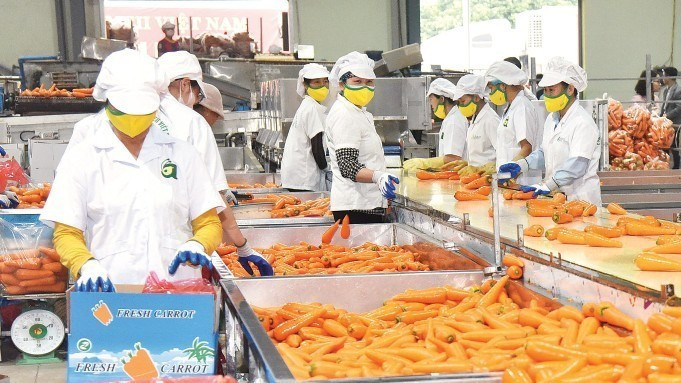
According to data for 2025, Viet Nam’s exports of agricultural, forestry and fishery products to the Middle East reached about 1.74 billion USD. Therefore, developing response scenarios is necessary. If the conflict lasts for about one month, export turnover could decrease by around 1 billion USD; if it lasts for three months, the decline could reach 3 billion USD–3.5 billion USD. Specifically, exports to the Middle East could decrease by about 500 million USD–600 million USD, exports to Europe could decline by around 1.5 billion USD–1.6 billion USD, and exports to North Africa could fall by around 200 million USD–250 million USD.
These scenarios are continuing to be studied and assessed by the Ministry of Agriculture and Environment in order to advise the Government and the Prime Minister on appropriate policy responses, including restructuring export markets and supporting enterprises in coping with global market fluctuations.
According to Deputy Minister of Agriculture and Environment Phung Duc Tien, 2026 is forecast to face more challenges than the previous year, with geopolitical fluctuations potentially affecting petrol prices, fertilisers, and many types of input materials for agricultural production.
In that context, the ministry has developed a system of solutions to proactively respond to market fluctuations while continuing to promote agricultural restructuring, diversify export markets; improve institutions, promote digital transformation, and strengthen quality control of agricultural products, food safety, and veterinary hygiene.
At the same time, response scenarios for natural disasters and epidemics, ensuring the safety of reservoirs, irrigation works, and forest fire prevention and fighting are being implemented to ensure stable production.
The agriculture sector has set a target for agricultural, forestry, and fishery export turnover in 2026 to reach about 73 billion USD–74 billion USD, while overall sector growth is expected to reach about 3.5%, with the first quarter projected to reach about 3.6%. According to leaders of the Ministry of Agriculture and Environment, the synchronous implementation of solutions in institutions, science and technology, digital transformation, and market expansion will help maintain the sector’s growth momentum and create a foundation for sustainable development in the coming period.
Author: NDO
RECOMMENDED TOPICS