VN
VN
 EN
EN
20/07/2026, 14:32
Legal environment
Room for targeted fiscal stimulus expands
Vietnam’s fiscal position has strengthened notably since the start of the year, with budget revenues significantly outpacing expenditures.
This widening surplus is creating policy space for targeted fiscal stimulus, which could be deployed alongside monetary measures to stabilize interest rates and support economic activity, according to Brian Lee Shun Rong and Chua Hak Bin, economists at Maybank Group.
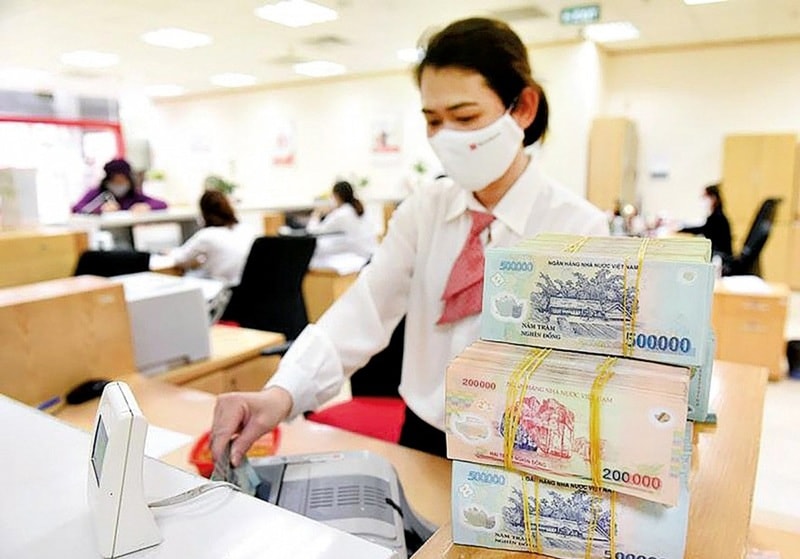
First-quarter 2026 data point to a solid recovery trajectory, with GDP growth reaching 7.83%. Against this backdrop, the government is expected to continue advancing fiscal support measures aimed at households and businesses. The services sector has led the rebound, particularly in information and communications, professional and scientific activities, education, healthcare, and wholesale and retail trade.
Caution Amid Emerging Risks
Despite the positive momentum, several macroeconomic risks are becoming more pronounced. Headline inflation, as measured by CPI, surged to a three-year high of 4.7% in March, driven primarily by a sharp increase in fuel prices, partially offset by softer food inflation.
External trade dynamics also signal underlying imbalances. Export growth remained robust at 20% in March, supported by electronics, but was outpaced by a 27.8% rise in imports, marking the fourth consecutive monthly trade deficit. Industrial production growth slowed to 6.9%, suggesting a degree of caution among manufacturers.
The manufacturing Purchasing Managers’ Index (PMI) highlighted further pressures, with input costs and output prices rising at their fastest pace in nearly 15 years. This reflects elevated transportation and raw material costs, while new export orders declined—an early signal of softening external demand.
Domestically, retail sales growth accelerated to 12% in March, buoyed by higher fuel sales and a recovery in hospitality revenues. However, international tourist arrivals slowed sharply to 1.3% growth, down from 18% in the first two months of the year, though a rebound remains plausible.
Supply-side disruptions are emerging as a key concern. Tightening availability of fuel and raw materials poses risks to manufacturing sectors, particularly plastics and components, with potential spillovers into exports. Elevated shipping costs and constrained fuel supply are adding further strain to supply chains. Businesses may delay investment decisions amid uncertainty surrounding supply security and the anticipated U.S. Section 301 decision in July.
The transport sector has already been impacted by reduced flight capacity, while rising fertilizer and construction material costs could exert lagged effects on agriculture and construction.
Fiscal Expansion Likely to Intensify
In this context, exchange rate pressures have contributed to rising interest rates, potentially dampening credit demand. Credit growth since end-December stood at 2.15% as of March 24 (compared to 2.3% a year earlier), while deposit growth slowed to 0.4% (from 1.2% a year earlier), reflecting tightening financial conditions.
Household consumption is likely to weaken as inflation rises and economic uncertainty persists, compounded by structural shifts such as partial remote working arrangements.
Against this backdrop, the government is expected to step up targeted fiscal interventions to support both households and businesses. Notably, authorities continue to maintain an ambitious double-digit GDP growth target, supported by substantial fiscal headroom.
To date, policy measures have focused primarily on stabilizing fuel prices. These include tax reductions—such as the removal of fuel import duties, environmental protection taxes, and petrochemical input taxes—alongside the use of the fuel price stabilization fund and demand-side measures, including encouragement of remote work, public transport usage, and potential flight reductions.
According to the General Statistics Office, state budget revenues have exceeded projections, reaching 32.8% of the annual target, with a year-on-year increase of 11.4% in the first quarter of 2026. In March alone, total revenues of VND 219.3 trillion surpassed expenditures of VND 207.5 trillion, despite the initial rollout of support measures.
Cumulatively, year-to-date revenues reached VND 829.4 trillion (approximately USD 31.5 billion), exceeding total expenditures of VND 530.1 trillion (USD 20.1 billion, up 23.1% year-on-year). This fiscal surplus provides a clear buffer for further stimulus deployment.
Monetary policy is expected to remain broadly accommodative. The State Bank of Vietnam has signaled its intention to maintain a “flexible and supportive” stance throughout 2026, focusing on ensuring liquidity and stabilizing borrowing costs to sustain economic growth.
Author: TRUONG DANG
RELATED TOPICS
RECOMMENDED TOPICS