VN
VN
 EN
EN
10/07/2026, 15:29
Culture- travel
Vietnam Poised to Host World Cup with World-Class Sports Complexes
Vietnamese sports are entering a new phase of development, closely linking competitive achievements with long-term strategic investment in infrastructure. Alongside the growing maturity of national teams, the development of large-scale sports complexes lays the essential groundwork for Vietnam to move closer to hosting world-class events such as the World Cup or the Olympics.
Global-standard sports infrastructure vision
A notable shift in Vietnam’s sports strategy in recent years has been the creation of multifunctional complexes where sports, culture, and community life are seamlessly integrated. These complexes are not only venues for competition but also hubs for training, performances, sports medicine, and large-scale social and cultural activities.
The groundbreaking of the Rach Chiec National Sports Complex on January 15 in Ho Chi Minh City, after over 30 years in planning, is a clear demonstration of this vision. Designed as a modern sports and cultural hub, Rach Chiec serves as a cornerstone for elite sports development in the South, while creating a new urban growth pole for Ho Chi Minh City. Developed by Sun Group under a PPP model, the project exemplifies the practical implementation of Resolution 68, where private enterprises are empowered to collaborate with the state in building infrastructure, services, and new public spaces.
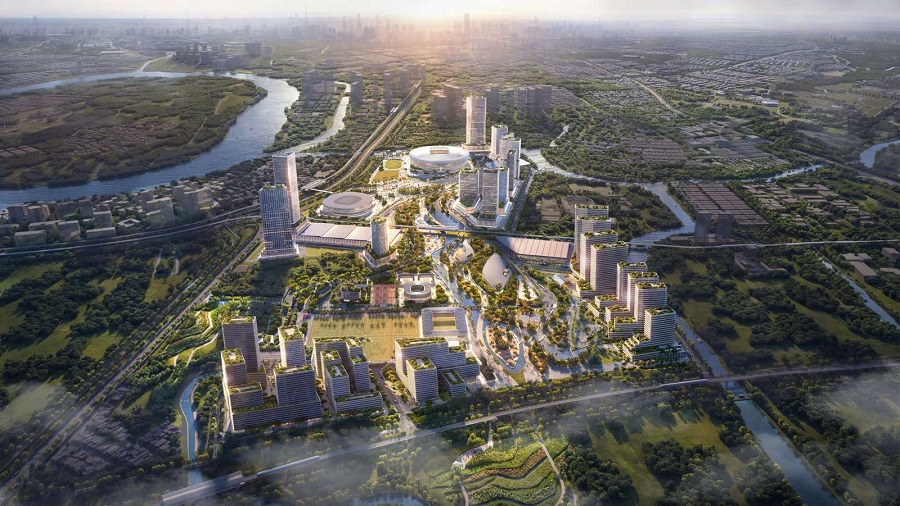
Overview of the newly inaugurated Rach Chiec National Sports Complex in Ho Chi Minh City
The centerpiece of the project is a 70,000-seat stadium with a modern retractable roof and integrated climate control system, capable of hosting competitions and performances in any weather. This feature is key to attracting major tournaments, international-scale events, and world-class artists-standards essential for nations aiming to host the World Cup or the Olympics.
Across Vietnam, this approach is being deployed systematically. From Hanoi’s Olympic-scale sports city and the 135,000-seat Trong Dong Stadium, to the PVF multi-purpose stadium in Hung Yen with 60,000 seats, and Rach Chiec in Ho Chi Minh City with an investment of VND 145,000 billion-Vietnam is progressively building the “infrastructure backbone” to enter the global sports stage.
Sports and cultural spaces for the public, driving urban growth
Modern sports complexes serve not only elite competitions but also play a broader social role. Designed with parks, pedestrian boulevards, plazas, and open cultural spaces, these complexes become daily activity hubs for thousands of citizens, promoting healthy lifestyles and improving the physical wellbeing of the population.
Architect Khuong Van Muoi, former Vice President of the Vietnam Architects Association, commented: “Worldwide, there are many large, modern stadiums in Dubai, Abu Dhabi, and Oman. I am delighted that the city now possesses a facility of comparable scale like Rach Chiec. It will become a destination for visitors while serving the citizens of Ho Chi Minh City and Southern Vietnam.”
In Ho Chi Minh City, the Rach Chiec National Sports Complex is expected not only to be a premier sports hub but also a new cultural growth pole, hosting performances, festivals, and large-scale sports-entertainment events. This approach aligns with Resolution 80-NQ/TW, positioning culture as the “spiritual foundation of society” and an endogenous driver of sustainable development.
Experience worldwide shows that major cities increasingly view sports-cultural complexes as engines of growth. Hosting frequent international tournaments and large-scale performances not only generates direct revenue from tourism and services but also enhances the city’s global image as dynamic, creative, and attractive.
_1.jpg)
Will Rach Chiec turn the World Cup dream into a reality?
Against this backdrop, the recent successes of Vietnamese sports, including U23 Vietnam’s victories over strong regional opponents like U23 UAE and achievements at SEA Games 33, reflect that human capital development is progressing alongside infrastructure investment. With athletes trained in Olympic-standard facilities and citizens accessing modern sports-cultural spaces, Vietnam is building a solid foundation to raise both performance quality and international standing.
In the long term, investing in world-class sports complexes aims not only at hosting events but also reflects the vision of the Party and State, treating sports and culture as drivers of national development. The participation of major private enterprises in realizing multi-billion-dollar projects is a critical factor ensuring this strategy comes to life.
While the World Cup or Olympics may not arrive immediately, Vietnam’s developing network of sports-cultural complexes across the country is laying a firm groundwork for demonstrating organizational capacity, national prestige, and confidence in a new era of domestic sports development.
Author: DUONG NAM HOANG
RECOMMENDED TOPICS