VN
VN
 EN
EN
06/07/2026, 02:00
Business economics
Vietnam’s breakthroughs
Vietnam has made tremendous progress, establishing itself as one of the world's most dynamic and open economies.
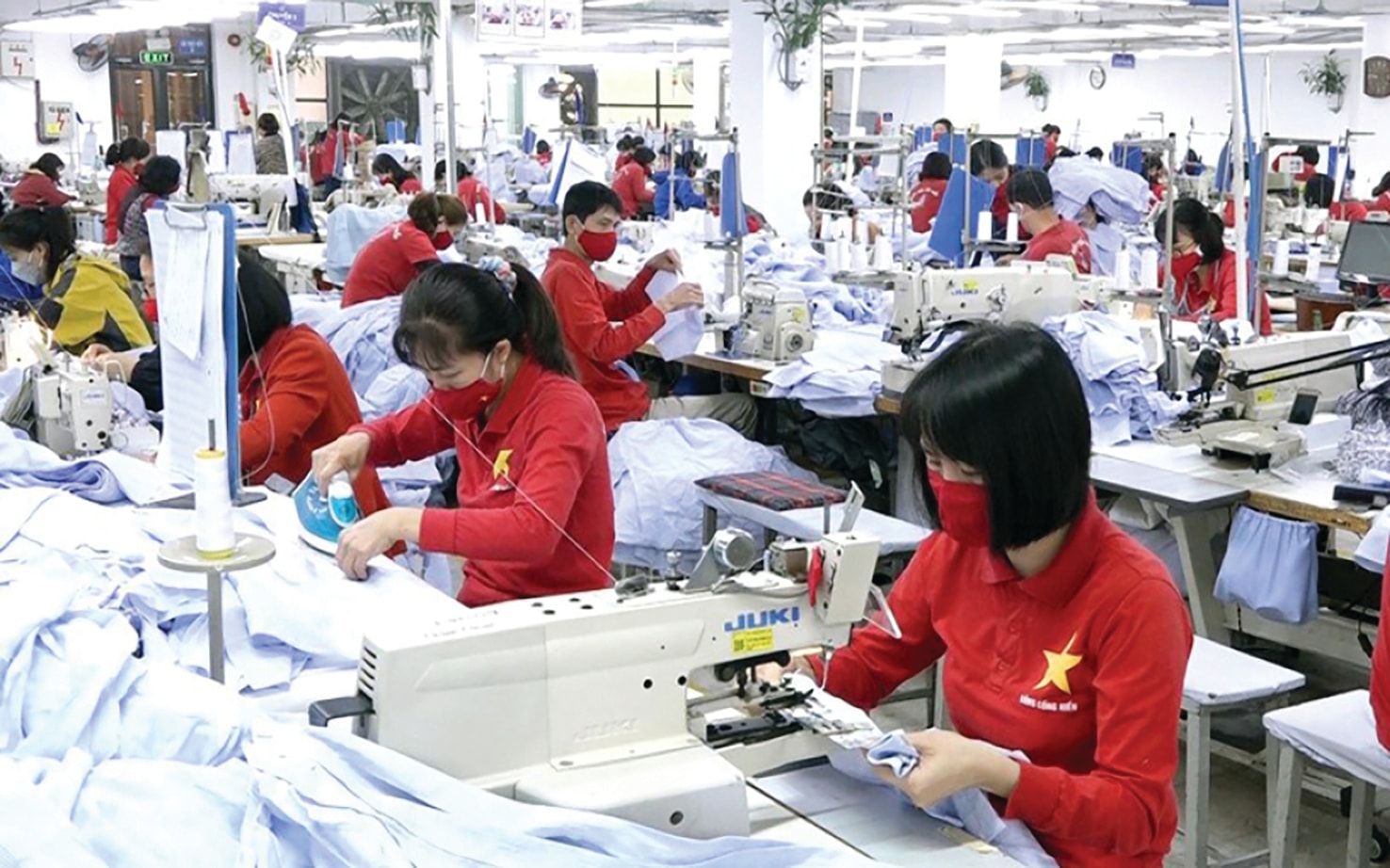
Vietnamese businesses have become an irreplaceable link in the global value chain.
Looking back to 1975, Vietnam's economy was extremely small, with a GDP of less than US$22 billion and inflation reaching 775% at times.
However, according to General Statistics Office figures, Vietnam's GDP will have reached around US$514 billion by the end of 2025, putting the country in the top 35 largest economies in the world. Furthermore, forecasts from the World Bank (WB) and international financial institutions such as UOB for the second quarter of 2026 indicated that, despite global financial market fluctuations and supply chain disruptions caused by Middle Eastern conflicts, the Vietnamese economy would continue to grow at impressive rates of 6.3% to over 7%.
In truth, the change in economic structure is the core of this revolution. Dr Vo Tri Thanh, an economist, notes that during the last 50 years, Vietnam has transitioned from a centrally planned economy to a socialist-oriented market economy. It is no longer recognised for exporting rice or crude oil but rather as an important link in the worldwide semiconductor and electronics value chain.
Furthermore, the presence of multibillion-dollar foreign direct investment (FDI) projects in green energy and chip manufacturing in Northern and Southern Vietnam's growth poles is changing the country's industrial landscape, contributing to economic diversification and sustainability efforts that are crucial for maintaining competitive advantage in the global market. Carlos Felipe Jaramillo, Vice President of the World Bank for East Asia and the Pacific, emphasised in his April 2026 report that Vietnam's resilience originates from properly exploiting the prospects of the digital age to enhance productivity and create long-term jobs.
However, experts contend that previous achievement does not ensure future success. The potential of a growth model based on low-cost capital and labour is steadily diminishing. Le Duy Binh, Director of Economica Vietnam, said: "Macroeconomic and political stability and the confidence of domestic consumers, as well as investors and international markets, in the Vietnamese economy and businesses are important foundations for us to believe in better growth prospects." Nonetheless, he emphasised that the main difficulty for the 2026-2030 period is not the growth rates, but rather the basis for growth and the economy's inherent capability.
Dr Nguyen Si Dung, who shares this viewpoint, says that the country's organisational structure and governance philosophy in the modern environment are now the most significant obstacles. The move from a labour-intensive growth model to a knowledge-based economy necessitates even greater progress in administrative reform and the development of high-quality human resources, as these elements are crucial for enhancing productivity and competitiveness in the global market.
However, more than a half-century after reunification of the country, Vietnam is confidently pursuing new chances. GDP growth estimates and estimated export-import turnover of more than US$800 billion this year are just markers on the racecourse. The ultimate objective of reform is the prosperity of all citizens, as well as the country's worldwide status.
With resilience built during the most difficult circumstances, we have every reason to trust in a brighter new era in Vietnam's rise.
Author: NGOC ANH
RECOMMENDED TOPICS