VN
VN
 EN
EN
21/07/2026, 10:30
Investment
What outlook for BCM?
Following the temporary postponement of the capital offering due to the US tariffs, Investment And Industrial Development Corporation (Becamex IDC, HoSE: BCM) has retained its position as Vietnam's biggest industrial park developer.
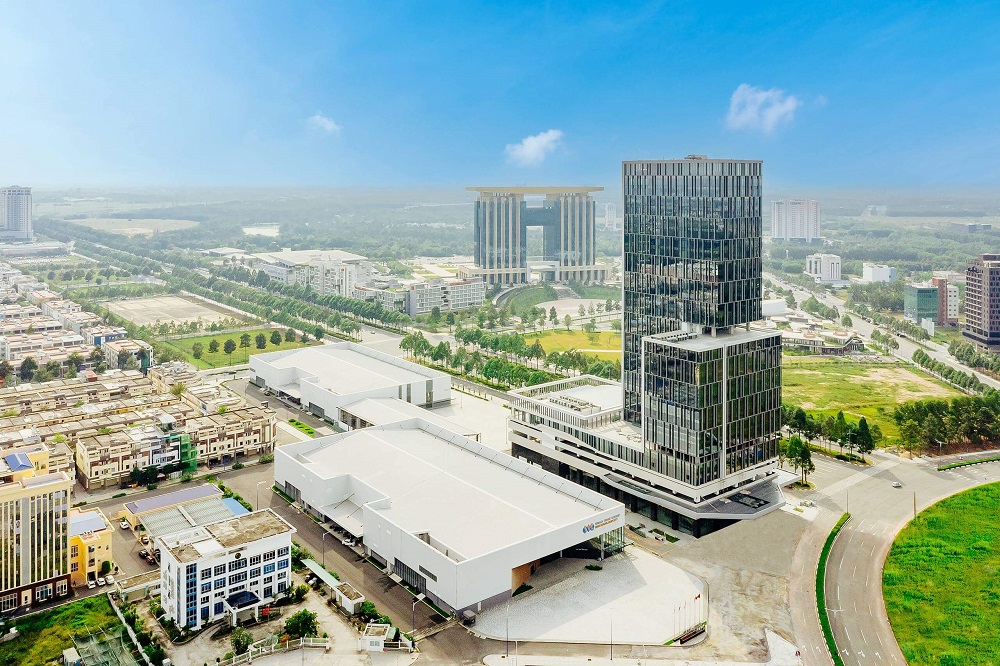
BCM aims to increase land transfers for the Binh Duong New City project in the second half of 2025.
BCM is a big corporation in Ho Chi Minh City, holding seven industrial parks totalling over 4,700 hectares that are now operational. As of the end of 2024, this contains 1,200 hectares of commercial urban property and 950 hectares of commercial industrial land. After Binh Duong merged with Ho Chi Minh City, BCM is still regarded as a top real estate business in Ho Chi Minh City, with ample land availability and the benefit of an open economic climate.
Sustaining business growth
In terms of total assets, BCM is one of the top corporations on the Vietnam stock market. After postponing the offering of 300 million shares, which was scheduled to raise more than VND 20.8 trillion in April due to US President Donald Trump's declaration of heavy tariffs, BCM took sound business measures to assure its success.
BCM's financial statement for the second quarter of 2025 indicated that net revenue and net profit increased by 116% and 272%, respectively, compared to the same time the previous year. This growth was fuelled by industrial park land lease and transfer, as well as a considerable increase in earnings from joint ventures, notably VSIPs. BCM leased 45.74 hectares of land to BW Bau Bang, and land transfer earnings from the Binh Duong New City and Bau Bang Extended Residential Area projects totalled VND 804 billion. This favourable outcome increased BCM's profit in the first half of 2025 to 73% of the full-year 2025 forecast, giving the company impetus to continue growing in the second half of 2025.
Notable plans
BCM aims to increase land transfers for the Binh Duong New City project in the second half of 2025. As a result, BCM is undertaking a strategy to transfer 20 hectares of residential real estate land to secondary developers. According to SSI, this plan will be supported by rapid construction progress and infrastructure upgrades after this area is merged into Ho Chi Minh City, and based on signed memorandums of understanding, BCM's residential real estate segment is expected to generate VND 3.7 trillion, up 17%, and VND 1.2 trillion, up 18% year on year, respectively.
Furthermore, the components from industrial park real estate and joint ventures will fulfil BCM's revenue and after-tax profit estimates for the full year 2025, reaching 6.8 trillion VND, a 30% rise, and 2.7 trillion VND, an 18% increase over the same period last year, respectively.
In the long run, VCBS believes that BCM may still be impacted by a drop in short-term investment demand as a result of US tariffs. However, BCM's industrial parks have occupancy rates of up to 80%. As a result, establishing additional industrial zones will take time, just as investors must adjust to the new US tariff policy.
According to VCBS, BCM's financial leverage ratio remains high in comparison to its rivals, owing principally to the company's simultaneous implementation of many large-scale projects within the industrial park-urban ecosystem. Analysts at VCBS believe the proposal to offer an additional 150 million shares to generate at least VND 7.5 trillion would be implemented if BCM shares recover following the US tariff release. In the case of a successful offering, BCM will greatly ease financial strain, particularly with debts due this year (about VND 2.489 billion). This issue will also help to improve BCM's financial structure and fundraising efforts for critical projects over the 2025-2026 term.
BCM and the Institute for Economic Development Research in Ho Chi Minh City recently completed research and suggested a high-speed train that would connect the city's heart to Cai Mep, Bau Bang, and Can Tho. The objective is to create a green logistics axis in Southern Vietnam that will connect Ho Chi Minh City to satellite provinces, serving as the backbone of green transport in the region and a "golden premise" for the North-South high-speed train.
Assuming BCM is truly selected to participate in these big infrastructure projects, this is not only a potential for the firm to raise its position as a unique "chaebol" in this sector but also a "boost" for Transit-Orientated Development (TOD).
Of course, BCM will need enormous resources for these major projects. BCM's public offering may return, and/or the firm will make relevant financing offers. Notably, in early August, a domestic credit rating agency assigned BCM a long-term issuer credit grade of A. This rating is viewed as BCM's preparation for its upcoming capital offering.
Author: Thanh Liem
RECOMMENDED TOPICS