VN
VN
 EN
EN
26/07/2026, 02:00
Investment
A nationwide wave of social housing groundbreakings
On December 19, a series of social housing projects across multiple provinces and cities will simultaneously break ground, delivering a significant boost toward Viet Nam’s goal of developing one million social housing units by 2030.
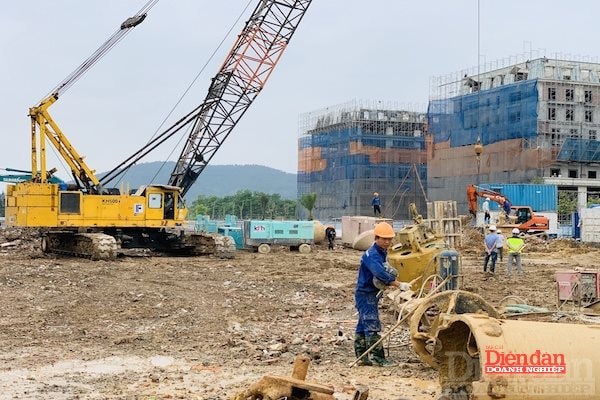
Numerous social housing projects across various localities nationwide will officially break ground.
In Hanoi, the Ministry of Public Security has registered to commence construction on two large-scale social housing projects dedicated to the People’s Public Security forces.
On the same day, numerous social housing projects across various localities nationwide will officially break ground.
Simultaneous Groundbreakings from North to South
Among them, the Son Dong social housing project for the People’s Public Security forces has a total investment of VND 3.271 trillion and will provide 1,325 apartments. The Vinh Thanh project, also for the People’s Public Security forces, has a total investment of VND 3.799 trillion with 2,012 apartments. Both projects are being developed by Confitech Tay Hanoi Joint Stock Company.
At the same time, Hanoi will also break ground on the Tien Duong 1 social housing project in Phuc Thinh Commune, with an estimated total investment of approximately VND 9.3 trillion. The project is being implemented by a consortium comprising Viglacera Corporation – JSC, Hoang Thanh Infrastructure Investment and Development JSC, and Central Construction JSC, and is expected to significantly increase the supply of social housing in Hanoi in the coming years.
In Quang Ninh, the province has registered to break ground on five projects with a combined investment of VND 9.166 trillion. These include: a social housing project on the 20% land fund of the new urban area project in Tran Thai Tong and Cao Xanh wards; a social housing project on the 20% land fund of the Ao Tien new urban area project in Ha Tu Ward; a social housing project on Lot 10 under the Ao Tien new urban area infrastructure business project in Van Don Special Zone; a social housing project on a designated lot within the Bai Chay service urban area in Bai Chay Ward; and a social housing project on plot AOM-72 under Subdivision Planning Area 2 in Cao Xanh Ward.
Da Nang is also joining the nationwide groundbreaking “day” with two projects in the Nam Cam Le Bridge residential area. In Hue City, social housing works under Phase 2 of the Thuy Van mixed-use complex project, and the eastern urban area project along the Thuy Duong – Thuan An road have also officially commenced. These projects are being developed by a consortium of Cotana Group JSC, Telin Group JSC, and Cotana Capital Real Estate Investment and Development JSC.
Clearing the Way for the One-Million-Unit Target
The acceleration of groundbreaking and sales of social housing projects across many localities is widely seen as a positive signal for low-income earners, as housing needs become increasingly urgent. Alongside this, preferential credit support programs and more flexible access conditions for social housing are gradually being introduced, opening up greater opportunities for people to own homes at affordable prices.
Not only homebuyers, but also social housing developers are seeing new opportunities to overcome long-standing bottlenecks, as the Government drafts a Resolution on special mechanisms for the sector. On December 8, Deputy Prime Minister Tran Hong Ha chaired a meeting to review the draft Resolution, focusing discussions on issues related to planning formulation and approval, construction permits, and adjustments to social housing project planning.
Under the proposal, social housing projects that have already received investment policy approval but lack detailed or subdivision planning would be allowed to prepare, appraise, and approve subdivision and detailed plans concurrently. This approach must ensure consistency across planning levels and clearly define the responsibilities of approving authorities. The mechanism aims to address implementation challenges, particularly difficulties arising from planning adjustments related to building height, land-use coefficients, and other technical indicators.

The acceleration of groundbreaking and sales of social housing projects across many localities is widely seen as a positive signal for low-income earners
Previously, the Government issued Decree No. 302/2025/ND-CP dated November 19, detailing the establishment of the National Housing Fund. This is a state financial fund operating outside the state budget and on a non-profit basis, with a focus on developing social rental housing—a segment that has long been neglected.
Amid persistently rising housing prices and increasingly pressing housing needs, strong and coordinated support measures from central to local levels are providing a substantial boost to the social housing segment. From expanding beneficiary groups and increasing supply to removing procedural bottlenecks, new policies are gradually unblocking long-standing constraints. While challenges remain regarding supply stability, pricing, and transparency in implementation, current developments point to a clearer roadmap for bringing the dream of stable housing closer to millions of young families.
According to experts, if these policies are implemented on schedule and prove effective, the social housing market in the 2026–2030 period is likely to enter its strongest growth cycle in nearly a decade, laying a critical foundation for achieving the target of investing in at least one million social housing units by 2030.
Associate Professor Dr. Tran Dinh Thien, former Director of the Viet Nam Institute of Economics, noted that social housing not only meets housing needs but also plays an important role in stabilizing the real estate market and improving quality of life. If the current pace of implementation is maintained, the goal of one million units by 2030 is entirely achievable.
However, many experts also emphasize the need to strengthen oversight and ensure transparency throughout the implementation process to prevent policy abuse and to safeguard the rights of intended beneficiaries.
Author: MAN NHI - TRUONG DANG (translates)
RELATED TOPICS
RECOMMENDED TOPICS