VN
VN
 EN
EN
22/07/2026, 02:00
Business economics
ASEAN Perspectives: What to watch out for?
Thailand will head to the polls early while the Philippines will host the ASEAN forum which puts a spotlight on its economy…
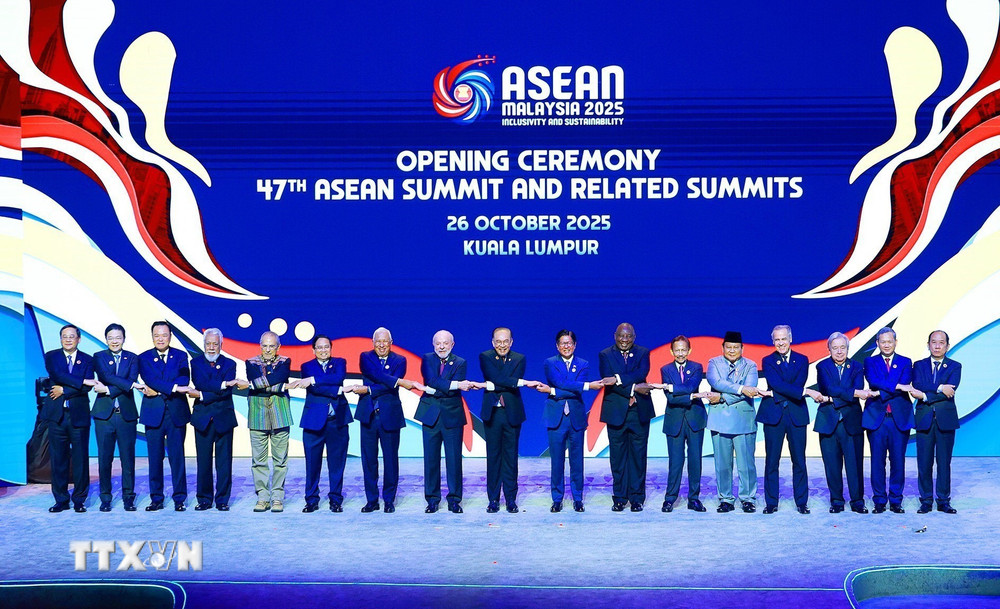
The 47th ASEAN summit and related summits were held in Malaysia
2026 isn’t an election cycle for Southeast Asia; Singapore just held its election last year, while Malaysia’s election will need to be called before end-2027.
But the year still has a few policy risks and political events that market watchers will likely monitor closely. These risks will test the grittiness of their region’s economies in how they can be resilient and withstand change.
The most prominent is Thailand, wherein the economy has cut its four-year administrative cycle short by holding an early election on 8 February 2026. This was after three years of political instability, with Thailand having three Prime Ministers since the May 2023 election. So far, pre-election polls show a tight race between Bhumjaithai and the People’s Party, wherein no party will, so far, win enough seats to guarantee a majority, requiring the need for coalition building again.
Similar to the May 2023 election, many political parties have so far proposed different forms of handouts and subsidies. However, the last election has also shown us that the process of forming a stable government is a long and arduous process—long enough to delay Thailand’s fiscal budget and put policy on a standstill. That said, we think a high degree of policy uncertainty persists in this year’s early election. In fact, the Bank of Thailand has already factored in a 6-month delay in passing the 2027 fiscal year budget (which starts in October of 2026) in its growth forecast (7 January 2026).
In the Philippines, the popularity of President Marcos has dipped to its lowest level since taking office, according to public opinion firm WR Numero. This is all while growth in 3Q 2025 dipped to its slowest pace since 2011, barring the COVID-19 pandemic, as the government kickstarted an extensive corruption investigation in public infrastructure projects.
Nonetheless, HSBC thinks the administration, in 2026, will likely hasten its institutional reform agenda, such as the relaxation of the Bank Secrecy Law and the passage of the Anti-Political Dynasty Law, to name a few. The limelight is on the Philippines as the country hosts the Association of Southeast Asian Nations’ major summit this year, incentivizing policymakers to push through with difficult but much-needed reform.
Over in Vietnam, the Communist Party of Vietnam (CPV) had its 14th National Congress from 19 to 25 January 2026. This is a quinquennial event wherein the congress chose the country’s leaders while setting the socioeconomic goals for the next five to ten years. Economic policy continuity is highly expected to prevail, regardless of the potential reshuffle in leadership.
“Vietnam’s economy is expected to grow in line with or above potential thanks to robust wage growth, strong credit and retail sales, and fiscal strength supporting economic growth,” said HSBC.
Author: NGOC ANH
RECOMMENDED TOPICS