VN
VN
 EN
EN
11/07/2026, 02:00
Business economics
Proactive strategy needed as global tariffs rise
The US’ decision to raise global tariffs to 15% on imported goods has sent fresh shockwaves through international trade, signalling a strong resurgence of protectionism in the global economic architecture.
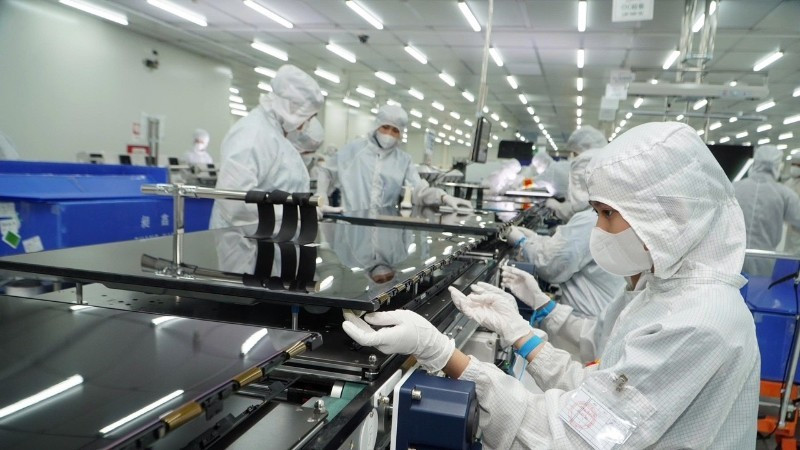
As the world’s largest economy increases trade barriers, the impact extends beyond bilateral relations, spreading across supply chains, raising costs, constraining trade, and accelerating the restructuring of global production. In this context, highly open economies such as Viet Nam are unlikely to avoid direct effects. Yet amid volatility, the imperative to maintain a proactive development stance has never been more pressing.
Viet Nam is entering a new development phase, targeting high and sustainable growth, with aspirations of achieving double-digit rates in the coming years. This objective is set against profound global shifts marked by intensifying strategic competition among major powers, fragmented supply chains, and the rising influence of trade protectionism and economic security.
The US decision to increase tariffs from 10% to 15% on imports from all countries should be viewed within this broader context. It is not merely a short-term trade measure but reflects a strategic adjustment aimed at protecting domestic production, reshaping supply chains, and reducing external dependence.
For Viet Nam, the US market holds a particularly important place in its export structure. Over many years, exports to the US have grown rapidly, serving as a key growth driver. Higher import tariffs will increase costs for Vietnamese goods, eroding price competitiveness — a critical factor for many export-oriented industries.
Labour-intensive sectors such as textiles, footwear, furniture, and assembly electronics may face tangible impacts, especially as global demand remains subdued. The risks of declining orders, narrowing profit margins, and mounting employment pressures must be fully recognised.
Elevated US tariffs may also encourage production relocation closer to consumer markets, intensifying competition for low-cost export-driven economies. As multinational corporations reassess supply chains to optimise tax and logistics costs, investment flows could shift towards regions with more direct access to the US market.
At the same time, universal tariff policies risk dampening global trade, slowing growth, and generating spillover effects for export-dependent economies.
However, a comprehensive assessment reveals that global tariff volatility also presents strategic opportunities for Viet Nam. With the 15% tariff applied broadly across many countries, relative tariff advantages among suppliers are narrowed. Competition will therefore hinge less on tax differentials or labour costs and more on political stability, supply chain reliability, product quality, and investment climate — areas where Viet Nam has built clear strengths in recent years.
Tariff pressures can also accelerate global supply chain diversification and reduced dependency. Economies with stable geopolitics, deep integration, and competitive costs remain attractive production destinations.
With an extensive network of free trade agreements, a stable socio-political environment, and an abundant workforce, Viet Nam continues to appeal to international investors. Historically, global supply chain shifts have often benefited Viet Nam, a trend unlikely to reverse in the medium term.
Ultimately, external tariff pressure serves as a catalyst for upgrading the domestic economic structure. The development trajectories of several East Asian economies show that pivotal transformations often occur amid heightened international competition and trade barriers. When cost advantages erode, economies must pivot towards productivity and technological competitiveness. Viet Nam now stands at such a juncture.
The US’ increase in global tariffs is not merely a short-term challenge but also a signal accelerating the transition towards a higher value-added development model.
Maintaining a proactive stance first requires strategic diversification of export markets. While the US is significant, it is not the only destination. Viet Nam possesses one of the most extensive FTA networks among developing economies, including agreements with the European Union, the UK, CPTPP, and RCEP members. Effective utilisation of these agreements can reduce reliance on a single market and broaden sustainable growth space.
Proactivity also entails a decisive shift towards higher-technology, higher-value exports. As products incorporate greater technological content, design, and branding, tariff factors become less decisive. The next phase of industrialisation should therefore prioritise digital technology, electronics, semiconductors, smart devices, green industries, and new materials — sectors aligned with supply chain restructuring and less sensitive to universal tariff fluctuations.
Strengthening enterprise capacity constitutes the third pillar. Higher tariffs accentuate the divide between firms reliant solely on cost advantages and those equipped with technological, managerial, and brand capabilities. Policy should promote innovation, digital transformation, productivity gains, and value chain linkages, while fostering supporting industries and stronger ties between FDI enterprises and domestic firms to increase localisation and resilience.
Selective investment attraction is equally vital. As global corporations seek new production bases, Viet Nam must shift from simply attracting capital to choosing strategic partners, prioritising high-tech projects, R&D centres, green manufacturing, and foundational industries. Only when investment is linked to technology transfer and workforce development can supply chain relocation generate lasting endogenous strength.
Developing the domestic market as a stable growth pillar is another critical dimension. An economy of 100 million people with a growing middle class offers a significant buffer amid global trade volatility. Sustainable growth requires a balanced combination of exports and domestic consumption. Expanding modern distribution systems, e-commerce, and the digital economy will reduce external dependence while creating fresh momentum for domestic production.
Above all, macroeconomic stability and investor confidence remain the bedrock of proactivity. In an uncertain world, countries that sustain political stability, policy consistency, and ongoing reform become safe havens for capital and supply chains. This has long been a defining advantage of Viet Nam and is increasingly valuable amid global turbulence. Maintaining stability, sustaining reform momentum, and strengthening national governance capacity will be decisive factors in enabling the economy to weather external shocks.
Global tariff volatility reflects not a temporary disruption but a long-term structural shift in the world economy, shaped by strategic competition, supply chain restructuring, and protectionism. Nations that maintain strategic autonomy, diversify relations, and continuously strengthen internal capacity will secure development advantages.
Four decades of renewal demonstrate that Viet Nam has repeatedly overcome global economic upheavals and emerged stronger after each challenge. Today’s tariff pressures are therefore not only immediate obstacles but also a test of resilience and adaptability. Maintaining a proactive stance must become a long-term strategic orientation: expanding markets, upgrading industry, empowering enterprises, and reinforcing endogenous foundations to transform external pressures into internal growth drivers.
With accumulated strengths and sustained commitment to reform and deep integration, Viet Nam possesses sufficient capacity to overcome new tariff barriers, sustain high growth momentum, and advance firmly on the path of rapid and sustainable development in the new era.
Author: NDO
RECOMMENDED TOPICS