VN
VN
 EN
EN
16/07/2026, 02:00
Business economics
Prospects for monetary policy in 2026
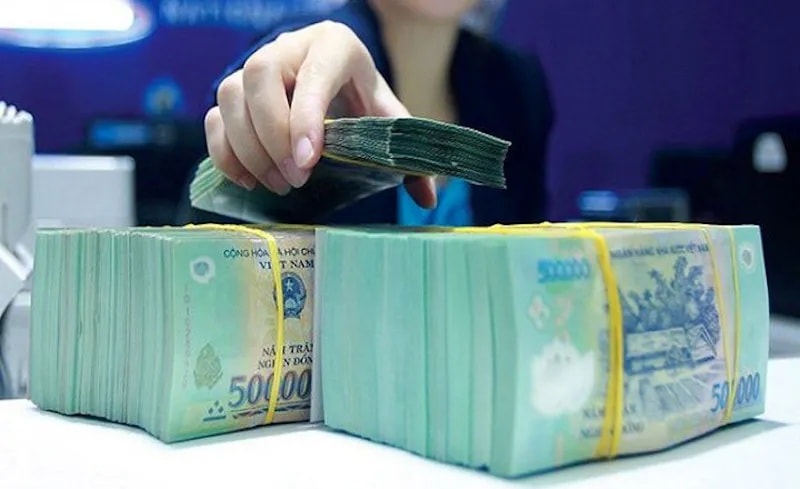
Looking back at 2025, Vietnam successfully maintained a low interest-rate environment to support economic recovery. However, in 2026, monetary policy is likely to shift toward a more cautious stance.
Dr. Do Thien Anh Tuan of the Fulbright School of Public Policy and Management notes that this does not imply a sharp reversal toward aggressive tightening. Rather, it reflects the international context, ambitious growth targets, and evolving inflation expectations.
Three Drivers of the “State Shift”
First, the Federal Reserve’s policy will remain a significant constraint. Although the Fed cut rates for the third consecutive time within the final four months of 2025, the U.S. policy rate still stands at 3.5–3.75%. Official Fed projections suggest the USD policy rate will remain around 3.4% by the end of 2026—considerably higher than the pre-Covid period. This implies the U.S. dollar is unlikely to weaken substantially, while exchange-rate pressures on emerging economies will persist.
In the final weeks of 2025, the VND/USD central rate hovered around 25,150. Some market forecasts project that USD/VND could fluctuate between 25,900 and 26,500 in 2026 before stabilizing. Under such conditions, Vietnam has limited room to pursue aggressive monetary easing without incurring exchange-rate pressure and heightened inflation expectations.
Second, the Government’s target of double-digit growth for 2026 will exert significant pressure on credit and aggregate demand. In 2025, GDP grew by more than 8%, while average CPI stood at 3.3% and core inflation at 3.2%. Moving into 2026, a growth target of 10% or higher implies sharply rising capital demand for public investment, private investment, and business expansion, while policy space is narrower than before. If credit growth continues to be expected at 18–20%, monetary policy will need to shift from supporting growth through low interest rates toward stricter oversight of credit quality.
Third, while inflation is not currently a major risk, inflation expectations may become more sensitive in 2026. Experience shows that when growth accelerates, public investment expands, administered prices are adjusted, and exchange rates fluctuate, inflation expectations can shift faster than actual inflation. This underscores the need for the State Bank of Vietnam (SBV) to respond proactively through liquidity management tools rather than waiting for CPI to breach critical thresholds.
Selective Capital Allocation
Given these factors, a prudent and flexible monetary stance appears appropriate for 2026. Policy rates may remain unchanged, but monetary management is likely to tighten through open market operations, credit controls, and exchange-rate management—especially during sensitive periods requiring responses to external shocks.
Late 2025 already provided early signs of this shift, when overnight interbank rates temporarily rose above 7%, prompting the SBV to inject tens of trillions of dong to stabilize liquidity before rates quickly eased again. This suggests that liquidity management and expectations—rather than immediate nominal rate hikes—will be the primary tools of policy adjustment.
Regarding funding costs, the impact in 2026 is expected to be differentiated. Lending rates are unlikely to fall significantly below the roughly 6.5% per year seen in 2025. Instead, rates could rise modestly by 25–50 basis points in certain tenors and banking segments if exchange-rate pressures intensify.
More importantly, capital allocation will become more selective. Export-oriented manufacturing sectors, firms with strong cash flows, and key infrastructure projects are likely to enjoy better access to financing. Meanwhile, sectors characterized by high leverage, low efficiency, or speculative activity may face higher borrowing costs or tighter credit conditions.
Finally, in terms of fiscal-monetary coordination, 2026 will be particularly sensitive. Fiscal policy is likely to remain expansionary to pursue ambitious growth targets, reflected in the large-scale public investment planned for 2026–2030. In contrast, monetary policy will need to safeguard macroeconomic stability—preventing excess liquidity from fueling exchange-rate volatility and inflation expectations, while avoiding overly tight conditions that would sharply raise funding costs.
In other words, fiscal policy may accelerate, while monetary policy must anchor stability. The Government’s greatest macroeconomic challenge in 2026 will be reconciling the goal of double-digit growth with the need to maintain stable interest rates, exchange rates, and inflation expectations.
Author: TRUONG DANG
RELATED TOPICS
RECOMMENDED TOPICS