VN
VN
 EN
EN
09/07/2026, 11:15
Investment
How interest rates affect investment channels
The current uptrend in interest rates represents a fundamentally different cycle from the tightening episode of 2022. According to Bui Van Huy, Vice Chairman of FIDT, this distinction is crucial for investors seeking to interpret market signals and recalibrate their asset allocation strategies.
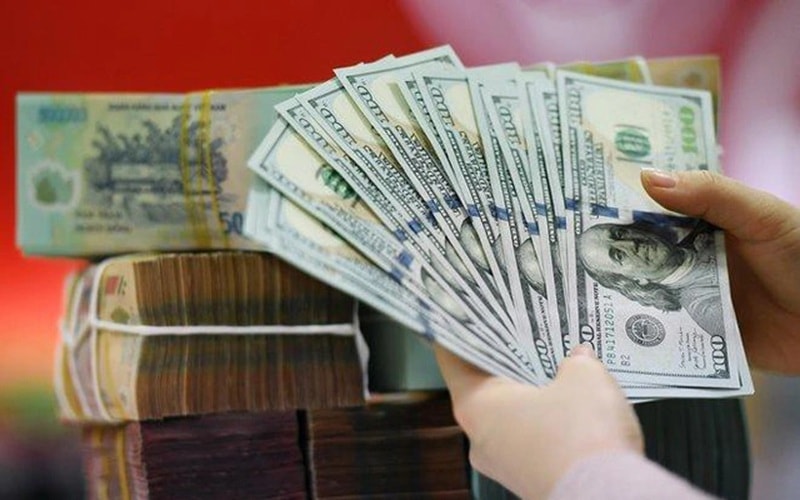
Monetary conditions are most clearly reflected through interest-rate movements. In recent months, both deposit and lending rates in Vietnam have shown signs of rising.
At first glance, this may evoke memories of 2022, when higher rates coincided with widespread dislocations across real estate, corporate bonds, and equities. However, Mr. Huy argues that the similarities are largely superficial. The core difference lies in the degree of policy autonomy.
In 2022, Vietnam was forced into a reactive stance as the US Federal Reserve raised interest rates aggressively, exerting strong pressure on the exchange rate. Domestic authorities had little choice but to tighten monetary conditions to stabilize the macro environment, triggering a liquidity squeeze that froze several asset markets.
Today, by contrast, the economy is operating from a more proactive position. Interest rates, as the price of capital, are responding to rising demand for money as economic activity recovers in a more substantive manner. Although the recovery remains uneven across sectors, following a K-shaped pattern in some areas, the current increase in rates is better understood as a reflection of improving economic health rather than systemic stress.
This shift in context has important implications for investment channels. Bank deposit rates have already increased by approximately 0.75 to 1 percentage point from their cyclical lows. With inflation under control at below 4 percent, real deposit yields have turned positive, restoring some of the appeal of cash holdings.
Nonetheless, Mr. Huy cautions that as Vietnam enters a phase of faster and more structural growth, holding an excessively large proportion of assets in cash may result in only average returns, or even gradual erosion of purchasing power over time. Cash, in his view, should play a stabilizing role in portfolios, but not dominate them.
Real estate continues to occupy the largest share of Vietnamese household wealth, often accounting for 70 to 80 percent of assets among high-net-worth individuals.
This reflects longstanding cultural preferences for accumulating productive assets and preserving wealth for future generations. At the same time, real estate is the asset class most sensitive to interest-rate movements, given the heavy reliance on financial leverage throughout the development, construction, and purchasing chain. Rising rates will inevitably exert pressure on the sector, particularly on segments characterized by speculative demand.
Even so, Mr. Huy maintains a constructive long-term outlook. Over the 2026–2030 period, real estate fundamentals are expected to benefit from strong public investment in infrastructure and a natural recovery cycle following the recent market bottom. Higher interest rates may temper short-term momentum, but are unlikely to derail the broader trajectory.
Equities, meanwhile, require a longer-term mindset. With limited room for further monetary easing, the stock market may struggle to deliver sharp index gains in the near term.
Yet this does not diminish its attractiveness as an investment channel. Mr. Huy expects capital flows to become more selective and fundamentally driven, favoring companies with solid earnings growth and reasonable valuations. Structural catalysts such as expectations of a market upgrade and improving corporate profitability continue to underpin the equity market, outweighing risks stemming from geopolitical tensions or margin-related pressures. Alongside real estate, equities remain among the most compelling assets in the current cycle.
Another asset class gradually regaining investor attention is the corporate bond market. After a period of turmoil, the market has become more standardized and transparent, supported by a stronger legal framework and enhanced investor protection. Companies that have weathered the recent downturn tend to possess relatively sound financial foundations. For investors, this creates opportunities to achieve yields meaningfully higher than bank deposit rates, provided that credit risks are assessed carefully.
In the realm of defensive assets, gold continues to serve as a traditional safe haven amid persistent macroeconomic uncertainty and cautious sentiment. However, Mr. Huy sees limited scope for outsized price appreciation. Silver, by contrast, is emerging as a more dynamic commodities investment, supported by stronger growth potential. Cryptocurrencies, meanwhile, appear to be in a corrective phase and are currently viewed as the least attractive option among major asset classes.
Taken together, Mr. Huy’s assessment suggests that the current investment landscape offers no asset that is unequivocally superior, but neither does it present a clear underperformer. The central challenge for investors is not to forecast individual markets in isolation, but to construct a multi-asset allocation that aligns with their risk tolerance and the prevailing macroeconomic environment. In a cycle defined by normalization rather than extremes, disciplined diversification, rather than speculative concentration, is likely to remain the most effective investment strategy.
Author: TRUONG DANG
RELATED TOPICS
RECOMMENDED TOPICS