VN
VN
 EN
EN
10/07/2026, 02:38
Business economics
ASEAN trade will endure
Despite the noise over tariffs and uncertainty that loomed throughout the year, trade remained resilient, not just in Southeast Asia, but even throughout Asia and the world. For ASEAN, exports grew at an astonishing rate of c12% y-o-y in January to November 2025.
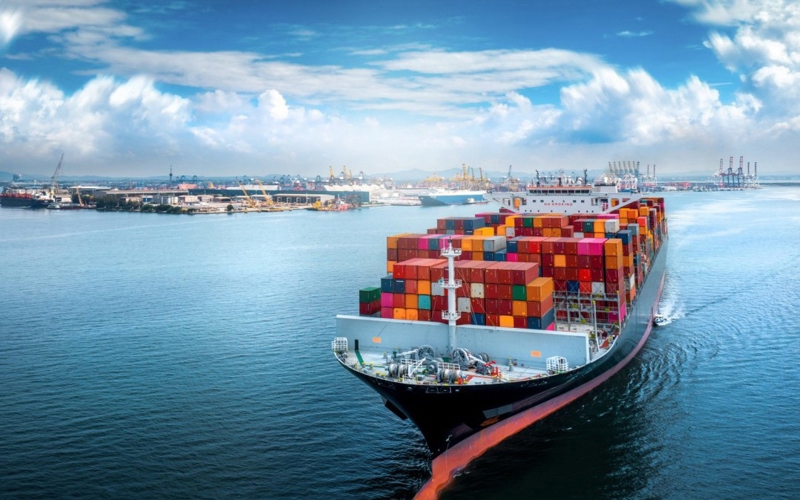
ASEAN is well-positioned to capture the gains of the ongoing boom in AI, with a third of ASEAN’s exports in electronics.
The frontloading of goods in anticipation of tariffs was one of the main explanations that made this paradox less contradictory. However, as argued extensively by Janet Henry, HSBC’s Global Chief Economist, trade was largely supported by the burgeoning Artificial Intelligence (AI) industry. Not only has this increased the demand for AI-related hardware, software, and services, but the wealth created by AI stock holdings also helped boost US consumer spending.
Now comes 2026. Will the paradox hold for Southeast Asia? Uncertainty has, indeed, abated, with the US beginning to reel in the tariffs it originally imposed. Well, the drop-off in frontloading demand should, eventually, come to the fore. And ASEAN isn’t insulated from this, as its exports to the US have started to ease after surging in the first half of 2025.
Nevertheless, we continue to believe that trade in ASEAN will endure, even after performing impressively in 2025 and even if a drop off in in frontloading demand were to occur. Growth in trade may not be as fast as it was in 2025, but it may still be remarkable enough to catch people’s attention.
Amid the surge in trade, ASEAN saw its global market share in exports jump by as much as 2 percentage points, from c. 7.4% in 2023 to c. 9.4% in 2025, illustrating that not all of ASEAN’s outperformance in trade was due to frontloading demand. If it was, global trade should have risen altogether, leading to a fairly stable market share in exports. This increase in market share, thus, puts a floor under how much exports can slow.
The rise of ASEAN’s global market share in exports was not followed by a commensurate rise in ASEAN’s global market share in imports. Though this can imply that global commodity prices have remained stable (such as oil), it can also allude to the genuine diversification of supply chains into ASEAN, most especially vis-à-vis transshipments.
Furthermore, this boom in ASEAN’s exports is, remarkably, diversified in terms of where these exports go. And what drove it? All corridors, except for mainland China. Exports from Southeast Asia to the US, India, Mexico, intra-ASEAN, and to the rest of the world now represent a larger portion of global exports—a testament to ASEAN’s growing influence in trade.
Global conditions and policy will likely increase this influence, as well as bolster Southeast Asia’s resilience against any pullback in frontloading demand.
FDI into ASEAN grew 8.5% y-o-y in the first three quarters of 2025, slower than the 18.2% rise in 2024 but impressive, nonetheless. Hence, ASEAN’s capacity to export still looks set to expand. The majority of these foreign direct investments are finding themselves flowing into the trade giants of Vietnam and Malaysia.
ASEAN is well-positioned to capture the gains of the ongoing boom in AI, with a third of ASEAN’s exports in electronics. Here, all four of ASEAN’s trade-dependent economies are well-positioned to capture the gains, with all having a substantial portion of their goods exports in auto-data processing and printed circuits—two types of hardware needed for AI computing.
The opposite works in reverse. If the boom in AI turns out to be a bubble waiting to burst, Malaysia and Thailand would be the most vulnerable in the region. Nonetheless, HSBC’s equity and multi-asset strategists take the view that AI is not a bubble waiting to pop, with the gains in the Nasdaq not yet anywhere close to the gains seen in the run-up to the DotCom bubble.
That said, in HSBC’s view, future demand, though muted globally as of late, is holding up in ASEAN. Five out of six ASEAN economies have their PMI new export orders indices in the last quarter of 2025 above their historical averages, in contrast to mainland China and the developed economies of the US, UK, and Japan.
Author: NGOC ANH
RECOMMENDED TOPICS