VN
VN
 EN
EN
16/07/2026, 02:00
Business economics
Aviation sector faces profit squeeze in the next growth cycle
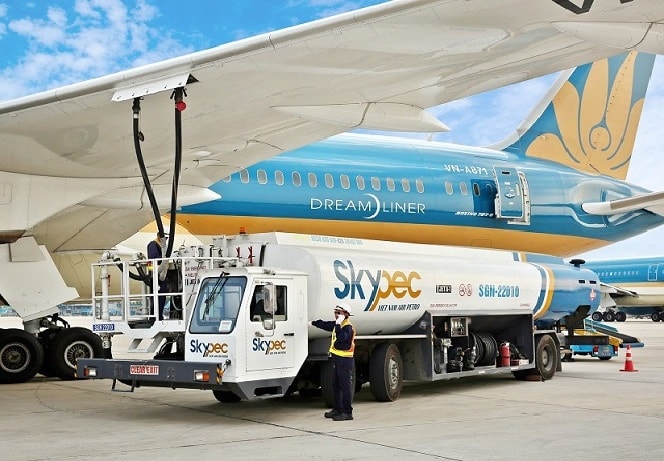
According to Phung Xuan Minh, Chairman of Saigon Ratings, rising energy prices are emerging as the central constraint on aviation profitability this year.
The medium-term outlook remains positive—but the current growth cycle is increasingly defined by unresolved bottlenecks.
According to the International Air Transport Association (IATA), global trade is adapting to protectionism and supply chain reconfiguration, supporting a projected 2.4% increase in air cargo volumes in 2026 to 71.6 million tonnes. With cross-border e-commerce expanding rapidly, air freight continues to serve as critical infrastructure for high-value, time-sensitive goods.
High profits, structurally thin margins
The industry is expected to generate $41 billion in net profit in 2026, up modestly from $39.5 billion in 2025, on revenues exceeding $1.05 trillion. Operating profit is projected at $72.8 billion, implying a margin of 6.9%.
Yet the underlying economics remain fragile.
Net margins are expected to hold at just 3.9%, largely unchanged year-on-year. On a per-passenger basis, profit remains thin at around $7.9—highlighting a structural inability to convert demand into durable profitability. Return on invested capital (ROIC) is estimated at 6.8%, still below the industry’s cost of capital of 8.2%.
In other words, growth is real—but largely absorbed by cost pressures.
The core issue lies in persistent supply chain constraints. From aircraft and engines to maintenance components, the entire aviation manufacturing ecosystem remains under strain, struggling to keep pace with a faster-than-expected post-pandemic recovery.
The global fleet is currently short by at least 5,300 aircraft relative to demand. This imbalance is unlikely to normalize before 2031–2034. In parallel, more than 5,000 aircraft are grounded due to shortages of maintenance components, particularly engines.
Major engine manufacturers such as Safran and General Electric are under mounting pressure, unable to scale production and repair capacity in line with airline demand. IATA estimates total losses from delayed aircraft deliveries, maintenance costs, and elevated engine prices at $11.1 billion—a material drag even for a trillion-dollar industry.
Revenue growth remains demand-driven
Passenger traffic is projected to reach 5.2 billion in 2026, up 4.4% year-on-year, with load factors hitting a record 83.8%. Passenger revenue is expected to reach $751 billion, supported by nearly 5% growth in revenue passenger kilometers (RPK).
Ancillary revenue continues to scale as a structural growth driver, projected at $145 billion—around 14% of total industry revenue. Services such as seat selection, baggage, onboard upgrades, and loyalty programs are providing stable, high-margin income streams.
Cargo volumes are expected to reach 71.6 million tonnes (2.4% YoY), generating $158 billion in revenue, supported by sustained demand from e-commerce and high-tech goods despite modest declines in freight rates.
Cost pressures are not cyclical—they are structural
Fuel costs alone are projected at $252 billion in 2026. Earlier forecasts assumed Brent at $62 per barrel—but that baseline has already been invalidated.
With Middle East tensions pushing oil prices close to double that level, fuel costs are likely to reprice upward almost proportionally—unless supply-side interventions materialize or geopolitical risks de-escalate.
Non-fuel costs are also rising sharply, expected to reach $729 billion (5.8% YoY). Labor accounts for the largest share (28%), reflecting a persistently tight aviation labor market. Maintenance costs, airport fees, and aircraft leasing expenses are all trending higher due to component shortages and geopolitical fragmentation.
Environmental compliance is an additional layer of cost. CORSIA expenses are projected to rise to $1.7 billion, while sustainable aviation fuel (SAF) adoption could add another $4.5 billion in costs, despite representing just 0.8% of total fuel consumption.
The real constraint: capacity, not demand
The key limiting factor for growth is no longer demand—it is supply.
Delayed aircraft deliveries are capping expansion capacity, while macro conditions remain stable but unexceptional, with global GDP growth projected at 3.1%. Inflation remains above central bank targets, with upside risks from energy prices—feeding directly into input costs, travel demand, and fleet expansion decisions.
Airlines have improved resilience post-pandemic. But the current shock cycle—energy, supply chains, geopolitics—is more structural than temporary.
In Minh’s framing, the sustainability of the current growth cycle depends almost entirely on whether these bottlenecks can be resolved—particularly supply chain constraints and fleet modernization.
New risks are also emerging, notably escalating tensions involving the U.S., Israel, and Iran—further complicating the energy outlook.
At a fundamental level, the industry is being squeezed by two simultaneous pressures:
Fuel availability and pricing risks, potentially forcing capacity cuts
Rising operating costs, compressing already thin margins
Demand remains strong—but converting that demand into sustainable profitability remains the industry’s core challenge.
If geopolitical tensions ease and key chokepoints such as the Strait of Hormuz reopen, oil price pressures could normalize. A softer USD would also support margin recovery for airlines with non-dollar revenue bases.
Under those conditions, aviation remains structurally positioned as a key driver of economic growth, tourism, and global integration.
But until then, the current cycle is less about expansion—and more about navigating constraints.
Author: TRUONG DANG
RELATED TOPICS
RECOMMENDED TOPICS