VN
VN
 EN
EN
15/07/2026, 11:10
Business economics
Unlocking capital for innovation
As Viet Nam shifts toward a knowledge and innovation-driven economy, universities and research institutes are increasingly expected not only to generate knowledge but also to play a more active role in commercializing research outcomes.
Three Core Dimensions
Under Hanoi's development plan, the city aims to establish at least 20 spin-off enterprises originating from university and research institute innovations in 2026. During the 2027-2030 period, it targets the creation of an additional five to ten such enterprises each year.
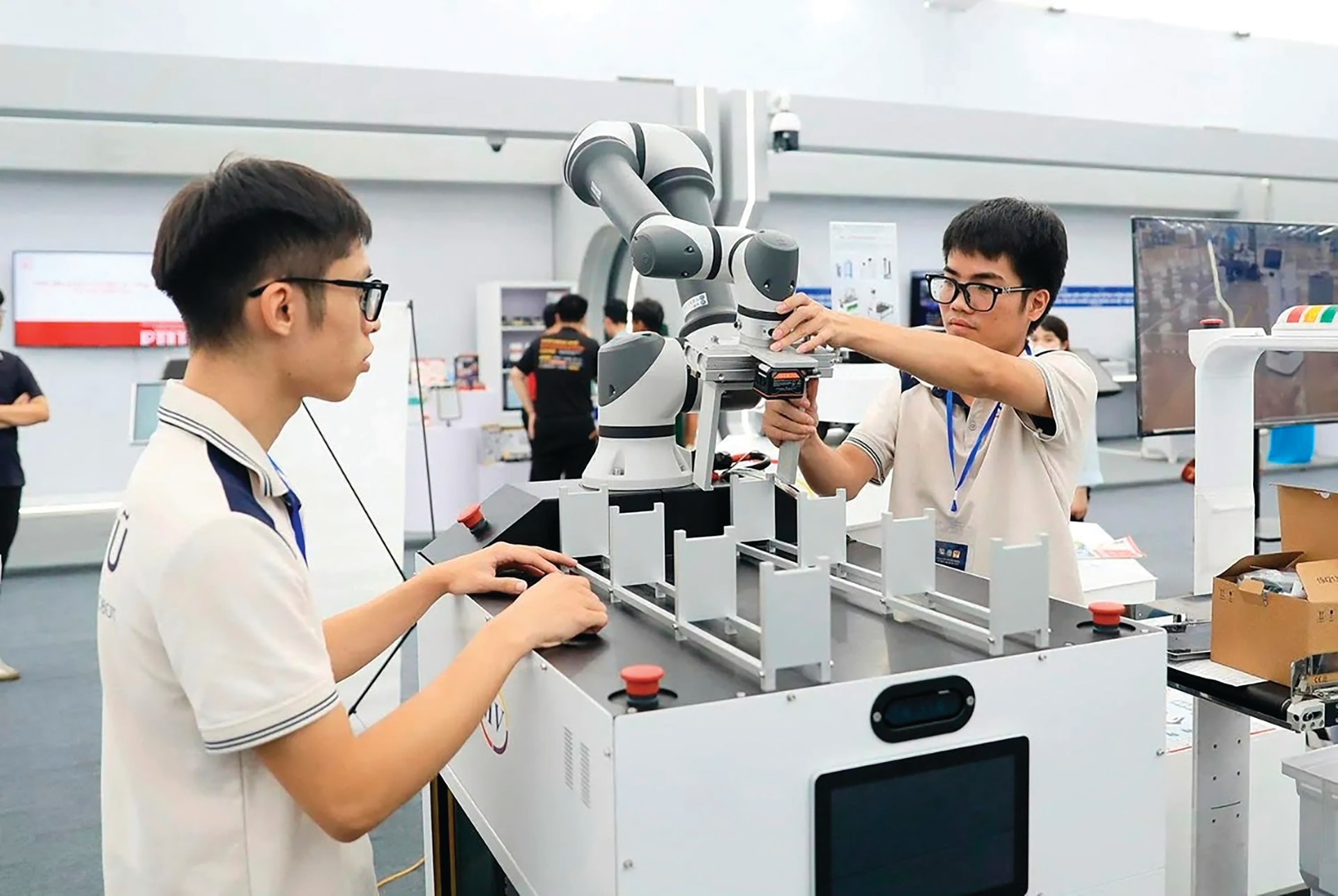
Hanoi aims to establish at least 20 spin-off enterprises originating from university and research institute innovations in 2026, with an additional five to ten created annually during the 2027-2030 period
According to Associate Professor Dr. Do Huong Lan of the University of Finance and Marketing, Viet Nam's science and technology management system has long operated under an administrative model focused on process control, strict input management, and safeguarding public assets. While this approach was suitable in a context of limited resources and a need for fiscal discipline, it also reduced flexibility, constrained experimentation, and hindered the transformation of research outcomes into commercially valuable products and services.
Recent reforms under Resolution 57-NQ/TW and a series of new laws have laid the foundation for a fundamental shift toward a development-oriented governance model. Under this approach, the State is no longer primarily a supervisory body but instead focuses on designing institutions, creating enabling conditions, and guiding stakeholders within the innovation ecosystem.
This transition is reflected in three key dimensions. First, management is shifting from process-based oversight to results-based evaluation, with products, technologies, and enterprises becoming the primary indicators of success. Second, policymakers are moving from a risk-avoidance mindset toward accepting controlled risks, recognizing the inherent uncertainty of innovation activities. Third, the model is evolving from one in which the State acts on behalf of market actors to one where the State serves as an enabler while the market takes the lead, with businesses and social actors playing a central role.
"For spin-off enterprises, this transition is fundamental," Dr. Lan said. "Spin-offs are highly experimental by nature and require institutional flexibility as well as tolerance for failure. Under a traditional administrative mindset, such models would struggle to emerge and grow. By contrast, an enabling approach creates the institutional space necessary for technological ideas to be tested, refined, and commercialized through enterprises."
A Gateway for Capital
Regulations governing the valuation, capital contribution, and transfer of intellectual property assets remain insufficiently clear, creating legal uncertainty and discouraging participation by investors and innovators. If addressed, these bottlenecks could become an important gateway for capital flows into technology and innovation-driven enterprises.
Pham Tuan Hiep, Investment Director at BK Holdings, noted that public universities can currently establish or invest in enterprises for a variety of purposes. However, he emphasized the need to distinguish clearly among three categories: enterprises commercializing research outcomes, science and technology enterprises, and companies established to manage intellectual property assets or investment capital.

The legal framework is gradually allowing research outcomes to be valued, intellectual property to be used as equity contributions, and institutions to exercise greater autonomy in choosing commercialization pathways.
The legal framework for university spin-offs is gradually taking shape through legislation such as the Enterprise Law, the Law on Higher Education, the Intellectual Property Law, the Technology Transfer Law, and regulations governing public assets.
Notably, the 2025 Intellectual Property Law and its implementing decrees have begun to remove barriers to the exploitation and commercialization of intellectual property assets. In parallel, the Ministry of Science and Technology is working with the State Bank of Viet Nam and the Ministry of Finance to develop mechanisms that would allow intellectual property assets to be used as capital contributions or collateral for bank loans.
According to Dr. Lan, a new concept of "assetizing knowledge" is emerging, under which knowledge, technology, and intellectual property are viewed as economic resources that can be valued, traded, and leveraged to generate additional value. The legal framework is gradually allowing research outcomes to be valued, intellectual property to be used as equity contributions, and institutions to exercise greater autonomy in choosing commercialization pathways.
This shift has significant structural implications for spin-off enterprises. First, it creates a legal basis for converting research outcomes into equity, a core component of enterprise ownership structures. Second, it enables benefit-sharing mechanisms among universities, research institutes, scientists, and investors, thereby strengthening incentives for participation. Third, it contributes to the development of a technology market where intellectual property assets can be traded according to market principles.
However, this transition also requires stronger implementation capacity and supporting mechanisms. Intellectual property valuation demands professional methodologies and specialized institutions. Benefit-sharing arrangements must be transparent and stable, while appropriate oversight tools are needed to prevent losses of public assets. As a result, assetizing knowledge is not merely a change in perspective but requires the coordinated development of the broader market institutions that support innovation.
Author: NGOC DIEM - TRUONG DANG
RELATED TOPICS
RECOMMENDED TOPICS