VN
VN
 EN
EN
14/07/2026, 03:54
Legal environment
Bao Dai Commune (Bac Ninh): A local government closer to the People and businesses
With the implementation of the two-tier local government model, Bao Dai Commune is making a strong shift toward a service-oriented administration that is closer to residents and more responsive to businesses.
Following the administrative merger, Bao Dai Commune in Bac Ninh Province has entered a new phase of operation, serving a population of nearly 60,000 people across a larger geographical area, with an increasing workload and higher public service demands.
Amid these challenges, the People's Committee of Bao Dai Commune has gradually demonstrated the effectiveness of the two-tier local government model, placing residents, businesses and cooperatives at the center of its service delivery efforts.
.jpg)
The Bao Dai Commune Public Administrative Service Center is providing increasingly efficient and responsive services to local residents.
A government closer to the people, faster in problem-solving
During the initial stage of implementing the two-tier local government model, Bao Dai Commune faced considerable pressure. The merged administrative area became larger, the population increased, the number of villages expanded, and the demand for administrative procedures, citizen petitions and grassroots-level problem-solving rose significantly. However, these circumstances also highlighted the urgent need to reform local governance and administrative management.
Assessing the effectiveness of the model after nearly one year of operation, Mr. Vu Van Son, Chairman of the People's Committee of Bao Dai Commune, described it as an important transformation that enables grassroots authorities to be closer to the people, more connected to local realities and more proactive in handling public affairs. With intermediary administrative layers streamlined, many issues raised by residents and businesses can now be addressed directly at the commune level, reducing processing time and enhancing the accountability of public officials.
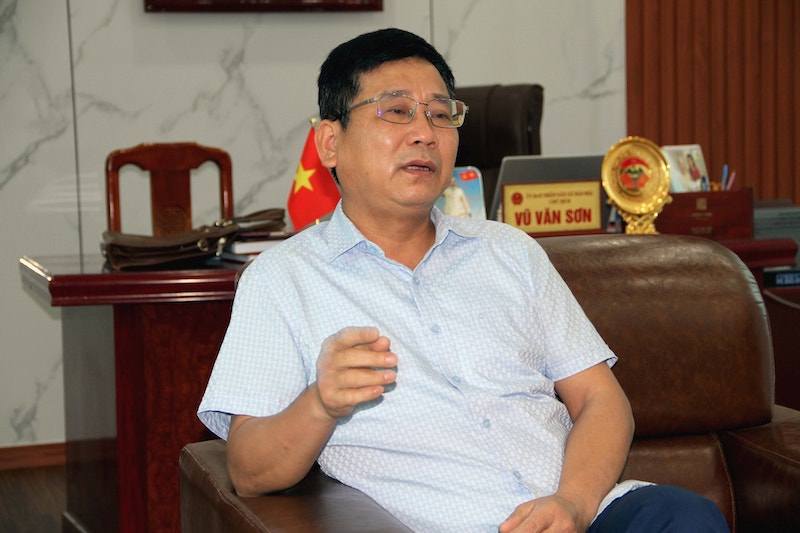
Mr. Vu Van Son, Chairman of the People's Committee of Bao Dai Commune, shares his views with Business Forum Magazine.
According to Mr. Vu Van Son, the commune's key priority in this new phase is to build a government that is service-oriented, action-driven, disciplined and effective. The administration seeks to proactively understand the needs of local residents while accompanying businesses, cooperatives and household enterprises, and promptly addressing difficulties arising in production, business operations and administrative procedures.
This spirit is clearly reflected at the Bao Dai Commune Public Administrative Service Center, which serves as the primary point for receiving, guiding and processing administrative procedures for residents and businesses. It is also the most important interface between the local government and the public.
Mr. Hoang Van Dem, Director of the Center, noted that the commune's large population places considerable pressure on daily administrative services. Since the merger, the number of visitors has increased significantly, while many sectors have experienced a surge in application volumes. At the same time, the Center continues to operate mainly from the former commune office facilities, resulting in limited space. During peak periods, accommodating visitors, providing guidance and receiving applications can be challenging.
Nevertheless, Mr. Hoang Van Dem emphasized that these difficulties have not diminished the commitment to public service. On the contrary, the new administrative structure has delivered positive results. Responsibilities among officials have become clearer, application processing procedures are increasingly standardized, and residents and businesses receive direct assistance, reducing travel time and enabling many procedures to be completed more quickly and conveniently than before.
“The pressure is indeed significant, particularly given the limitations in infrastructure. However, we regard the Public Administrative Service Center as the place where the spirit of a service-oriented government is most clearly demonstrated. Despite the challenges, the effectiveness of the new model is becoming increasingly evident, especially in narrowing the distance between the government and the people,” Mr. Hoang Van Dem said.
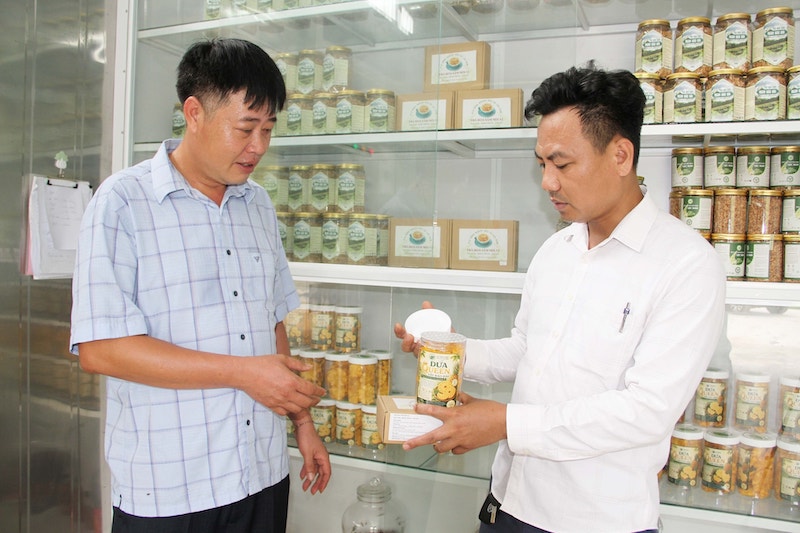
The dried pineapple product of Luc Nam Organic Agriculture Cooperative is expected to be well received by consumers and expand its market presence.
Supporting businesses and advancing the private sector
Beyond administrative reform, Bao Dai Commune's authorities have identified support for businesses, cooperatives and household enterprises as a key priority in promoting local economic development.
Mr. Chu Van Hung, Director of Luc Nam Organic Agriculture Cooperative, said that the cooperative currently produces Bao Dai dried pineapple, a locally distinctive processed agricultural product. Throughout its development, the cooperative has received support from commune and provincial authorities, as well as government agencies, in agricultural development, trade promotion and the promotion of local One Commune One Product (OCOP) products.
According to Mr. Hung, such support has enabled the cooperative to further improve product quality and encouraged agricultural producers to invest more confidently, enhance production standards and gradually expand market access.
In addition to processed agricultural products, a number of farming models applying advanced technologies in Bao Dai Commune have also yielded positive results. Support for greenhouse and net-house systems, together with the adoption of modern cultivation techniques, has helped farmers improve productivity and crop quality, reduce weather-related risks and achieve more stable production outcomes.
Mr. Nguyen Van Quyen, Director of Quyen Huyen Agricultural Services Cooperative, highly appreciated the support provided by provincial authorities, the agriculture sector, science and technology agencies, and the commune government. According to him, financial support policies for greenhouse and net-house construction have created favorable conditions for cooperatives to improve crop yields and quality, facilitating a gradual transition from traditional farming to more controlled and efficient production methods.
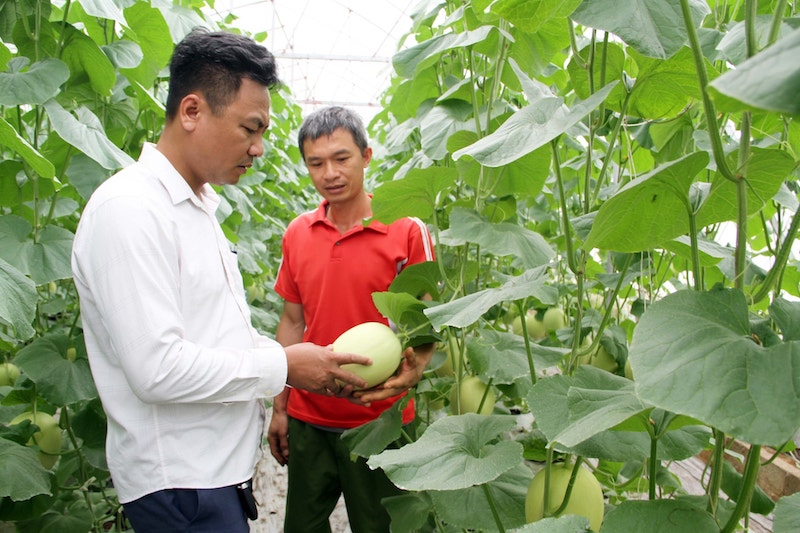
Officials from the Economic Affairs Division of Bao Dai Commune assist cultivation activities at Quyen Huyen Agricultural Services Cooperative.
However, Mr. Quyen also noted that agriculture is a unique sector subject to multiple challenges, including weather conditions, market fluctuations, input costs and labor shortages. Therefore, in addition to infrastructure support, he suggested that more policies should be introduced to promote agricultural mechanization, particularly through partial financial assistance for purchasing production equipment and machinery.
Although challenges remain in terms of infrastructure, population pressure, workload and the management of a larger administrative area, the initial results of the two-tier local government model clearly demonstrate the local administration's spirit of innovation, responsibility and action.
These foundations will play an important role in helping Bao Dai Commune build a truly service-oriented government, promote economic development, improve the quality of life for residents and strengthen its position within Bac Ninh Province's new development landscape.
Author: Kim Dung - Vu Phuong (Cam Anh translates)
RECOMMENDED TOPICS