VN
VN
 EN
EN
20/07/2026, 14:32
Legal environment
Completing regulations on customs operational areas and coordinated anti-smuggling efforts
Decree No. 153/2026/ND-CP, which amends and supplements regulations on customs operational areas and the responsibilities for coordination in preventing and combating smuggling and the illegal transportation of goods across borders, has contributed to strengthening the legal framework, facilitating import and export activities and enhancing the effectiveness of state customs management.
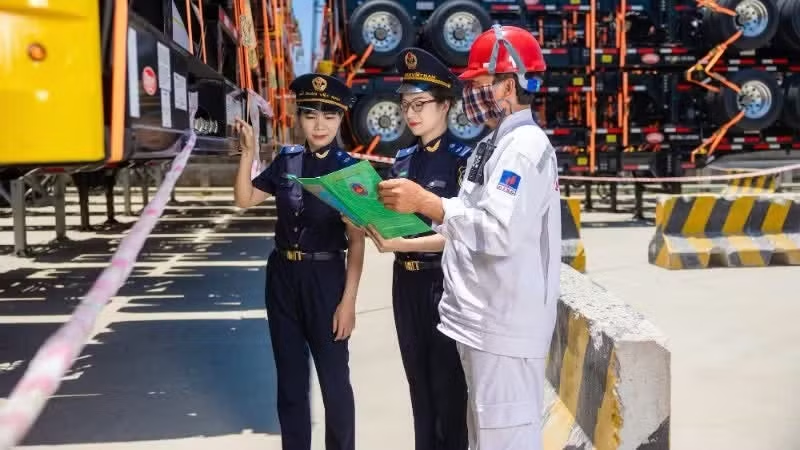
Refining regulations on the scope of customs operational areas
According to the Customs Department, Decree No. 153/2026/ND-CP was promulgated to provide detailed implementation of the provisions of the 2014 Customs Law concerning the scope of customs operational areas and the responsibilities of relevant authorities in preventing and combating smuggling and the illegal transportation of goods across borders.
The decree also institutionalises the Party's policies and orientations set out in Resolution No. 18-NQ/TW, ensuring the consistency and coherence of the legal system at a time when numerous related legal documents have been amended, supplemented, or newly issued. These include regulations concerning the reorganisation of provincial-level administrative units, the management of land border gates, concentrated digital technology zones, international financial centres, high-tech parks, and customs inspection and supervision locations.
According to the drafting authority, a review of the implementation of Decree No. 01/2015/ND-CP and Decree No. 12/2018/ND-CP found that although the existing regulations have facilitated import and export activities, improved the effectiveness of state customs management, and strengthened coordination in preventing and combating smuggling and the illegal transportation of goods across borders, a number of practical difficulties and shortcomings have arisen during implementation. The issuance of Decree No. 153/2026/ND-CP therefore aims to promptly address these issues while ensuring greater consistency throughout the legal system.
With regard to the amendments, the decree focuses on revising and supplementing provisions contained in four articles and the Appendix of Decree No. 01/2015/ND-CP (as amended and supplemented by Decree No. 12/2018/ND-CP).
For land border gates and inland waterway border gates, the decree stipulates that all land border gates must have clearly defined boundaries and operational areas based on criteria such as boundary markers or coordinates, depth, adjoining locations, and length. These are linked to the names of the newly reorganised provinces and communes and are specified in detail in the appendix to the decree. This provision ensures compliance with Article 7 of the 2014 Customs Law, meets practical management requirements, and facilitates customs inspection, supervision, control and import and export activities.
The decree also introduces the terms "customs clearance routes, dedicated cargo transport routes" and "railway border gates" to align with regulations governing land border gates management and the practical needs of import and export operations.
One notable amendment is the narrowing of the customs operational area for 20 secondary border gates where no import or export activities currently take place. This adjustment is intended to ensure compliance with the Customs Law regarding customs operational areas, while enabling customs authorities to concentrate personnel and facilities at border gates with higher cargo volumes, thereby improving the effectiveness of state management and facilitating international trade activities.
In addition, the decree introduces provisions for determining customs operational areas covering border gates, customs clearance routes, dedicated cargo transport routes, border openings, and other locations not previously specified in the decree but which may subsequently be opened, upgraded, or officially authorised for import and export activities by competent authorities, meeting all legal requirements. This provision ensures that no areas fall outside the scope of customs state management while also facilitating cross-border trade activities.
For areas located outside border checkpoints, the decree adds numerous locations to the customs operational area in accordance with the Customs Law and other relevant legal regulations. These include the headquarters, warehouses, and production facilities of enterprises manufacturing or trading goods subject to customs supervision and control within high-tech parks, concentrated digital technology zones, economic zones, and international financial centres; production facilities of export processing enterprises; the headquarters, warehouses, and production facilities of organisations and individuals importing goods for processing or export production; extended air cargo warehouses; export processing facilities; and locations designated for the consolidation, inspection, and supervision of import and export goods in accordance with the law.
Accelerating digital transformation in anti-smuggling efforts
In addition to provisions concerning the scope of customs operational areas, Decree No. 153/2026/ND-CP also amends and supplements regulations relating to coordination responsibilities and leading mechanisms in preventing and combating smuggling and the illegal transportation of goods across borders.
Accordingly, the decree introduces provisions on the exchange and provision of information in the form of documents and electronic data between relevant authorities, implementing the policy of accelerating digital transformation under the Politburo’s Resolution No. 57-NQ/TW and the National Digital Transformation Programme.
At the same time, the decree amends and supplements Article 12 of Decree No. 01/2015/ND-CP to clarify the responsibilities of customs authorities within customs operational areas. Under the new provisions, customs authorities take the lead in carrying out tasks related to preventing and combating smuggling and the illegal transportation of goods across borders in accordance with customs legislation. This amendment is consistent with the principle set out in Resolution No. 18-NQ/TW that "each task should be assigned to only one lead authority, which bears main responsibility", while also complying with the Customs Law and international treaties to which Viet Nam is a member.
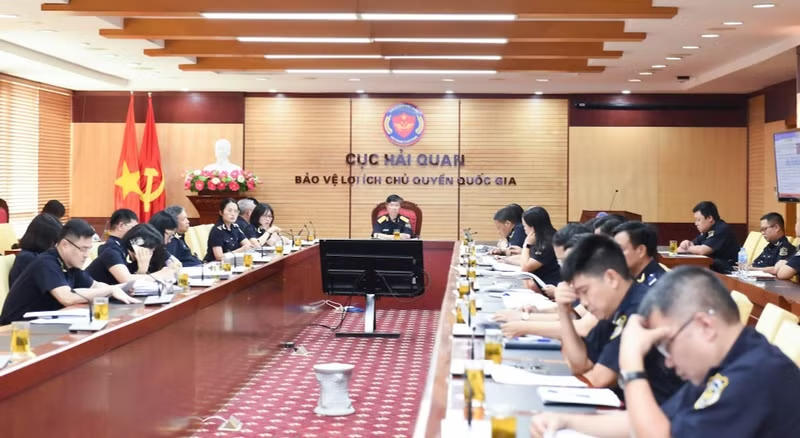
To ensure the consistent implementation of the new regulations across the customs sector, the Customs Department organised a training conference on Decree No. 153/2026/ND-CP. Accordingly, Deputy Head of the Customs Department Luu Manh Tuong chaired the recent conference at the headquarters of the Customs Department to implement the Government’s Decree No. 153/2026/ND-CP, dated May 14, 2026, which amends and supplements a number of provisions of Decree No. 01/2015/ND-CP detailing the scope of customs operational areas and responsibilities for coordination in preventing and combating smuggling and the illegal transportation of goods across borders (as amended and supplemented by Decree No. 12/2018/ND-CP).
The conference aimed to disseminate the new provisions of the decree and establish a common understanding and consistent implementation approach throughout the customs sector, while enhancing the capacity of customs officials to implement the regulations effectively. It also sought to promptly resolve difficulties arising during implementation, ensuring that the decree is applied consistently and effectively, thereby strengthening the effectiveness of state customs management and efforts to prevent and combat smuggling and the illegal transportation of goods across borders.
According to the Customs Department, the training conference will help establish a consistent understanding and implementation approach across the sector, enabling customs officials to fully grasp the new regulations and promptly address practical challenges encountered during implementation. As a result, Decree No. 153/2026/ND-CP will be implemented in a consistent and effective manner, contributing to enhancing the efficiency and effectiveness of state customs management and strengthening efforts to prevent and combat smuggling and the illegal transportation of goods across borders, while facilitating import and export and international trade activities.
Author: NDO
RECOMMENDED TOPICS