VN
VN
 EN
EN
20/07/2026, 14:32
Legal environment
Hung Yen Justice Sector: Creating a stable and transparent legal environment
Entering a new era of development, law enforcement in Hung Yen province has undergone a strong transformation after one year of operating under the two tier local government model.
Our reporter spoke with Mr. Tran Huu Nam, Director of the Hung Yen Department of Justice, about the province's journey of reform; the Department's role as an institutional "filter" and a driver of the investment environment; as well as its efforts to reduce legal compliance costs for businesses, create a unified and seamless legal framework, and foster a strong culture of respect for the rule of law, laying the foundation for breakthroughs in the new era.
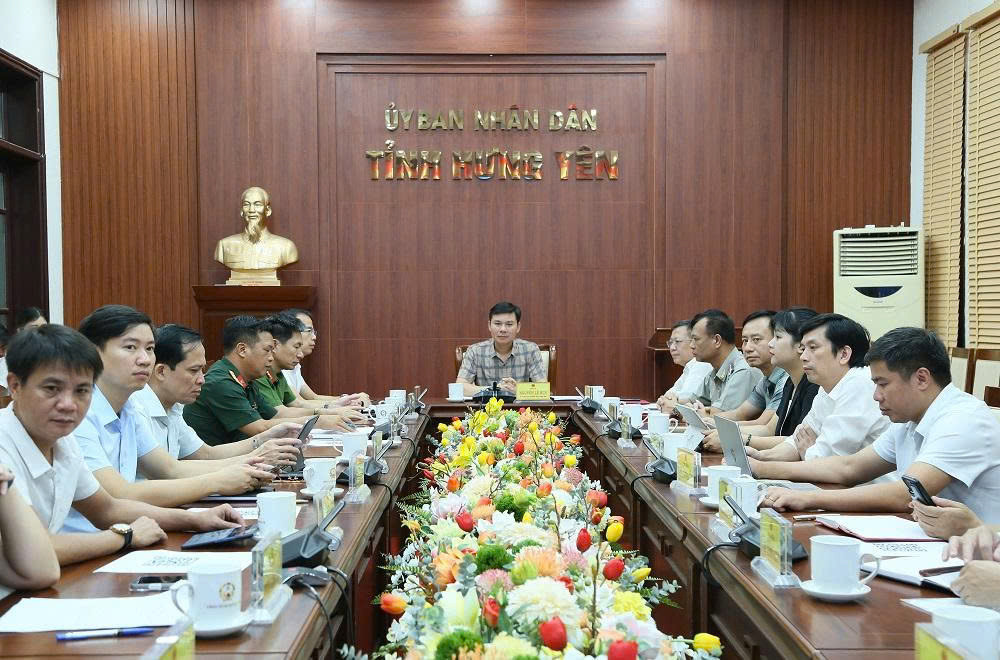
On July 2, Permanent Vice Chairman of the Hung Yen Provincial People's Committee Nguyen Le Huy, together with delegates, attended the online conference to review justice sector performance in the first six months of the year and deploy key tasks for the last six months of 2026, organized by the Ministry of Justice.
- Could you share the most outstanding results of the Hung Yen Justice Sector in institutional reform to create a unified and seamless legal framework for the province?
It can be said that the post merger period has been a "test by fire" for the Hung Yen Justice Sector. The biggest and most critical challenge in merging the administrative boundaries was how to unify the two systems of legal normative documents, which had many differences, in order to avoid conflicts and overlaps in management, administration and the application of law.
Aware of this responsibility, from July 1, 2025, the Department of Justice proactively played the leading role, mobilizing all of its professional resources to take charge of a comprehensive review of 1,231 legal normative documents issued by the People's Councils and People's Committees of the former Thai Binh Province and the former Hung Yen Province. This was a large scale review that required great care, meticulousness and absolute accuracy.
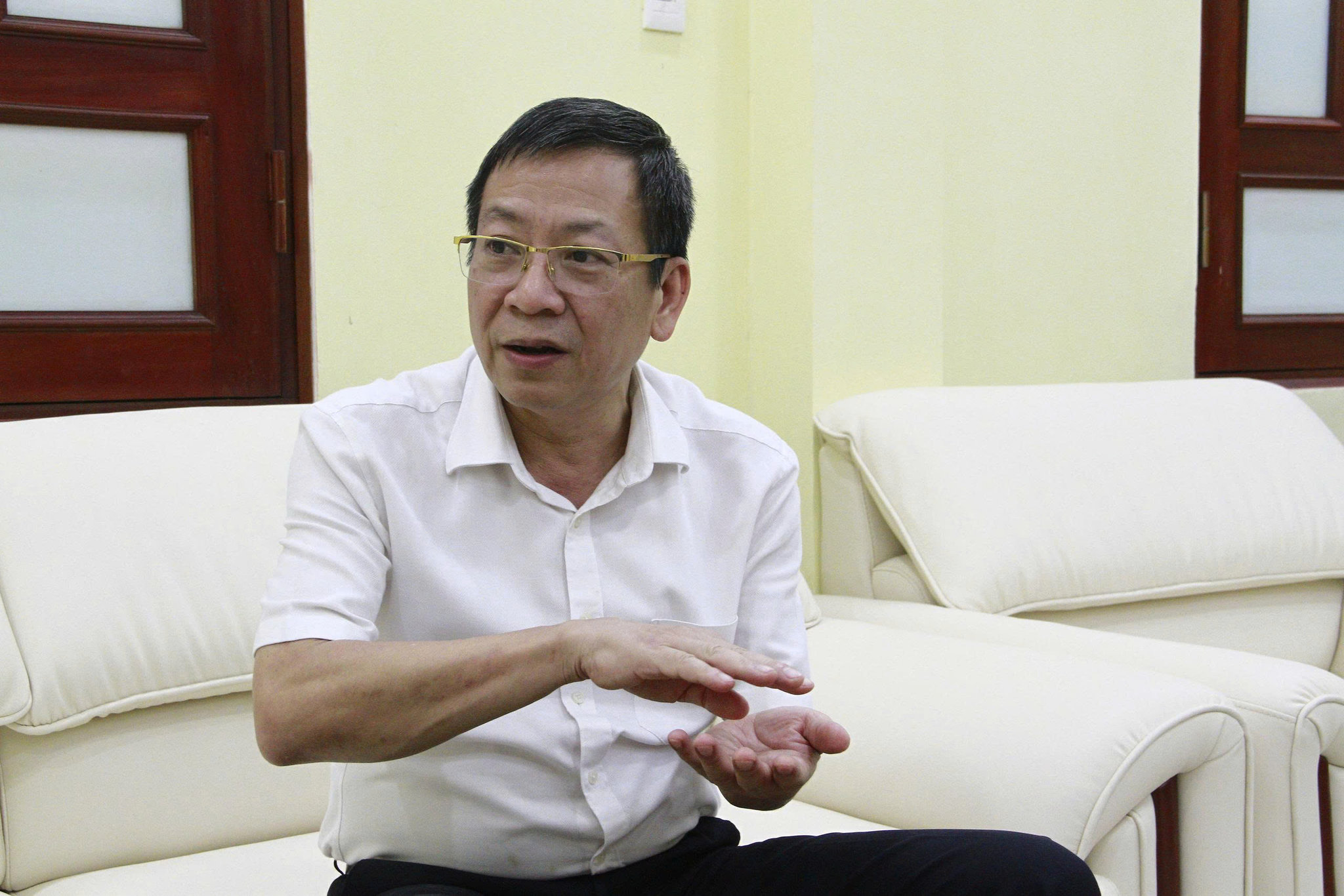
Mr. Tran Huu Nam, Director of the Hung Yen Department of Justice, speaks with a reporter from Business Forum Magazine.
In this process, the Department of Justice provided comments on nearly 700 draft documents from central and local authorities. On that basis, the Provincial People's Council and the Provincial People's Committee issued 233 new legal normative documents, ensuring full compliance with procedures, processes and legality, and these documents were immediately updated to the National Database of Legal Normative Documents. The successful establishment of a unified legal framework, after just one year following the merger, has become the core foundation for the smooth and effective operation of the two tier local government system.
In the first six months of 2026, the Department of Justice organized the review and provided comments on 260 draft documents submitted by central and local agencies and units for consultation. It also continued to maintain the "Legal Consultation" program broadcast live on the provincial radio station.
To improve the effectiveness of legal support for small and medium sized enterprises (SMEs), the Department of Justice prepared and submitted to the Provincial People's Committee for approval the Project on "Establishing and operating a network of legal consultants to provide legal support for SMEs in Hung Yen Province"; and developed a Questions and Answers on legal support for SMEs publication.
The Department of Justice issued Plan No. 29/KH-STP dated May 26, 2026 on implementing Project No. 01 under the model "Government accompanying and serving people and businesses" in the field of civil registration, aiming for all civil registration events to be processed in the electronic environment.
The Department strengthened the use of the digitized civil registration database integrated into the electronic civil registration database in accordance with the list issued under Decision No. 3458/QD-BTP of the Ministry of Justice, enabling civil registration data to replace paper documents in the settlement of administrative procedures.
The application of information technology in civil registration and civil registration management, the implementation of the Electronic Civil Registration Database Project, the digitization of civil registration books, and the provision of online civil registration services at the local level have all received close attention and have been actively implemented.
- One of Hung Yen's major objectives in streamlining the administrative apparatus is to create an open and transparent investment and business environment. How has the Justice Sector translated this objective into reality?
In the context of the country entering a new era of development, law enforcement implementation is no longer limited to examining legality, but must place greater emphasis on effectiveness and a service oriented approach. In Hung Yen, we have identified that the law must go hand in hand with economic development, directly reducing legal compliance costs (B1 Index) for businesses and people when carrying out administrative procedures and licensing procedures.
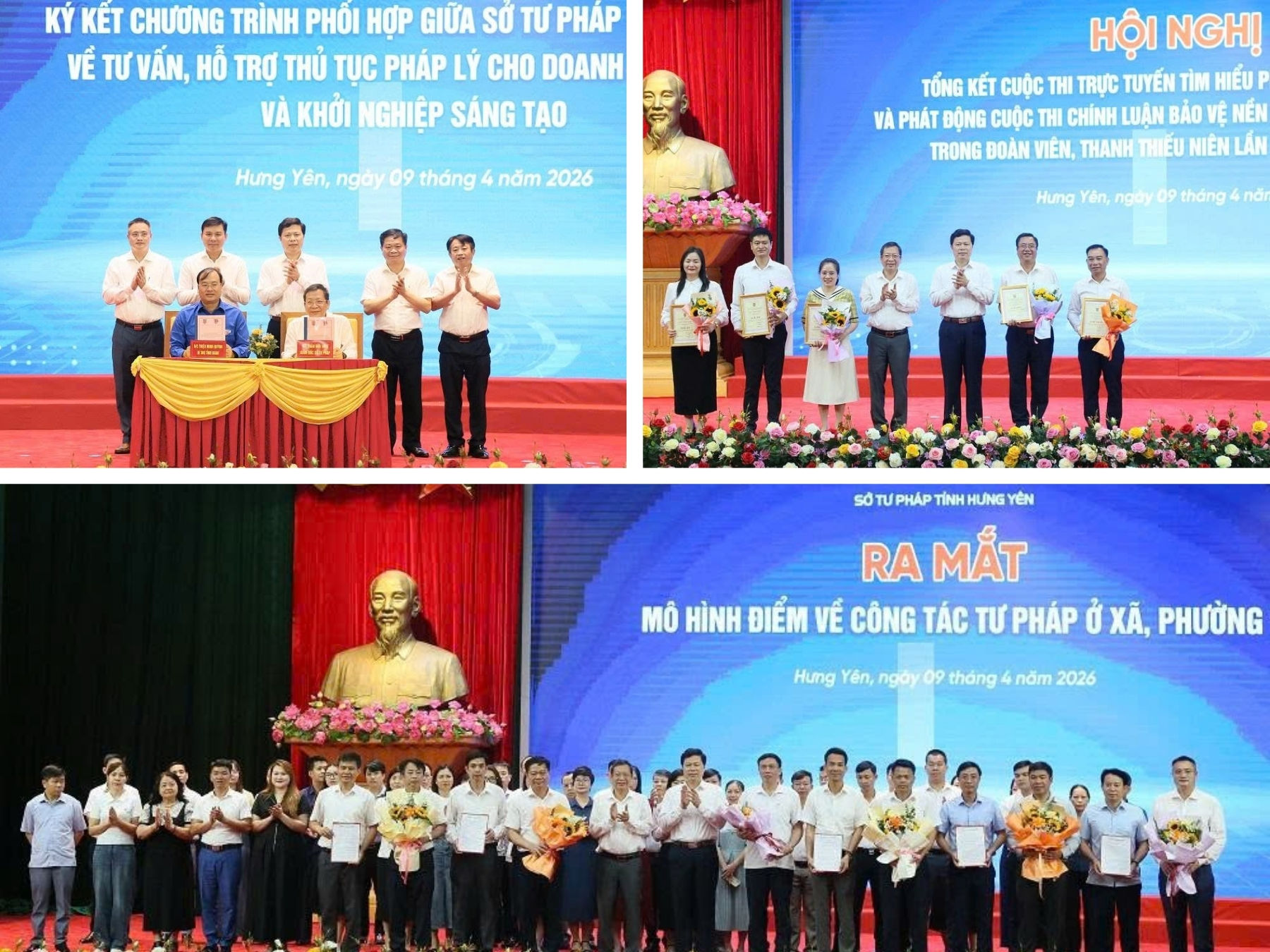
On April 9, the Hung Yen Department of Justice and the Hung Yen Provincial Youth Union organized the conference to review the online competition "Learning about the law on the election of deputies to the National Assembly and People's Councils".
The Department of Justice has taken concrete actions, placing people and businesses at the center through three pillars:
Institutionalizing the Central Government's strategic resolutions: Immediately after the Politburo issued Resolution No. 66-NQ/TW on reforming lawmaking and law enforcement, describing it as the "breakthrough of breakthroughs" in institutional improvement, the Department of Justice promptly advised the Standing Committee of the Provincial Party Committee to issue Plan No. 432-KH/TU, clearly assigning responsibilities and implementation roadmaps for each agency. We also linked this with Resolution No. 68-NQ/TW on private sector development, creating broad social consensus and turning the spirit of respect for the rule of law into a driving force for improving the investment environment.
Making strong breakthroughs in administrative reform: The Department of Justice is currently responsible for 208 administrative procedures, including 152 procedures under its direct authority. The results achieved to date clearly reflect the spirit of efficiency: the proportion of online applications has reached nearly 98% (169 out of 172 applications). In particular, 132 out of 172 applications were processed ahead of schedule.
Implementing the model of "three key breakthroughs" at the grassroots level: At the beginning of 2026, the Department of Justice issued a project to implement three key breakthroughs: creating breakthroughs in legal dissemination and education, legal aid, and judicial support activities.
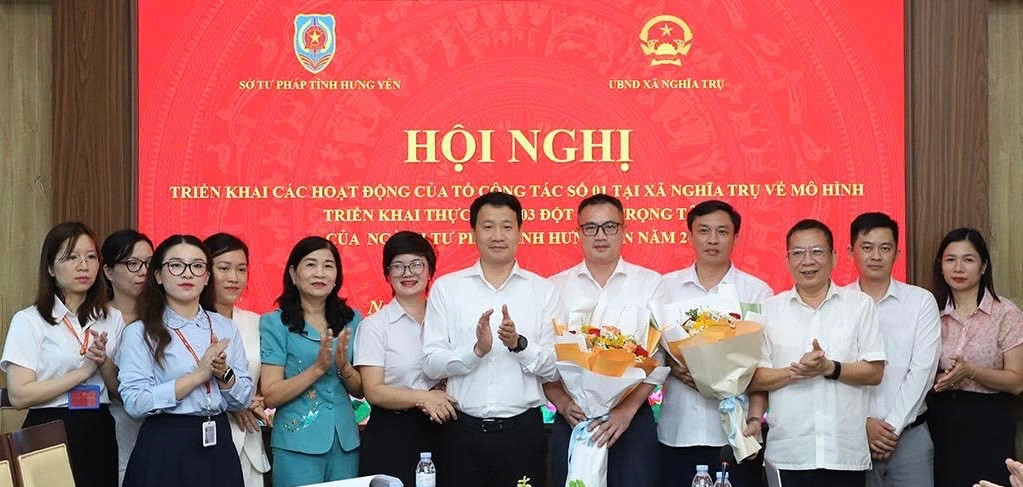
On May 19, Task Force No. 01 was launched in Nghia Tru Commune to implement the pilot model of the Justice Sector's three key breakthroughs in 2026.
In addition, the Department of Justice and the Standing Committee of the Hung Yen Provincial Youth Union signed a cooperation program on legal consultation and legal support for young entrepreneurs and innovative start ups. The program focuses on legal dissemination, legal consultation, support for administrative procedures, and organizing training courses on legal knowledge for young entrepreneurs and youth, thereby contributing to creating a favorable legal environment and promoting entrepreneurship and innovation in the province.
- What recommendations and proposals would you like to make to the Ministry of Justice and central authorities to further improve the institutional framework and promote digital transformation in the coming period?
After one year of Hung Yen operating under the two tier local government model in the field of justice, practical implementation has revealed a number of issues. On behalf of the local Justice Sector, I would like to make the following key recommendations and proposals focusing on the following major issues:
First, regarding institutional development and improvement: We propose that the Ministry of Justice soon issue comprehensive and fundamental directions and solutions to thoroughly address intersectoral difficulties and obstacles in judicial administration, civil judgment enforcement and judicial support activities. In particular, it is necessary to further strengthen the coordination mechanism between the central and local authorities to conduct a nationwide review of the system of legal normative documents, eliminating conflicting provisions among specialized laws at their source.
Second, we propose that the Central Government further promote the reduction and simplification of administrative procedures and business conditions in line with the spirit of Conclusion No. 18-KL/TW of the Politburo. Greater decentralization and delegation of authority to the grassroots level are needed to shorten processing times for people and businesses.
Third, regarding digital transformation: technology is the "key" to modernizing the Justice Sector. At present, Hung Yen has achieved 100% coverage of official government email accounts, applied software for the management of administrative violations down to the commune level, and is developing the following software systems: (1) a database software system on grassroots mediation and the application of AI for legal research and mediation consultation at the grassroots level; (2) a database software system for bailiffs' records in the province; and (3) the construction of the Hung Yen Justice Sector Digital Data Center.
However, to ensure greater consistency, we propose that the Ministry of Justice complete the overall digital transformation architecture of the Justice Sector in a unified manner nationwide; complete shared databases interconnected with the National Population Database and other national databases; and complete unified professional software systems from the central government to local authorities, avoiding fragmented investment and lack of connectivity. At the same time, the Ministry should study and issue mechanisms and technical standards, while strengthening guidance on the application of artificial intelligence in judicial activities, ensuring information security, protecting personal data, and improving the quality of services for people and businesses.
- Thank you very much!
Author: KIM DUNG (THANH TRA translates)
RECOMMENDED TOPICS