VN
VN
 EN
EN
22/07/2026, 02:00
Business economics
Economic diplomacy key to Vietnam’s double-digit growth goal in 2026
Economic diplomacy is expected to play a decisive role as Vietnam targets double-digit growth from 2026, requiring all levels, sectors, localities and economic fields to accelerate at a corresponding pace.
Vietnam is ramping up economic diplomacy as a core growth engine, with Prime Minister Pham Minh Chinh calling for more substantive, results-driven action to help the country achieve double-digit economic growth from 2026.
Speaking at a national conference on January 10, the prime minister urged ministries, localities, sectors and overseas missions to accelerate efforts in expanding markets, attracting international resources and driving breakthroughs in science and technology.
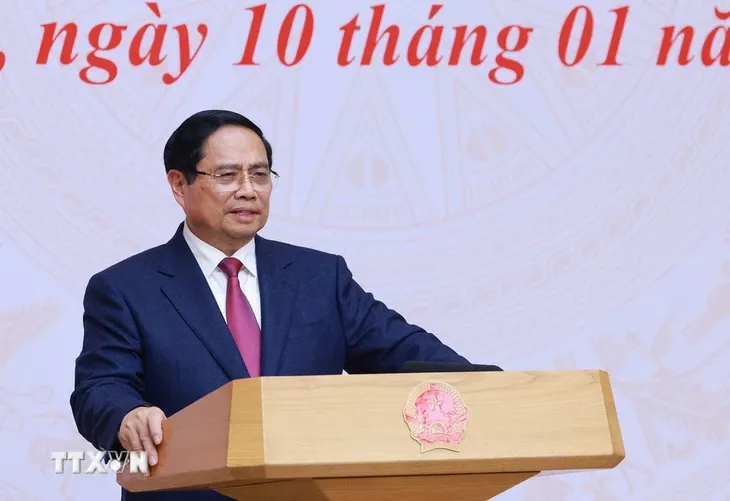
Vietnam's Prime Minister Pham Minh Chinh at the conference on January 10. Photos: VNA
“To reach double-digit growth, all levels and sectors must move faster and in sync,” Chinh said, stressing that economic diplomacy must translate policy into measurable outcomes.
The conference reviewed economic diplomacy performance in 2025 and set priorities for 2026. It was held in a hybrid format with participation from government leaders, ministries, local authorities and Vietnamese ambassadors and heads of overseas missions.
Economic diplomacy delivers a strategic shift
Reviewing the results of 2025, the prime minister said that economic diplomacy recorded major achievements, marking a shift in approach and helping turn challenges into opportunities through proactive engagement, expanded markets, improved quality, clearer effectiveness, economic growth, and public benefits.
Vietnam conducted 75 high-level external activities, upgraded relations with 17 countries and signed around 350 cooperation agreements, which was 2.5 times higher than in 2024.
These agreements strengthened the country’s ability to mobilize external resources for socio-economic development and improved resilience amid global economic and trade fluctuations.
Vietnam consolidated key export and investment markets while making breakthroughs in new and potential destinations such as Latin America, the Middle East, Africa, Central Asia and Central and Eastern Europe.
As a result, Vietnam rose into the world’s top 15 trading economies, with total import-export turnover projected to exceed US$900 billion.
National branding, trade promotion and tourism promotion saw clear progress, directly contributing to growth in the services and tourism sectors.
In science and technology, more than 70 cooperation documents were signed at government, ministerial, business, academic and local levels, including strategic frameworks with leading global technology hubs.
Economic diplomacy facilitated the entry of major global technology corporations, supported key investment projects and helped Vietnamese technology firms expand overseas.
Meanwhile, networks of overseas Vietnamese intellectuals were further strengthened, with around 5,000 expert profiles compiled and a target set to bring 100 leading specialists back to work in the country.
During the year, Vietnamese representative missions abroad organized nearly 500 trade, investment and tourism promotion activities while supporting localities in conducting more than 150 promotion programs at home and overseas and assisted in the signing of about 100 international cooperation agreements.
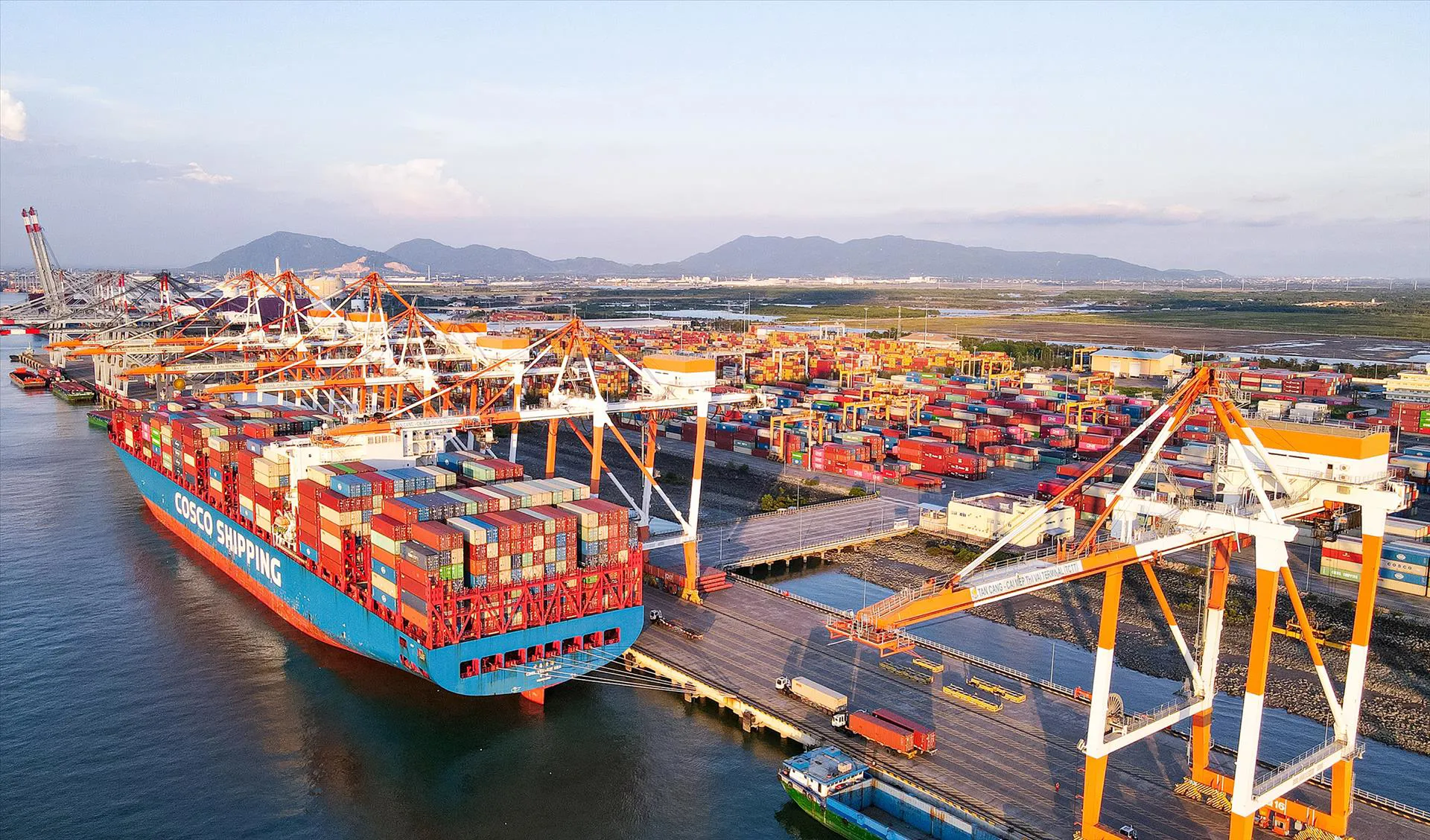
Cai Mep-Thi Vai Port in the southern economic hub of Ho Chi Minh City is one of the most important ports in Vietnam.
Sincerity and dialogue as guiding principles
At the conference, Prime Minister Pham Minh Chinh said diplomacy, especially economic diplomacy, must be based on sincerity, dialogue and cooperation with shared interests and shared risks.
He urged ministries, localities, businesses and overseas Vietnamese missions to decisively translate the Party and State’s guidelines into concrete actions, especially strategic resolutions of the Politburo and the upcoming 14th National Party Congress.
The priority will be given to international cooperation on science and technology, innovation, digital transformation and green transition, in addition to sustainable energy, smart cities and tourism.
Vietnam also seeks to attract major technology groups and overseas Vietnamese scientists while enabling domestic firms to integrate more deeply into global value chains.
Economic diplomacy is tasked with renewing traditional growth drivers through diversified and multilateralized markets, products and supply chains.
PM Chinh called for stronger engagement with potential markets in the Middle East, Africa and South America.
He also urged the expansion of free trade agreements with Bangladesh, Pakistan and African countries and faster negotiations with the Mercosur bloc.
To unlock new growth engines, it requires stronger cooperation with major and traditional partners while expanding engagement with potential partners in emerging technologies such as cloud computing, artificial intelligence and semiconductors.
The government will step up support for businesses, especially small and medium-sized enterprises, through a coordinated ecosystem covering banking, logistics, human resources and legal services to help them expand globally.
At the event, some ambassadors were given tasks, with the ambassador to the United States being asked to work toward early recognition of Vietnam’s market economy status and removal from the US high-tech export restriction lists.
Meanwhile, the ambassador to China was instructed to advance cross-border railway projects. The ambassador to Russia was tasked with promoting cooperation on the Ninh Thuan nuclear power plant.
While the ambassadors to Belgium and ASEAN were directed to work with the European Commission and regional partners to combat illegal, unreported and unregulated fishing to protect national reputation and ensure sustainable fisheries development.
The Ministry of Industry and Trade was assigned to finalize a program supporting Vietnamese enterprises’ global expansion, strengthen links with international investors, ensure effective operation of international financial centers and free trade zones, and promote cross-border economic activities.
Economic diplomacy amid global transition
At a foreign affairs sector conference on December 29, 2025, Permanent Deputy Minister of Foreign Affairs Nguyen Minh Vu described 2025 as a year of transition from an old global order to a new one, marked by volatility and uncertainty.
It was also the first year the Ministry of Foreign Affairs implemented its expanded mandate after merging with the Party Central Committee’s External Relations Commission and taking on additional tasks from the National Assembly’s Committee for External Relations, becoming the coordinating body for the political system’s external activities.
During the year, the diplomatic sector deepened relations with 42 partners at a comprehensive partnership level or higher and played a more active role in shaping rules at multilateral forums.
Reviewing the 2021-2025 period, Prime Minister Chinh highlighted six keywords, namely streamlined apparatus, timely adaptation, effective innovation, expanded cooperation, enhanced position and development-oriented diplomacy.
With 2026 expected to remain volatile, the Party and State view foreign affairs and international integration as core and regular tasks to advance a higher-level comprehensive foreign policy strategy.
The prime minister urged the diplomatic sector to uphold a 24-word principle focused on accurate policy advice, flexible adaptation, timely adjustment, effective transformation, community responsibility and stable development.
Author: Hanoitimes
RECOMMENDED TOPICS