VN
VN
 EN
EN
20/07/2026, 14:32
Legal environment
Improving a legal framework for a transparent real estate market
At a time when the Vietnam real estate market has yet to fully recover, housing prices in several major cities continue to set new benchmarks, raising questions about the market’s sustainability over the medium and long term.
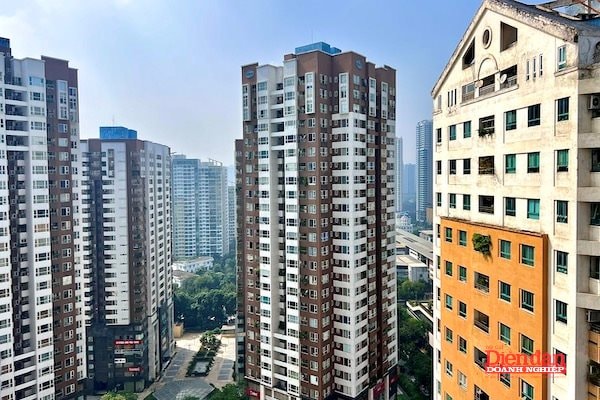
Currently, housing prices have risen sharply and are increasingly far beyond the affordability of the general public.
Previously, some opinions had proposed studying and supplementing regulations in the direction of increasing taxes on real estate transfers to curb speculation.
Rapid House Price Increases
At the forum “The Real Estate Market in the New Phase—Awarding Certificates for Livable Projects 2025” held recently, Dr. Can Van Luc, Chief Economist of BIDV, noted that housing prices are now at very high levels and are increasingly out of reach for most people. Internationally, it takes an average of around 15 years of income for an individual to purchase a home, whereas in Viet Nam this figure has risen to nearly 26 years. This gap clearly reflects the severe housing pressure faced by middle- and low-income groups, particularly in major urban areas.
Data show that during the 2019–2024 period, real estate prices nationwide increased by nearly 60%. In the first 11 months of 2025 alone, property prices in Hanoi and Ho Chi Minh City rose by an average of more than 20%, even though the market was still in the process of recovering from a downturn. According to many experts, the continued establishment of new price levels for housing and land, while the income of the majority of the population grows slowly, is an abnormal phenomenon that poses significant risks to the market’s sustainable development.
Beyond price issues, Dr. Can Van Luc pointed out that the market is also facing a serious mismatch between supply and demand. Although supply has shown some improvement compared to previous periods, the product structure remains misaligned with actual demand. The market is oversupplied in the high-end segment, while there is a severe shortage of reasonably priced commercial housing and social housing for low- and middle-income earners.
In reality, in many localities, most newly launched projects are concentrated in the mid- to high-end segments, with prices far exceeding the purchasing power of the majority of urban residents. As a result, genuine housing demand is being suppressed, while capital tends to flow into speculative and hoarding activities in real estate, increasing the risk of price bubbles and reducing liquidity over the medium and long term.
Analyzing the underlying causes of persistently high real estate prices, Dr. Can Van Luc emphasized that the biggest bottleneck lies in legal and regulatory issues. Prolonged obstacles in land, investment, and construction procedures, together with risk-averse attitudes in project approval processes, have constrained supply for an extended period. When supply is limited and input costs rise, supply–demand imbalances worsen, creating upward pressure on housing prices.
In addition, practices such as price manipulation, artificial price inflation, and speculation remain widespread in many areas, especially when information about planning or infrastructure investment emerges. Meanwhile, current tax policies on real estate remain incomplete, with relatively low transfer and rental taxes that are insufficient to regulate short-term speculative behavior. These factors combined have contributed to rapid price increases that are difficult to reverse.
The Need to Complete the Institutional Framework
From this reality, Dr. Can Van Luc recommended that the State continue to improve the institutional framework related to land, construction, and real estate; promptly issue full decrees and circulars guiding the implementation of new laws; and strengthen enforcement. Closely monitoring market developments and intervening in a timely manner when signs of instability emerge is considered crucial to limiting systemic risks.
At the same time, concrete and feasible solutions are needed to stabilize and gradually reduce housing prices, diversify capital sources for the market, and develop healthy finance for the real estate market. Preventing waste in the management of land and public assets, along with promoting digital transformation and green transformation in the real estate sector, are also seen as important orientations for the coming period.
From a broader perspective, Dr. Vo Tri Thanh, former Vice Director of the Central Institute for Economic Management, argued that Viet Nam’s real estate market is facing an imperative to restructure in a more substantive direction. According to him, real estate can no longer continue to rely excessively on expectations of asset price appreciation but must return to its core role of serving genuine housing needs and sustainable urban development.
“When real estate prices rise mainly due to expectations and speculation, accumulated risks become very large, not only for businesses but also for the financial system and the broader economy,” he warned. He also emphasized the role of information transparency in stabilizing the market. When people and investors lack full and accurate information on planning, legal status, and transaction prices, the market is easily influenced by rumors and herd psychology, creating conditions for artificial price “fevers.”
In this context, Ms. Tong Thi Hanh, Director General of the Department of Housing and Real Estate Market Management under the Ministry of Construction, said that the Ministry and relevant agencies are implementing a synchronized set of measures to curb price manipulation. One of these measures is the development of a decree on a real estate database, requiring transparency from supply to pricing, especially in the primary market. Only with comprehensive data can regulators effectively monitor the secondary market, where price inflation activities are most prevalent. In addition, closely tracking inventories and product structures in each locality will help identify shortages in specific segments and guide appropriate development.
Furthermore, the Ministry of Construction is studying the establishment of a state-managed electronic real estate transaction center, coordinated with land, tax, and financial authorities. This platform is expected to play a key role in controlling brokerage activities, limiting misinformation, and enhancing transparency across the entire market.
Author: VI ANH - TRUONG DANG
RELATED TOPICS
RECOMMENDED TOPICS