VN
VN
 EN
EN
23/07/2026, 01:50
Legal environment
Should Vietnam cut fuel import tariffs to 0%?
Rising tensions in the Middle East have heightened concerns about potential disruptions to global energy supplies. Vietnam’s Ministry of Finance has proposed cutting import tariffs on petroleum products to 0% as a short-term measure to expand sourcing options and stabilize the domestic market.
Geopolitical tensions in the Middle East are placing additional pressure on global energy markets, prompting Vietnamese authorities to consider contingency measures earlier to address potential supply shortages and price volatility.
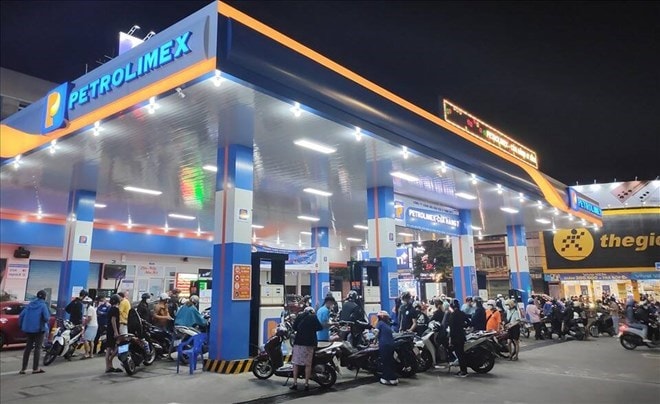
The conflict involving the United States, Israel and Iran has already affected the global petroleum trade.
Against this backdrop, the Ministry of Finance has proposed reducing the Most Favored Nation (MFN) import tariff to zero for several fuel products and key input materials. The measure is intended as a temporary solution to facilitate imports and help stabilize the domestic market.
According to documents submitted by the ministry to the Ministry of Justice for review, authorities are drafting a decree to amend MFN tariff rates on certain petroleum products and inputs through an expedited legislative procedure. The goal is to respond quickly to developments in the global energy market.
The Ministry of Finance noted that global instability—particularly the conflict in the Middle East—is causing sharp fluctuations in energy prices, especially crude oil and natural gas, while increasing the risk of disruptions in global petroleum supply.
Notably, the proposal is driven not only by concerns over price volatility but also by fears of supply shortages. According to the ministry’s assessment, the conflict involving the United States, Israel and Iran has already affected the global petroleum trade.
In a worst-case scenario, oil shipments through the Strait of Hormuz—one of the world’s most critical energy transit routes—could be disrupted. Roughly 20 million barrels of crude oil pass through the strait each day, much of it destined for refineries in Asia. If flows through this route were interrupted, many refineries in the region could be forced to reduce output or limit fuel exports.
Vietnam would not be immune to such disruptions. The Ministry of Finance warned that some domestic refineries could face operational challenges if imported crude supplies were constrained, potentially affecting their ability to fulfill existing delivery contracts.
At present, most of Vietnam’s petroleum imports come from countries with free trade agreements (FTAs), where tariff rates are already low or zero. However, if global supply tightens, access to these traditional suppliers could also be affected.
Reducing MFN tariffs is therefore seen as a way to open an additional “import window,” allowing Vietnamese companies to source fuel from non-FTA markets if necessary.
Under the proposal, MFN tariffs on unleaded gasoline and blending components such as naphtha and reformate would fall from 10% to 0%.
Tariffs on diesel, fuel oil, jet fuel and kerosene would also drop from 7% to 0%.
Meanwhile, several petrochemical feedstocks—including xylene, condensate, and paraxylene—would see tariffs reduced from 3% to 0%, while other cyclic hydrocarbons would fall from 2% to 0%.
From a policy perspective, the measure appears to be more preventive than purely price-driven. In a scenario where global supply becomes constrained, the main concern is not simply whether imports are expensive but whether fuel is available at all.
With MFN tariffs reduced to zero, major fuel importers would gain greater flexibility to source supplies from markets that currently lack preferential trade agreements. This could help ease pressure on companies responsible for ensuring domestic fuel availability.
Of course, the policy would come at a fiscal cost. Based on 2025 import volumes, the Ministry of Finance estimates that reducing tariffs to zero could reduce government revenue by about 1.024 trillion Vietnamese dong.
However, compared with the risk of supply disruptions or a sharp surge in domestic fuel prices—both of which could drive inflation—the fiscal impact may be considered manageable within a broader macroeconomic stabilization strategy.
The proposal also reflects a shift toward more flexible policy responses to external shocks. In a rapidly changing global energy market, waiting until shortages emerge or prices spike before acting could lead to much higher economic costs.
Preparing a tax policy tool in advance to expand import options may therefore serve as a necessary short-term solution, even if it does not address the deeper structural vulnerabilities of the petroleum market.
Over the longer term, energy security cannot rely solely on tariff policy. As global supply becomes increasingly vulnerable to geopolitical tensions, Vietnam’s resilience will depend more on its ability to secure stable crude supplies, expand domestic refining capacity and build strategic reserves.
For now, however, the proposal to cut petroleum import tariffs to zero signals that the government’s immediate priority is clear: ensuring supply and minimizing price shocks for the broader economy.
Author: NGUYEN GIANG - TRUONG DANG
RELATED TOPICS
RECOMMENDED TOPICS