VN
VN
 EN
EN
24/07/2026, 16:11
VCCI
Proposal to remove multiple barriers and procedures in broadcasting and television management
Providing comments on the draft regulation on the management, provision and use of broadcasting and television services issued by the Ministry of Culture, Sports and Tourism, the Vietnam Chamber of Commerce and Industry pointed out several shortcomings and proposed removing barriers and simplifying administrative procedures.
In response to Official Letter No. 915/BVHTTDL-PTTH&TTĐT of the Ministry of Culture, Sports and Tourism regarding comments on the draft, VCCI put forward a number of recommendations.
Regarding the licensing conditions for editing foreign channels on pay television services (Article 6), the draft requires applicants to demonstrate sufficient financial capacity through cost estimates for editing or editing and translation activities over one year, along with documents proving lawful financial sources to ensure implementation in accordance with the estimates (Point d).
This requirement is understood as aiming to ensure the financial capability of press agencies to carry out the editing of foreign channels on pay television services.
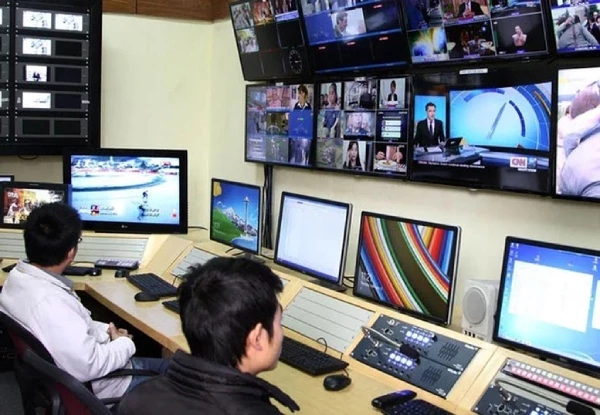
Illustrative image.
“This requirement is unnecessary and not consistent with the purpose of business conditions (which is to safeguard public interests as stipulated in Clause 1, Article 7 of the Investment Law). Ensuring financial capacity for business operations is the responsibility of the enterprise itself, and state intervention in this case is not necessary,” VCCI stated.
In addition, the draft requires applicants to have copyright or authorization documents permitting the use of foreign channels in Vietnam (Point e).
According to VCCI, requiring such documents at the application stage is unreasonable, as organizations are not yet permitted to conduct editing activities at that time. Therefore, it is very difficult to obtain such authorization documents.
Based on these analyses, VCCI proposed removing Points d and e, Clause 1, Article 6 of the draft.
Regarding procedures for granting certificates of registration to provide foreign channels on pay television services (Article 10), VCCI noted that the total processing time of 34 working days is too long compared to similar procedures, and proposed reducing it to 18 working days.
Similarly, under Article 11, the time required for amendments and supplements is recommended to be shortened from 26 days to 10 working days. VCCI also proposed simplifying application dossiers, particularly by not requiring resubmission of content descriptions and broadcast schedules for changes unrelated to content or channel categories.
Regarding Article 13, VCCI argued that restricting the export of domestic broadcasting content to enterprises with registered import-export business lines is inappropriate. According to VCCI, this is not a conditional business activity requiring control, and current laws no longer rely on registered business lines to determine business rights. Therefore, VCCI proposed allowing all legally established enterprises to engage in exporting domestic broadcasting and television programs.
For the pilot implementation of new technology-based services (Article 14), VCCI recommended clearly defining the procedures for preparing and submitting proposals to the Prime Minister to ensure transparency and feasibility during implementation.
Author: VCCI
RECOMMENDED TOPICS