VN
VN
 EN
EN
16/07/2026, 02:00
Business economics
Tapping into vast potential of Halal economy
The global Halal economy is expanding at around 5% annually and is projected to reach a value of 10 trillion USD by 2028. Against this vast potential, Viet Nam has made a decisive shift in its approach. From being a “niche market” of experimental nature, Halal has evolved into a strategic direction contributing to the diversification of the country’s external economic development space.
A large market with diverse opportunities
No longer merely a religious standard, Halal has become a global economic model symbolising faith, quality, and product sustainability. For entrepreneur Bui Thi Huong, Chairwoman of Helen Solar – Yen Khanh Hoa Co., Ltd., the journey towards Halal did not begin with purely commercial objectives, but with a commitment to preserving and safeguarding one of Viet Nam’s precious natural products.
At a time when the bird’s nest market was rife with confusion due to the intermingling of genuine and counterfeit products, the prime minister’s message at the 2024 National Halal Conference — describing Halal as a comprehensive system of standards covering quality, safety and ethics — opened a new path for the company.
For a prolonged period, Helen Solar’s products underwent rigorous appraisal under the supervision of the National Halal Certification Centre (HALCERT). The firm standardised its entire production process and technology as well as recruited Muslim personnel for oversight.
“Once the process was completed, both our raw and processed bird’s nest products obtained Halal certification. We no longer needed to market our products — partners sought us out and introduced Helen’s products into demanding markets,” Bui Thi Huong shared
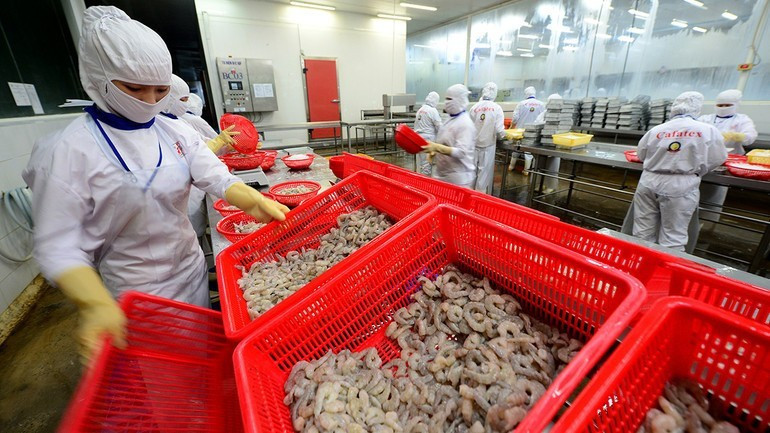
The Halal economy has become the fastest-growing segment globally, with an annual growth rate of 5.2%. Notably, an increasing number of consumers beyond the two-billion-strong Muslim community are choosing Halal as a lifestyle, creating broad opportunities for new suppliers such as Viet Nam.
In 2023, the prime minister issued Decision No. 10/QD-TTg approving the scheme “Enhancing international cooperation to build and develop Viet Nam’s Halal industry to 2030.” On that foundation, the establishment of HALCERT, the development of national standards, and the expansion into additional sectors demonstrate that Viet Nam has begun approaching Halal as an ecosystem rather than merely a story of a handful of export commodities.
Associate Professor Dr Dinh Cong Hoang, Head of the Middle East and West Asia Research Division at the Institute for South Asian, West Asian and African Studies, observed that opportunities arising from the Halal economy for Viet Nam are not diffuse but clearly concentrated in areas where the country holds comparative advantages. Agriculture and food constitute key pillars, particularly as many Muslim countries — especially in the Middle East — depend heavily on external supply to ensure food security. With its diverse production ecosystem, Viet Nam is well placed to meet this demand in line with green, clean, and sustainable standards consistent with Halal requirements.
“Halal-certified products can be sold at significantly higher prices than conventional goods. Some enterprises have proactively invested in factories, adjusted processes, and persistently pursued Halal standards to open the door to new markets. Localities such as Da Nang, Quang Ninh, Ninh Binh, Khanh Hoa, and Lang Son have shown interest in developing Halal as a new pathway towards achieving double-digit growth models,” Associate Professor Dr Dinh Cong Hoang noted.
Halal-certified products can be sold at significantly higher prices than conventional goods. Some enterprises have proactively invested in factories, adjusted processes, and persistently pursued Halal standards to open the door to new markets.
Associate Professor Dr Dinh Cong Hoang
In addition, Muslim-friendly tourism is regarded as a promising form of “on-the-spot export.” Tan Van Vuong, Deputy Director of Da Nang’s Department of Culture, Sports and Tourism, said the city currently boasts more than 800 dining establishments catering to Muslim visitors. In the first eleven months of 2025, Da Nang welcomed over 617,000 Muslim tourists from Indonesia, Malaysia, and the Middle East, supported by the expansion of direct and charter flights. In the coming period, the city plans to develop dedicated Halal tourism products, expand hotels and restaurants meeting Muslim-friendly criteria, and arrange prayer spaces at airports, tourist sites, and shopping centres to better serve visitors.
Looking further ahead, experts believe Halal also paves the way for pharmaceuticals, natural cosmetics, modest fashion, and other consumer industries in Viet Nam. From this perspective, Halal certification is not merely a passport but a foundation for building credibility, thus enabling markets to seek out suppliers once the “garden” has matured and grown sufficiently sweet.
A strategy to “awaken” the market
Assessing Viet Nam’s position, Ramlan Osman, Director of the National Halal Certification Centre (HALCERT), said the country stands before a major opportunity to build a comprehensive Halal ecosystem. However, the greatest challenges lie in awareness and brand-building. Many potential products — including rice, cashew nuts, spices, coffee, and seafood — are already present domestically but have yet to fully access markets across the 57 Muslim-majority countries.
In this context, guiding enterprises at the micro level and supporting them to properly understand and initiate Halal processes is essential. In the long term, as Halal trade continues to expand, Viet Nam must take a more proactive role in connecting businesses, researchers and industry organisations to foster innovation and apply best practices aligned with Halal principles.
Kohdayar Marri, Ambassador Extraordinary and Plenipotentiary of Pakistan to Viet Nam, noted that if Viet Nam wishes to strengthen cooperation and trade with Muslim countries, serious investment in the Halal sector is indispensable. To welcome Muslim tourists, it is necessary to proactively meet essential requirements, from providing food compliant with Islamic law to ensuring suitable facilities for prayer. In export activities, for Vietnamese Halal food to establish a firm foothold, the key lies in building brand credibility while demonstrating respect for and an understanding of the religious values associated with the products.
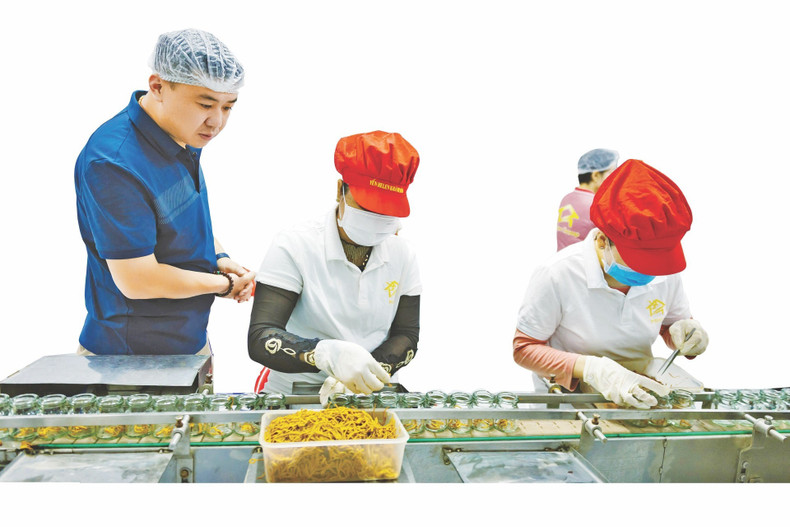
Despite high expectations, the Vietnamese brand remains relatively faint in Muslim markets, with many products having to rely on foreign labels to reach consumers. Associate Professor Dr Le Phuoc Minh, former Director of the Institute for African and Middle Eastern Studies under the Viet Nam Academy of Social Sciences, remarked that the Halal market remains “an open door that many enterprises still hesitate to step through.”
Certification costs and the restructuring of production processes represent initial barriers, while economic returns are not immediately visible, causing hesitation. This is compounded by a reluctance to change and limitations in awareness as Halal is still viewed through a lens of prejudice and insufficient information.
From this reality, Associate Professor Dr Le Phuoc Minh emphasised the decisive role of the State. Beyond policy orientation, it is necessary to promptly translate strategies into concrete measures, including specialised trade promotion programmes, strengthened economic diplomacy with Muslim countries, the development of a synchronised Halal ecosystem, and the acceleration of digital transformation and e-commerce.
When the “torch” of policy is lit brightly and strongly enough, Vietnamese enterprises will be able to confidently transform Halal potential into tangible and sustainable economic gains.
Author: NDO
RECOMMENDED TOPICS