VN
VN
 EN
EN
16/07/2026, 16:40
Culture- travel
The enduring symbolism of horses in Vietnamese painting
In the current of modern Vietnamese art, the horse is not only a familiar creature in daily life but also a figure rich in inspiration. From wartime canvases to contemporary works, horses appear as witnesses to history, embodying displacement and the yearning for freedom, leaving a distinctive imprint on generations of Vietnamese artists.
Horses as witnesses of history and human fate
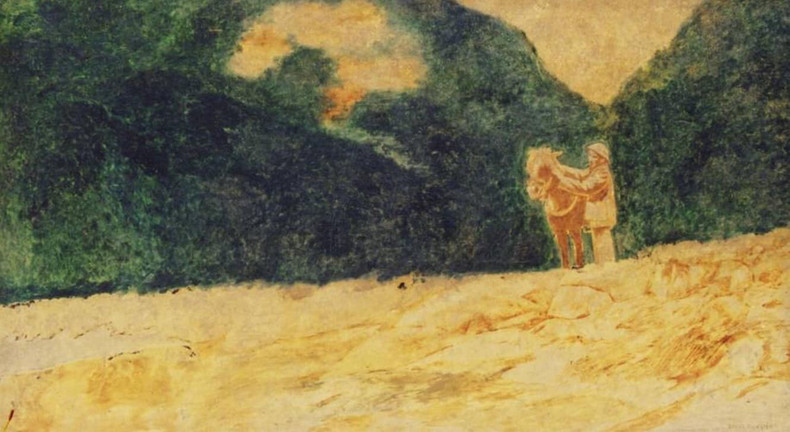
When discussing wartime fine arts, one immediately recalls Duong Bich Lien’s lacquer painting Bac Ho O Chien Khu Viet Bac (Uncle Ho in the Viet Bac Revolutionary Base), recognised as a national treasure and preserved at the Viet Nam Fine Arts Museum. In the tranquil setting of the Viet Bac mountains and forests, the image of Uncle Ho with his horse crossing a stream emerges simply and gracefully, yet full of inspiration. The horse blends seamlessly into the natural rhythm of life in the mountains and among the people during wartime.
Through the traditional lacquer medium and refined brushwork, Duong Bich Lien portrays the horse as a silent companion, accentuating Uncle Ho’s calm, humane demeanour amid hardship. The artwork thus carries profound historical value whilst serving as a poetic symbol of Vietnamese art.
Equally significant is the work of Nguyen Sang. In his painting Giac Dot Lang Toi (The Enemy Burns My Village), the horse is not a mere supporting detail but a central element, merging with the movement of soldiers and fleeing villagers, heightening the epic rhythm of the composition. In 2023, marking Nguyen Sang’s centenary, this work was chosen for adaptation into a postage stamp. In Tru Mua (Taking Shelter from the Rain), under Nguyen Sang’s brush, the horse appears in haste and resignation amid forest rain and mountain winds, where human and equine forms merge in the arduous march, evoking poignancy and fate.
Particularly notable is Nguyen Sang’s lacquer painting Nghi Trua (Midday Rest). The artist captures a quiet moment amid relentless marches: soldiers and porters lie down to rest, while the horse stands calmly, sharing their exhaustion. Its heavy, sturdy form, slightly bowed, suggests endurance and sorrow, as if gathering strength for the journey ahead.
For the pre-war and wartime generation of artists, horses were above all witnesses. They bore the traces of the times, of hardship, of ceaseless movement, accompanying humanity through the most intense years of the 20th century.
Midday Rest thus adds a gentle nuance to the world of horse imagery in Nguyen Sang’s oeuvre and wartime art more broadly. For Nguyen Sang, the horse is inseparable from humanity; a fellow traveller, a companion embodying the fate of wartime existence.
In the wider context of wartime art, figures such as To Ngoc Van, Mai Van Hien, Le Quoc Loc, Phan Ke An, Tran Dinh Tho, and others depicted horses sporadically in tempera paintings, sketches, and everyday scenes linked to war bases and forest transport. Horses entered paintings then as an inevitable part of reality. This modest presence lent the motif documentary weight and emotional resonance, faithfully reflecting a harsh historical period.
For the pre-war and wartime generation of artists, horses were above all witnesses. They bore the traces of the times, of hardship, of ceaseless movement, accompanying humanity through the most intense years of the 20th century.
Horses as symbols of individuality in contemporary art
Entering the post-war and contemporary era, as Vietnamese fine arts expanded its expressive scope, the horse motif gradually became a strongly personalised symbol. Each artist approached the horse in their own way, infusing it with their worldview, emotions, and formal language.
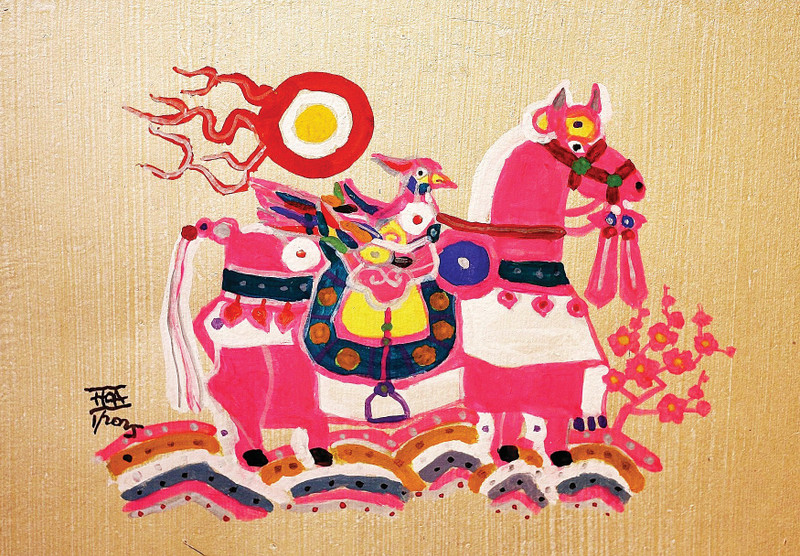
In this period, Nguyen Tu Nghiem stood out for placing the horse within the symbolic system of his celebrated zodiac series. His horse is highly stylised, evoking folk art yet steeped in modern spirit. His zodiacs – including the horse – do not aim for realism but emphasise rhythmic forms and intrinsic energy, creating a formal pinnacle with which later generations continue to engage.
Following in his footsteps, artists such as Dang Xuan Hoa and Pham Viet Hong Lam continued with zodiac paintings in tempera or gouache on do (poonah) paper or multi-layered paper. For Dang Xuan Hoa, zodiac paintings – including the horse – are not merely a Tet pastime but a space for experimenting with the balance between modern structure and folk spirit. His horses often have robust, solid forms with restrained colours, exuding calm, like a leisurely dialogue with tradition in contemporary life.
From ties to history and wartime reality, the horse gradually became a cultural symbol, then a personal imprint, carrying the philosophical musings and deep inner feelings of each artist.
Meanwhile, Pham Viet Hong Lam approaches zodiac paintings with a lighter, more expansive mindset. His horses are vividly coloured, full of vitality, close to the festive spirit, like a painted spring greeting, where folk cultural elements are conveyed through fresh, innocent personal emotion. In the realm of zodiac paintings, each artist renders the horse in their own style, yet they share one point: adding vibrancy and interest to the Tet painting season, extending a cherished Vietnamese cultural pastime.
While these artists view the horse as a cultural form, Le Ba Dang elevates it to a conceptual level rich in philosophy. Horses are a theme he explores extensively, alongside women. He shapes horses through diverse techniques: drawing, cutting, collage, printing, and high abstraction. Boundaries blur between human and horse, form and ground, finite and infinite. The horse is no longer merely a beast of strength but an imprint of the desire to set forth, of resilient yet intelligent movement.
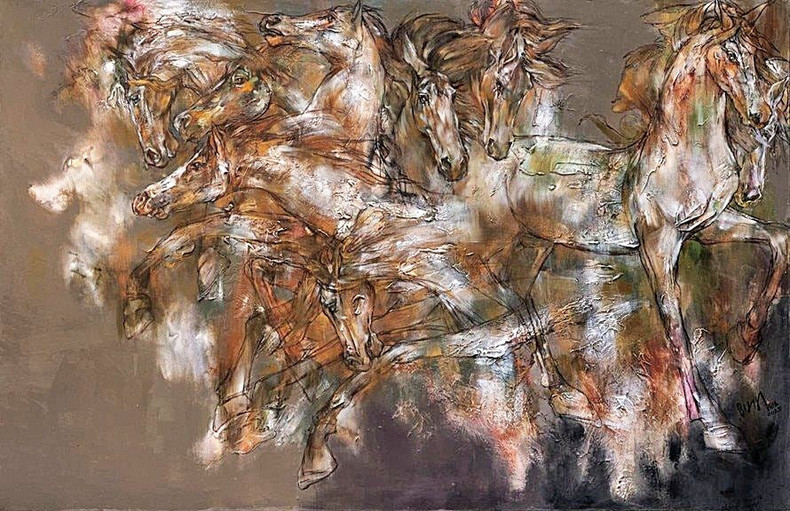
Equally notable in contemporary fine arts is Hua Thanh Binh. In his paintings, horses appear with a distinct inner life: sometimes quiet, melancholic, resigned; at other times rearing up, hooves flying, as if breaking all bonds. Horses often accompany images of young women and traditional motifs – from Ly Dynasty dragons to Champa cultural patterns and decorative designs in communal houses.
This combination creates a space both modern and deeply cultural, where the horse becomes a symbol of loyalty and endurance but also embodies suppressed longing for freedom. For Hua Thanh Binh, the horse seems a mirror reflecting the artist’s inner world: contemplative, profound, ceaselessly seeking spiritual liberation.
From Duong Bich Lien and Nguyen Sang to Le Ba Dang, Nguyen Tu Nghiem, Dang Xuan Hoa, and Hua Thanh Binh, one can see that the horse motif in Vietnamese painting has travelled a long journey. From ties to history and wartime reality, it gradually became a cultural symbol, then a personal imprint, carrying the philosophical musings and deep inner feelings of each artist.
Author: NDO
RECOMMENDED TOPICS