VN
VN
 EN
EN
26/07/2026, 02:38
Business economics
Towards stronger management capacity in the durian sector
In 2025, the durian sector marked a leap in growth, with export turnover reaching approximately 4 billion USD, accounting for nearly 50% of the country’s total fruit and vegetable export value.
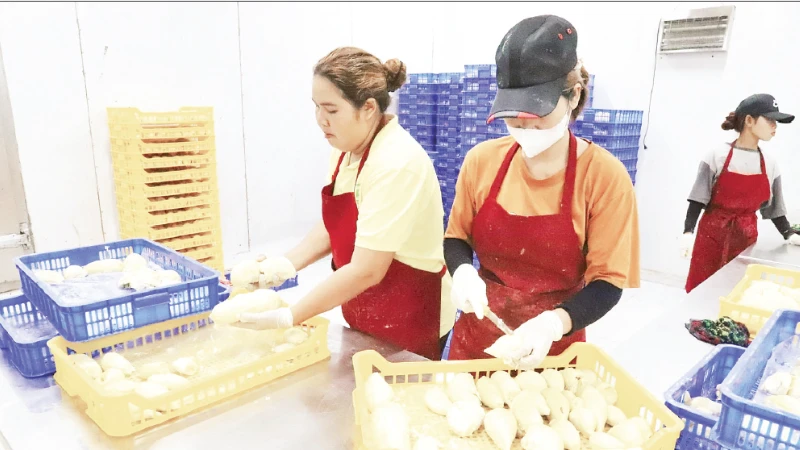
However, the sector is facing challenges related to the standardisation of growing areas and compliance with international standards, requiring stronger management capacity from production to consumption.
Over the past decade, the national durian planting area has increased nearly sixfold, reaching around 180,000 hectares, with output exceeding 1.5 million tonnes. The Central Highlands is the region with the largest durian-growing area, covering more than 75,000 hectares.
According to the Department of Agriculture and Environment of Dak Lak pProvince, the province currently has about 44,900 hectares of durian, including 269 growing areas covering approximately 7,400 hectares, and 40 packing facilities that have been granted codes. Regarding frozen durian packing facilities, 16 units in the province have been approved with export codes by the General Administration of Customs of China. Fresh durians from the province have been exported to many markets such as China, Thailand, Japan, and the United States, with export turnover in 2025 reaching about 1.1 billion USD.
Dang Thi Thuy, Deputy Director of the Dak Lak Department of Agriculture and Environment, Dang Thi Thuy said that although durian plays a key role in the province’s agricultural economy, the sector still reveals many shortcomings, as most durian production areas remain fragmented and small-scale. Cultivation processes and pest control during production are not strictly followed by farmers. Specifically, there are still cases of fertilisers and plant protection chemicals being used more times than recommended, or chemicals outside the permitted list being applied, leading to warnings of violations related to plant quarantine and food safety for some export consignments.
In addition, linkages between producers and cooperatives, cooperative groups, and enterprises remain loose and unsustainable, resulting in the absence of a complete value chain. These are also common limitations of the national durian sector, leading to instability and higher risks in consumption.
From the export perspective, data from the Import-Export Department (Ministry of Industry and Trade) show that China continues to be the key market, shaping growth trends for the durian sector. However, export performance in 2025 showed displayed clear divergence, as turnover declined in the first half of the year due to China tightening controls on pesticide residues and technical standards.
From the third quarter of 2025, exports recovered as enterprises stepped up the standardisation of growing areas, packing facility codes, and traceability, while functional agencies effectively coordinated to address technical bottlenecks, helping stabilise customs clearance. By the end of November 2025, Viet Nam’s durian exports to China reached nearly 885,000 tonnes, valued at 3.24 billion USD.
This demonstrates that durian export growth cannot rely solely on expanding area and output or merely capitalising on market demand;, but it must be closely linked to the level of standards compliance and the sector’s capacity to organise production.
Assessing prospects for durian exports in the coming period, Le Minh Tam, Director of Thien Tam Agricultural Produce Trading Co., Ltd., said that demand for this fruit continues to grow strongly. Viet Nam’s ability to maintain its market share in key markets depends largely on expanding and effectively managing growing-area codes, controlling pesticide residues, and ensuring stable quality and supply.
In the first 11 months of 2025 alone, fresh durian was China’s largest imported fruit item, reaching 1.79 million tonnes valued at 7.18 billion USD, up 17.2% in volume and 5% in value. Other markets such as Malaysia, the United States and Australia also recorded strong growth compared with the same period in 2024.
As durian plays a dominant role in the fruit and vegetable export structure, the objective is not only to maintain growth momentum but, more importantly, to ensure the sustainability and credibility of the sector.
Accordingly, durian exports need to gradually reduce excessive reliance on fresh fruit, increase processed products, and expand consumer markets to enhance added value and spread risks.
In addition, the regulatory role of state management agencies needs to be more clearly promoted, with a proactive approach to early warnings on technical trade barriers, unified application of quality standards, and stronger substantive supervision across the entire chain from production and processing to export.
Author: NDO
RECOMMENDED TOPICS