VN
VN
 EN
EN
22/07/2026, 02:00
Business economics
Unlocking resources for textile enterprises to go green
The pressure to green production is becoming a matter of survival for the textile industry. Yet businesses continue to struggle with barriers related to financing, technology, administrative procedures, and the absence of unified standards.
The green transition is no longer an option but an urgent requirement and an irreversible trend for global industry. For Viet Nam’s textile and garment sector — one of the country’s key export industries with annual export turnover reaching US$45–46 billion — the pressure has become more visible than ever.
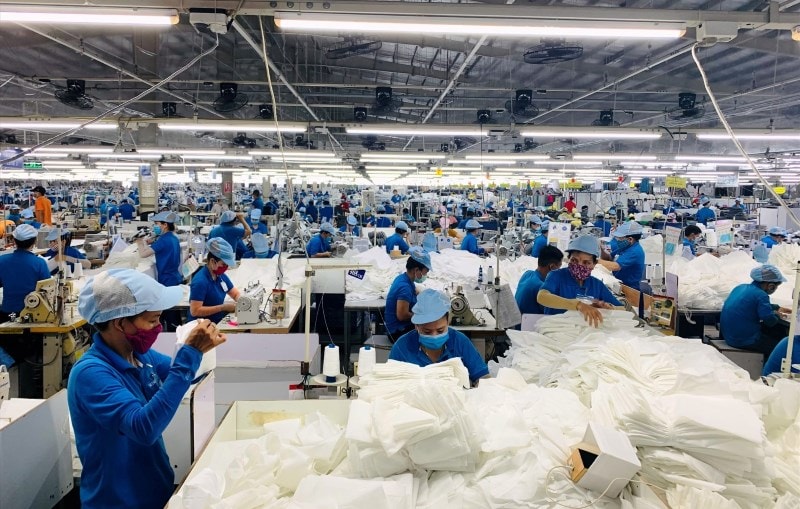
Green transition is no longer an option but an urgent requirement.
When more than 90% of Vietnam's textile and garment exports are destined for demanding markets such as the United States, the European Union, and Japan — all of which are tightening environmental, emissions and traceability standards — the path toward greener production is no longer a trend but a prerequisite for survival and growth. However, this promising journey is being held back by a range of challenges.
In its practical report and recommendations contributing to the amendment of the 2020 Law on Environmental Protection, the Viet Nam National Textile and Garment Group (Vinatex) stated that many obstacles are still slowing down enterprises’ green transition efforts. One of the biggest bottlenecks lies in administrative procedures related to environmental permits and treatment infrastructure in industrial parks.
Sharing the same view, Mr. Trương Văn Cẩm, Vice Chairman and Secretary General of the Viet Nam Textile and Apparel Association, noted that uneven awareness among businesses, along with administrative hurdles ranging from investment licensing to environmental impact assessments and fire safety approvals, have further complicated the situation. Small and medium-sized enterprises (SMEs) are the hardest hit, as they lack capital, personnel and tools to access and implement green transition measures. Although some major firms such as TNG, May 10 and Việt Tiến have pioneered digital governance and emissions measurement, most other enterprises remain stuck at the stage of “green awareness” without sufficient conditions for concrete implementation.
Mr. Hoàng Mạnh Cường, Deputy General Director of Bảo Minh Industrial Park Infrastructure Investment JSC, also highlighted the difficulties in green transition. While businesses have made significant efforts to reduce water consumption in dyeing processes — from 125–130 litres per metre of fabric down to 80–85 litres — achieving fully “waterless” technology would require massive investment in new production lines, beyond the financial capacity of many companies.
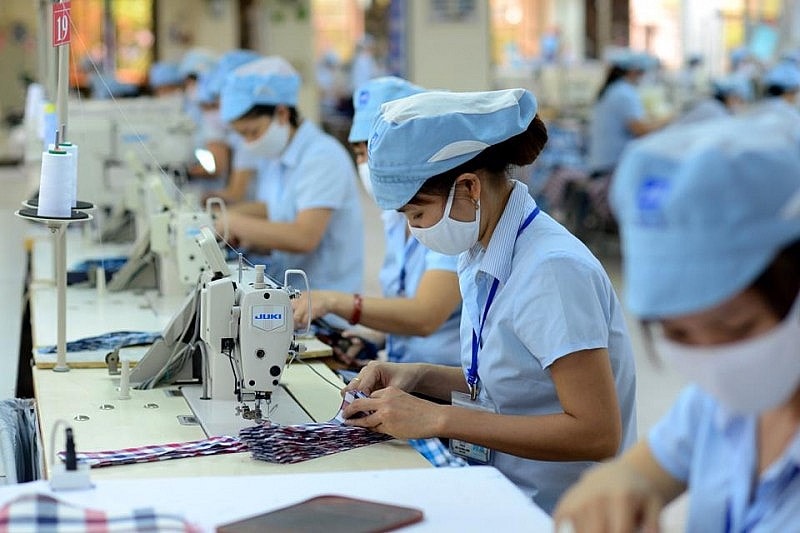
Completing the legal framework in a transparent, synchronized and practical manner.
Similarly, shifting from coal-fired boilers to renewable energy sources such as biomass or solar power is only the first step. In northern regions, where sunlight hours are limited, the efficiency of solar investments remains relatively low, making large-scale adoption difficult. This reflects the shortage of affordable green technology solutions suitable for domestic enterprises.
From this reality, Vinatex has proposed a number of recommendations to improve environmental protection mechanisms and legal policies, including: using automated monitoring data as a basis for inspections and supervision; applying environmental risk-based management mechanisms; simplifying licensing procedures; and improving carbon market mechanisms and greenhouse gas inventory guidelines tailored to textile enterprises.
According to Vinatex, completing the legal framework in a transparent, synchronized and practical manner would help create more favourable conditions for businesses to invest more deeply in green transition, strengthen competitiveness and ensure sustainable development in the coming years.
The group hopes that new regulations will address inconsistencies among related laws, creating a coherent legal corridor that supports enterprises in accessing tax incentives and green finance policies when investing in waste treatment technologies or water recycling systems.
Meanwhile, Mr. Hoàng Mạnh Cường pointed out that developing eco-industrial parks — where businesses commit to energy efficiency, water circularity and green, clean working environments — requires substantive support from the State, particularly in unlocking access to green finance.
According to Mr. Cường, businesses are currently struggling under the pressure of a “dual transition”: simultaneously digitalizing operations and greening production, while lacking a unified set of green transition standards. This has led to confusion in orientation and implementation, especially as companies are forced to comply with multiple ESG criteria from international clients while Viet Nam still lacks a corresponding national standard framework.
Author: THY HANG - TRUONG DANG
RELATED TOPICS
RECOMMENDED TOPICS