VN
VN
 EN
EN
26/07/2026, 02:38
Business economics
Untangling bottlenecks for rice exporters
A market reversal has left rice exporters on the defensive, prompting calls for long-term agreements and solutions to storage and financing constraints.
The Viet Nam Food Association, citing data from the Customs Department, reported that rice exports in the first half of April 2026 reached 530,991 tonnes, worth USD 246.4 million, down 2.1% in volume and 8.7% in value year-on-year.
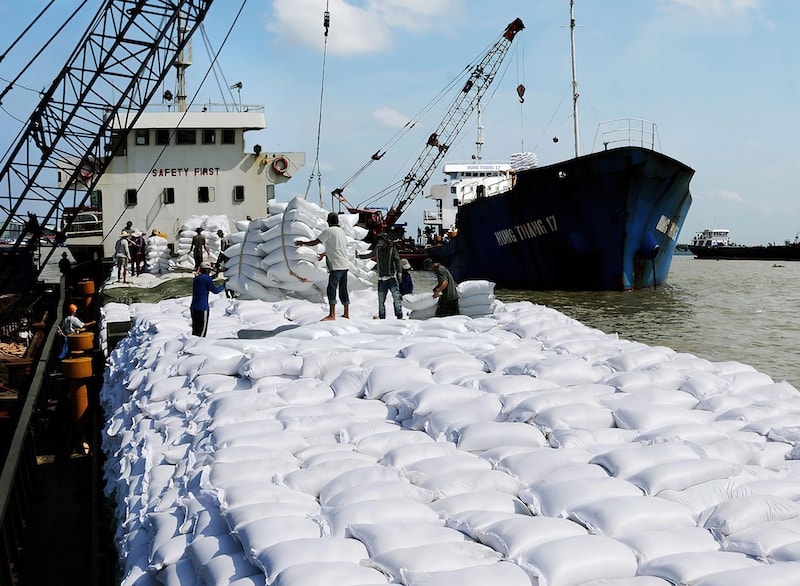
Cumulative rice exports as of April 15, 2026 reached 2.8 million tonnes, worth USD 1.3 billion, down 1.3% in volume and 10.5% in value compared to the same period in 2025.
“Double losses” amid market reversal
By April 15, 2026, Viet Nam had exported 2.8 million tonnes of rice, worth USD 1.3 billion, down 1.3% in volume and 10.5% in value year-on-year. The main driver was a 9.3% drop in export prices, averaging just USD 469 per tonne. The widening gap between volume and value highlights the dominance of falling prices in shaping the market.
More concerning, during the recent harvest, paddy prices at times dropped to around VND 5,000 per kilogram, discouraging farmers from selling. Rice matured in the fields, but transactions stalled due to low prices. Within days, however, prices surged sharply, while the volume available for businesses to purchase had already diminished.
According to Đỗ Hà Nam, Chairman of the Viet Nam Food Association, the situation of “no rice available for sale” is closely tied to developments in the Philippines, which accounts for over 40% of Viet Nam’s rice exports. In 2025, the country announced a halt to imports for the last four months of the year, leaving Viet Nam with over 1 million tonnes in stock.
After this restriction period, the Philippines resumed purchases of around 300,000 tonnes. Nam noted that this initially raised concerns among Vietnamese exporters about shrinking demand. However, actual demand later exceeded expectations, triggering a rapid market reversal.
This volatility has placed many businesses in a dilemma. During harvest, fearing a lack of contracts and competitive pressure, firms ramped up procurement. But as prices rose, previously accumulated inventories became harder to sell, pushing up costs and eroding margins. Many exporters remain uncertain about future deliveries.
Strengthening market regulation capacity
Nam argued that the core issue is enabling farmers to store paddy for longer periods. This requires addressing drying and storage infrastructure. He proposed providing credit support to farmers, using paddy as collateral, or facilitating consignment storage at enterprise or export warehouses.
Beyond storage, businesses also face payment bottlenecks when purchasing directly from farmers. Rural rice transactions still rely heavily on cash, while regulatory requirements on payments and cash flow management complicate direct procurement.
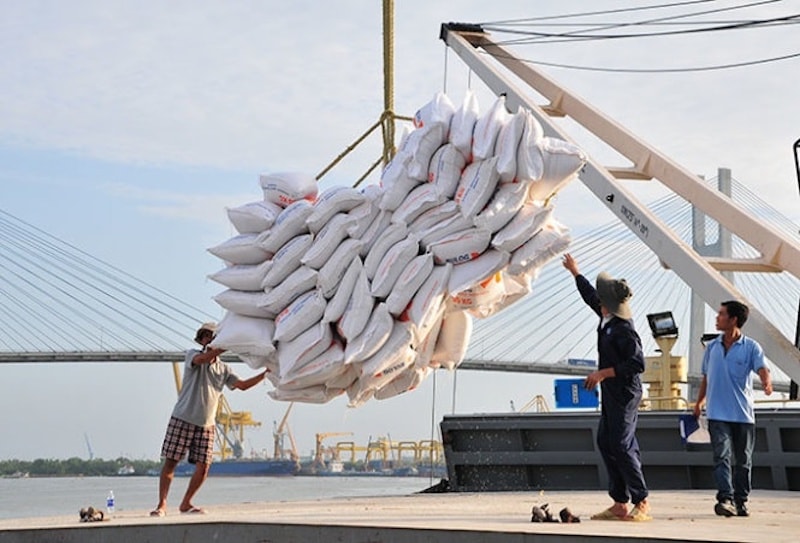
Market volatility has placed many exporters in a difficult position.
“Many farmers are not accustomed to bank transactions. They only sell one or two harvests a year, and the amounts are not large, so opening accounts or making withdrawals is seen as inconvenient. As a result, businesses often have to rely on intermediaries,” Nam explained.
Without resolving these bottlenecks, the rice market will continue to follow its cyclical volatility: farmers struggle to secure good prices during harvest, while businesses face shortages when prices rise.
Sharing the industry’s concerns, Deputy Minister of Agriculture and Environment Võ Văn Hưng said he had recently engaged with Philippine counterparts and confirmed that demand for Vietnamese rice remains strong. Both sides are also advancing long-term cooperation frameworks.
According to Hưng, the Philippines plans to send a delegation to Viet Nam to discuss strategic cooperation in the rice sector. This indicates continued reliance on Vietnamese supply, especially as domestic production costs remain high and insufficient to meet consumption needs.
However, the Deputy Minister stressed that the issue goes beyond demand to strategic positioning. “We need to move toward long-term agreements,” he emphasized.
He added that without stable commitments, export management will remain reactive to policy shifts from trading partners.
Domestically, authorities are reviewing proposals to support farmers and businesses, including mechanisms for consignment storage and increased reserves. Organizing drying, storage, and post-harvest services is seen as essential to improving market regulation capacity.
Technically, investments in drying and storage are not overly complex but require coordinated participation from businesses and proper implementation. “If done well, farmers can store paddy longer and reduce the pressure to sell immediately after harvest,” Hưng noted.
Author: THY HANG - TRUONG DANG
RELATED TOPICS
RECOMMENDED TOPICS