VN
VN
 EN
EN
26/07/2026, 02:38
Business economics
Vietnam’s wood industry accelerates to meet EU’s new rules
A series of technical requirements under the VPA Agreement and the EUDR are pushing Vietnamese wood enterprises to accelerate traceability, digitalize data, and strengthen supply chains to maintain their export advantages.
Viet Nam was the second country in Asia to sign a Voluntary Partnership Agreement (VPA) with the European Union (EU), creating an important foundation for the wood industry to meet increasingly strict requirements on the origin and legality of exported products.
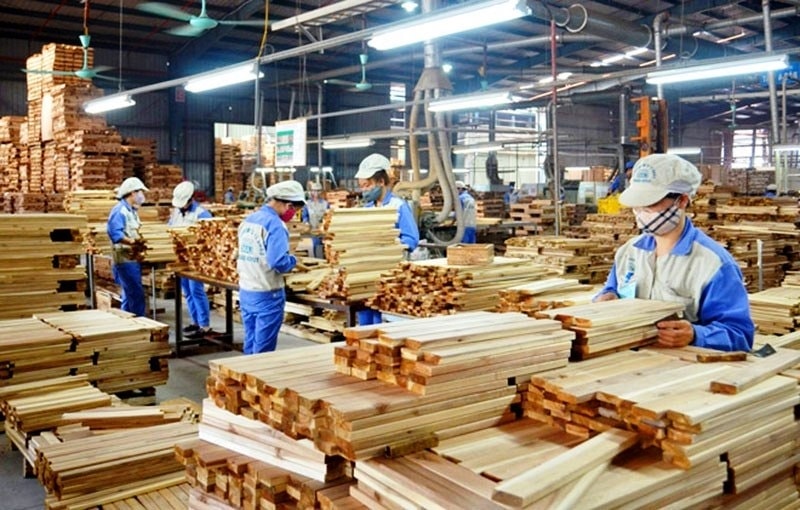
Vietnam is the second country in Asia to sign a Voluntary Partnership Agreement (VPA) with the European Union.
Experts emphasized that although the agreement was initially considered “voluntary,” the rise of green consumption and sustainable trade has led EU markets and consumers to demand that imported wood products comply with increasingly stringent regulations. Europe’s market size is large enough to turn “voluntary” standards into de facto mandatory requirements.
Specifically, the Voluntary Partnership Agreement (VPA) is a legally binding trade agreement aimed at improving forest governance and promoting legal timber trade between Viet Nam and the EU. Under the agreement, countries exporting timber to the EU must establish a Timber Legality Assurance System (VNTLAS), verify product origins, and only shipments meeting the requirements are eligible for FLEGT licenses for export.
These criteria include compliance with regulations related to land-use rights, forest use and management, environmental and social standards, handling of confiscated timber, timber imports, transportation, trading, processing, exports, taxation, and labor regulations. Such requirements have become major technical barriers for wood exporters in developing countries including Malaysia, Indonesia, Thailand, and Viet Nam.
According to Mr. Ngô Sỹ Hoài, Vice Chairman and Secretary General of the Vietnam Timber and Forest Products Association, Viet Nam was the second Asian country after Indonesia to sign the VPA with the EU. This was considered an early step that helped lay the groundwork for the industry to adapt to the EU’s evolving standards.
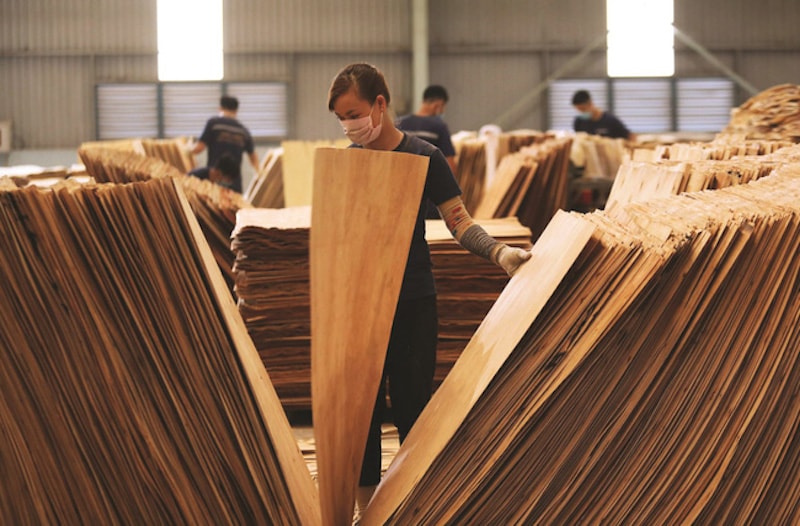
Vietnamese wood enterprises are also being forced to rapidly adapt to the technical challenges posed by the implementation of the EU Deforestation Regulation (EUDR).
Alongside the VPA, Vietnamese wood enterprises must also quickly adapt to the technical challenges brought by the EU Deforestation Regulation (EUDR). Technical requirements are becoming increasingly strict.
According to Mr. Hoài, Viet Nam has spent recent years improving policy frameworks and strengthening inspections and management systems to align more closely with EU requirements.
“We have prepared quite systematically. The issuance of FLEGT licenses for each export shipment is still being discussed in terms of how to align it consistently with the EUDR, the EU’s regulation on deforestation and forest degradation,” Mr. Hoài said.
To comply with the EUDR, enterprises must meet two key requirements. First, they must complete Due Diligence Statements (DDS) regarding timber origin.
Second, they must establish electronic evidence systems, including geolocation coordinates of harvesting areas, to prove that raw materials do not originate from deforestation or conversion of natural forests.
However, according to representatives from the Vietnam Timber and Forest Products Association, this remains a major technical challenge for businesses in the sector.
“Vietnamese wood enterprises are already familiar with tracing raw material origins, from farmers and traders to processors and exporters. However, building and operating electronic data systems to ensure traceability under the new requirements will still require more time,” Mr. Hoài noted.
He also stressed that building cooperation mechanisms among stakeholders across the supply chain is essential to meeting the EU’s new requirements. If implemented effectively, the process could benefit the entire wood industry ecosystem.
“Enterprises need to develop detailed guidelines for all relevant stakeholders so they can jointly apply and comply with the EUDR. If done well, this could become a mutually beneficial model for the entire supply chain,” Mr. Hoài emphasized.
Sharing the same view, Dr. Trương Tất Đơ from the Department of Forestry and Forest Protection under the Ministry of Agriculture and Environment said that the EUDR goes beyond paperwork and shifts toward monitoring through spatial data and remote sensing technology. Inaccurate or dishonest declarations can easily be detected through comparisons with the EU’s independent systems.
According to technical authorities, the fundamental solution is to build an integrated spatial data platform, overlaying forest boundary maps as of December 31, 2020 with raw material area maps to classify risk zones and control risks from the source.
As satellite data becomes increasingly public and accurate, avoiding compliance is no longer feasible. The only viable path forward is honest declarations, standardized data, and international-standard supply chain governance.
Experts noted that although wood exports to the EU currently account for a relatively modest share of Viet Nam’s total export turnover, the EU remains a “standards market.” Once enterprises can meet EU requirements, they will find it easier to access other premium markets because the EU has become a global benchmark for sustainable development and supply chain transparency.
Professor Võ Đại Hải, Director of the Vietnamese Academy of Forest Sciences, said Viet Nam should accelerate the digitalization of forest plantation areas and develop nationwide databases for forest owners to meet international requirements on transparency in product origin and production technologies.
Author: THY HANG - TRUONG DANG
RELATED TOPICS
RECOMMENDED TOPICS