VN
VN
 EN
EN
10/07/2026, 02:38
Business economics
Vietnam remittances surge in 2025, fueling growth, investment and global confidence
Vietnam recorded a strong rise in remittance inflows in 2025, reflecting growing confidence among overseas Vietnamese in the country’s economic stability, policy environment and long-term development prospects.
Remittances sent home by overseas Vietnamese in 2025 are estimated to have surpassed the US$16 billion recorded in 2024, according to the State Bank of Vietnam’s Region 2 office based in Ho Chi Minh City.
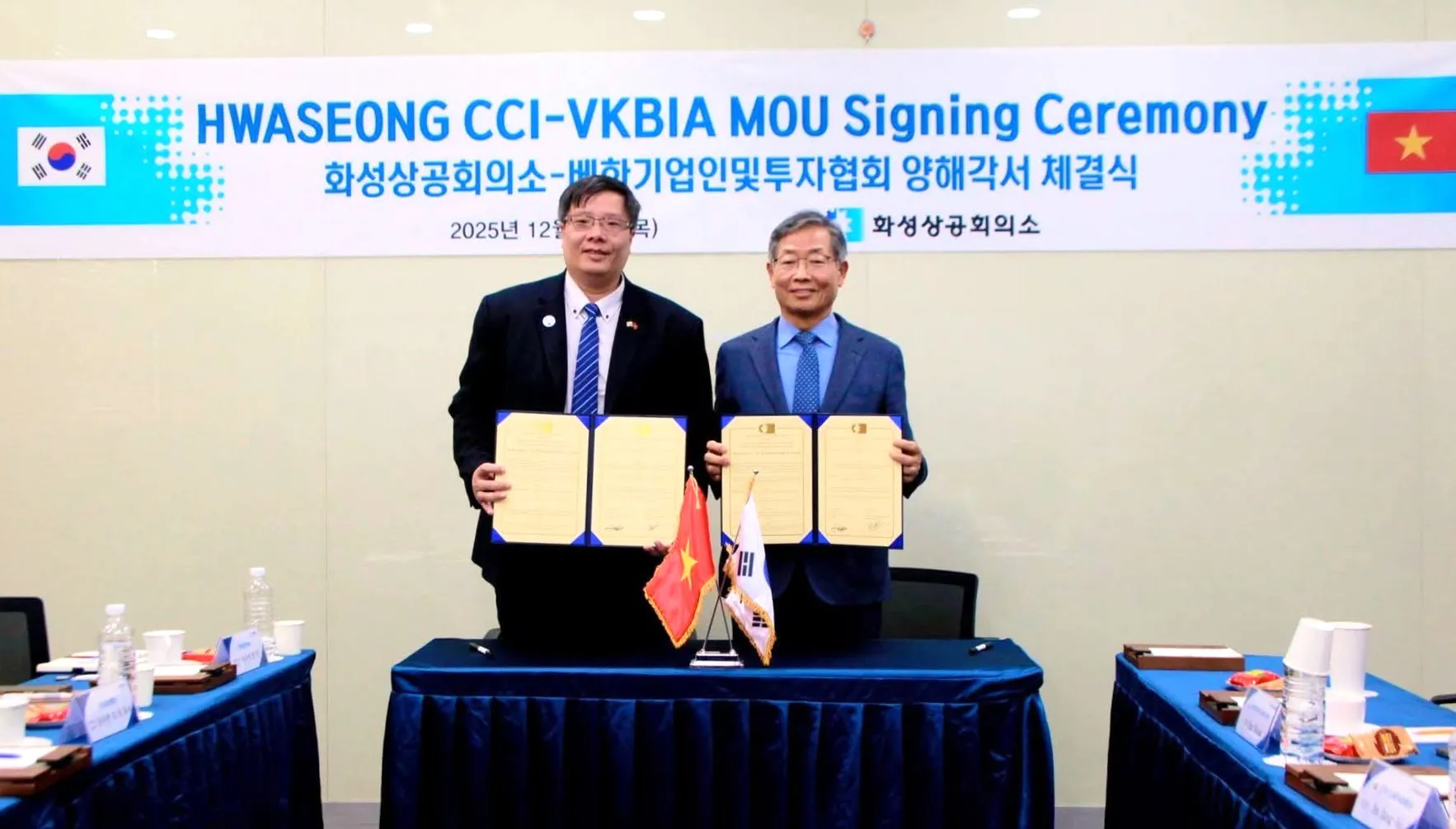
The Vietnam–Korea Business and Investment Association (VKBIA) and the Hwaseong City Chamber of Commerce and Industry (HCCI) signed a comprehensive strategic memorandum of understanding (MoU) on December 11 in Hwaseong, South Korea. Photo: VKBIA
Ho Chi Minh City alone may receive up to $10.5 billion in remittances this year, compared with $9.6 billion in 2024. The city accounts for around 60% of total remittance inflows nationwide.
Each year, overseas Vietnamese remit roughly $15 billion-$16 billion to Vietnam. In addition, Vietnamese investors from 35 countries and territories have launched 457 projects at home, with total registered capital of $1.73 billion across 26 of the country’s 34 provinces and cities.
By region, Asia remained the largest source of remittances to Ho Chi Minh City as of the end of the third quarter of 2025, contributing more than 50% of the total.
The Americas followed with 30%, Europe with 9%, Oceania with 8.4% and Africa with 2%. Notably, remittances from Africa surged by more than 150% year on year.
Other regions also posted solid growth, with Europe rising 16.7%, Oceania 11% and the Americas 10%.
Tran Thi Ngoc Lien, Deputy Director of the State Bank of Vietnam’s Region 2 office, said remittance inflows typically accelerate in the fourth quarter, especially around the New Year and the Lunar New Year holidays.
“This is a highly positive growth trend. It shows overseas Vietnamese confidence in domestic economic stability, flexible exchange-rate management and stable interest rates,” she said.
Beyond Ho Chi Minh City, remittances also flowed strongly to provinces and cities with large overseas Vietnamese communities, including Hanoi, Nghe An, Ha Tinh and Hai Duong.
In practice, remittances extend beyond cash transfers. Overseas Vietnamese increasingly channel funds into real estate, financial assets, production activities and business ventures.
Financial expert Dinh Trong Thinh said remittances help raise living standards for millions of households, improve the national balance of payments, strengthen foreign-exchange reserves and stabilize the exchange rate, thereby supporting the value of the Vietnamese dong.
These inflows also enhance the effectiveness of monetary policy and reduce reliance on foreign borrowing, easing fiscal pressure and debt-servicing costs, he added.
The overseas Vietnamese community has expanded rapidly in both scale and capacity. From about 2.7 million people in nearly 90 countries and territories in 2004, the number has grown to nearly 6.5 million across more than 130 today.
Around 80% of overseas Vietnamese live in developed economies, where their professional standing and social influence continue to rise and gain recognition.
According to Vu Truong Giang, Acting Director General of the Overseas Labor Management Department under the Ministry of Home Affairs, Vietnam sent more than 128,000 workers abroad in the first 10 months of the year, fulfilling 98.5% of the 2025 target.
Traditional labor markets remained stable. Japan led with 57,200 Vietnamese workers, followed by Taiwan (China) with 51,640 and South Korea with 9,600. Several European markets, including Germany, Romania and Hungary, also attracted large numbers of Vietnamese workers.
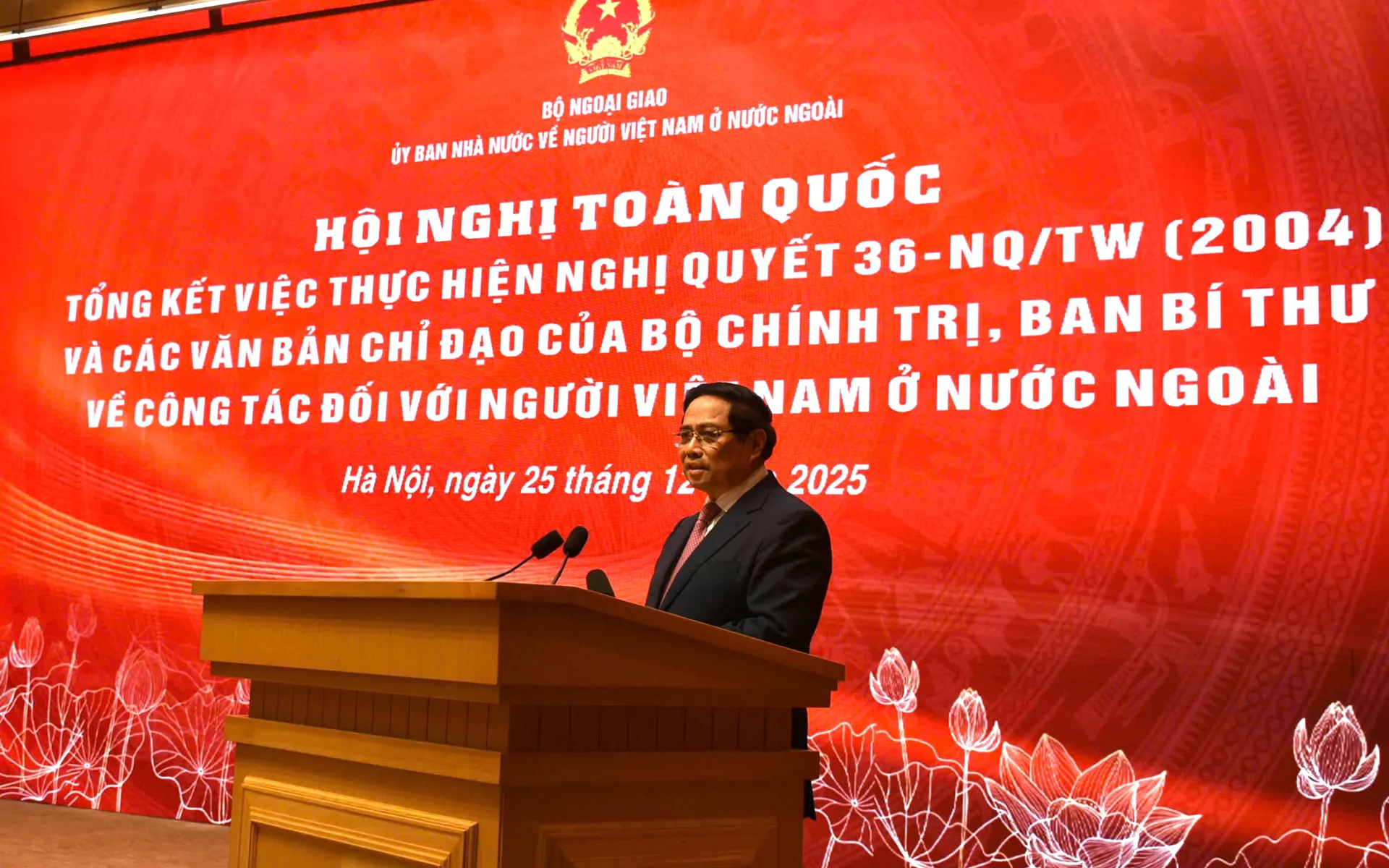
Prime Minister Pham Minh Chinh speaks at a conference marking 20 years of implementing Resolution 36 on overseas Vietnamese affairs. Photo: MoFA
By the end of 2025, the number of Vietnamese working overseas is estimated at 650,000, exceeding the 2021-2025 plan by 30%.
At a recent year-end conference, Deputy Minister of the Ministry of Foreign Affairs Le Hoai Trung described remittances as “a major financial resource making a tangible contribution to the country’s development.”
He said policies on overseas Vietnamese affairs have made clear progress, strengthening patriotism and reinforcing emotional ties with the homeland.
Remittances now increasingly flow into investment, start-ups, real estate, education and production rather than consumption alone, said Tran Hai Linh, a Vietnamese expatriate in South Korea and Chairman of the Vietnam-Korea Business and Investment Association.
Vietnam’s financial institutions have responded by launching new products, upgrading technology and simplifying payment procedures to attract these inflows.
Local authorities have also introduced targeted policies. Ho Chi Minh City, for example, approved a framework in 2024 to promote more effective use of remittances through 2030.
“To fully harness this capital, Vietnam must maintain a stable and transparent macroeconomic environment that builds long-term trust among overseas Vietnamese,” Linh said.
He also called for tailored investment channels for the diaspora, such as green bonds, reputable investment funds and innovation-driven green transition projects.
In addition, he urged further improvements in legal frameworks and administrative procedures to safeguard property rights and encourage sustained engagement.
Growing contributions from overseas Vietnamese
Cash transfers from abroad usually peak toward year-end and during the Lunar New Year, reflecting the strong emotional bonds overseas Vietnamese maintain with their families and homeland.

Homeland Spring - an annual programme connecting overseas Vietnamese with the homeland. Photo: MoFA
Sending money home during Tet remains a deeply rooted tradition, symbolizing gratitude, family unity and a lasting connection to one’s roots.
Beyond remittances, overseas Vietnamese contribute across a wide range of fields. The community has expanded “both in size and quality” over the past two decades, Prime Minister Pham Minh Chinh said at a conference marking 20 years of implementing Resolution 36 on overseas Vietnamese affairs.
Efforts to preserve Vietnamese cultural identity abroad have intensified, with September 8 designated annually as Vietnamese Language Honor Day.
Vietnamese-origin scientists have gained international recognition, while politicians, artists, writers, athletes and business leaders of Vietnamese descent continue to make their mark globally. More than 1,000 overseas Vietnamese associations now operate worldwide.
Prime Minister Chinh said Resolution 36 created breakthroughs in mobilizing intellectual and financial resources from the diaspora while strengthening ties with the homeland.
Foreign Affairs Minister Le Hoai Trung said contributions from overseas Vietnamese stood out as a highlight in Vietnam’s foreign relations achievements in 2025.
During the year, Vietnam upgraded relations with 17 partners, bringing the total number of countries with comprehensive partnership status or higher to 42.
Vietnam now holds comprehensive strategic partnerships with all five permanent members of the United Nations Security Council and 18 of the G20’s 21 members.
Vietnam’s total trade turnover in 2025 exceeded $900 billion, securing its position among the world’s 15 largest trading economies. Foreign investment inflows continued to reach record levels, supported by diversified and innovative external economic activities.
As 2026 begins, a year marked by major national milestones, including the 14th National Party Congress, the growing strength and meaningful contributions of overseas Vietnamese are expected to remain a vital pillar supporting Vietnam’s next phase of development.
Author: Hanoitimes
RECOMMENDED TOPICS