VN
VN
 EN
EN
26/07/2026, 02:38
Business economics
Proposal for recycling credits to ease EPR challenges
Proposed amendments to the Extended Producer Responsibility (EPR) mechanism aim to reduce implementation difficulties for businesses.
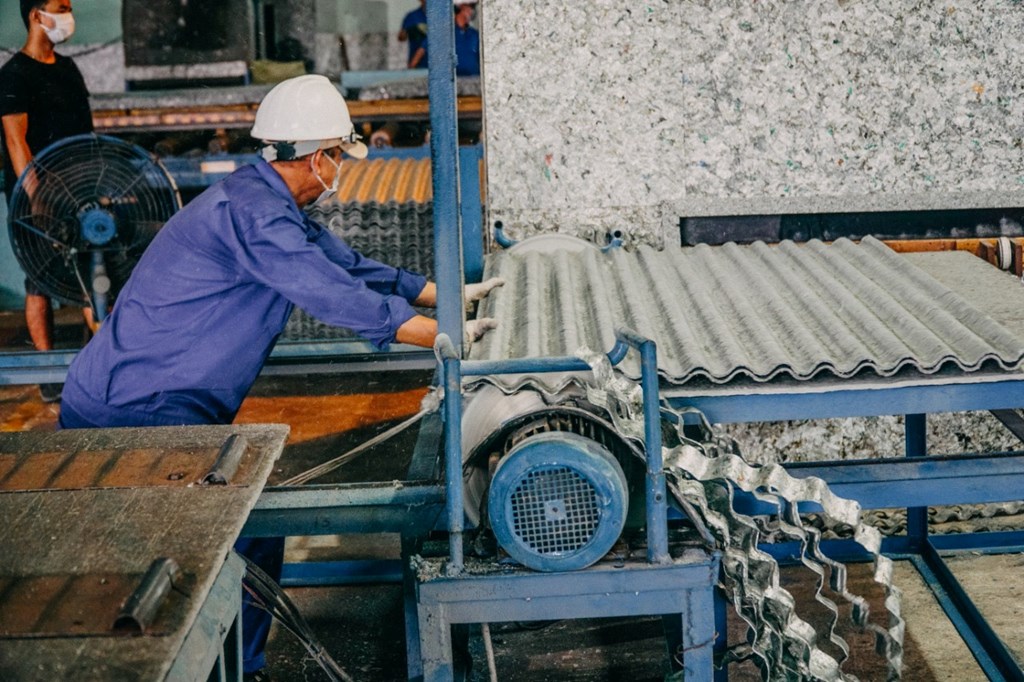
EPR, introduced under Viet Nam’s 2020 Law on Environmental Protection, requires manufacturers and importers to fulfill recycling obligations either by organizing recycling activities themselves or by making financial contributions to the Viet Nam Environmental Protection Fund to support recycling efforts.
Mr. Ho Trung Kien, Deputy Director General of the Department of Environment, said that under the proposed direction, the financial contribution option would no longer be maintained. Instead, companies would be granted full responsibility to fulfill recycling obligations themselves.
Implemented since 2024, the mechanism has revealed several challenges during its rollout. According to feedback from businesses, representatives of the Department of Environment (under the Ministry of Agriculture and Environment) acknowledged obstacles related to recycling costs, financial contribution mechanisms, and the still-developing domestic collection and recycling system.
Under the 2026 legislative program, several provisions of the 2020 Law on Environmental Protection are expected to be amended to improve policy consistency and operational efficiency, including the EPR framework.
Mr. Ho Trung Kien said the Ministry of Agriculture and Environment is currently drafting changes whereby manufacturers and importers would take full responsibility for meeting recycling obligations through cooperation with, or delegation to, recycling organizations. The proposed adjustment aligns with international practices.
Providing further details, Mr. Do Van Thuan, a representative of the National EPR Office, said manufacturers and importers would be able to fulfill their obligations through flexible mechanisms, such as organizing collection and recycling of discarded products and packaging themselves, transferring waste to recycling facilities, contracting recycling companies to handle the entire process from collection to recycling, authorizing Producer Responsibility Organizations (PROs), or combining these approaches.
During implementation, some producers and importers have conducted recycling activities but still failed to meet the required recycling rates set by the government. Instead of imposing administrative penalties, the drafting agency has proposed two options to address the shortfall.
The first option is to purchase recycling credits to compensate for the missing recycling volume. According to Mr. Do Van Thuan, credits can be understood as verified recycling results. Hiring a recycling company under the EPR system already functions similarly: recyclers collect and process waste, then report their results to demonstrate compliance with producers’ obligations.
Recycling credits operate on a comparable principle. Recycling companies proactively collect and recycle products or materials in advance, and an auditing company verifies and issues credits corresponding to the recycling volume achieved.
Manufacturers and importers in need of credits can purchase them from recyclers that have converted their recycling output into certified credits. Mr. Thuan noted that this option is the closest to the current regulatory framework.
The drafting agency also proposes setting a minimum recycling requirement of 70% for manufacturers and importers. The remaining 30% could be covered through the purchase of recycling credits. If the recycling rate falls below 70%, companies would still need to purchase credits for the shortfall but may also face administrative sanctions.
While developed countries typically have well-established collection and recycling infrastructure for various product categories, Viet Nam’s system remains underdeveloped for certain products, particularly electrical and electronic equipment and lithium batteries, creating challenges for businesses.
Therefore, for products that are easier to collect and recycle, such as packaging, the drafting agency proposes that recycling credits remain valid until December 31 of the following year. For products that are more difficult to collect and recycle, such as electronics or vehicles, credits would have a longer validity period.
Recycling credits would be issued by licensed recycling facilities that hold valid environmental permits. Producer Responsibility Organizations (PROs) are expected to issue credits along with detailed reports, which must be verified by an independent auditing body.
The second option under consideration is a deposit mechanism with the Viet Nam Environmental Protection Fund to guarantee fulfillment of recycling obligations for the uncompleted volume. However, several issues remain under discussion, including whether competent authorities must determine the outstanding recycling volume, how long companies would have to complete recycling for that volume, and how deposit rates should be calculated.
According to the drafting agency, the proposed amendments are currently being consulted with relevant stakeholders. They are expected to be submitted to the National Assembly in April, potentially adopted in October, and could take effect from 2027 onward.
Author: HANH LE- Truong Dang
RELATED TOPICS
RECOMMENDED TOPICS