VN
VN
 EN
EN
09/07/2026, 11:15
Investment
Vision for planning the development of Ha Noi’s urban green system
In recent years, Ha Noi has paid increasing attention to the development of its urban green system. However, these efforts have not always been scientific nor guided by a long-term vision, and in some cases have even been implemented in a campaign-style manner.
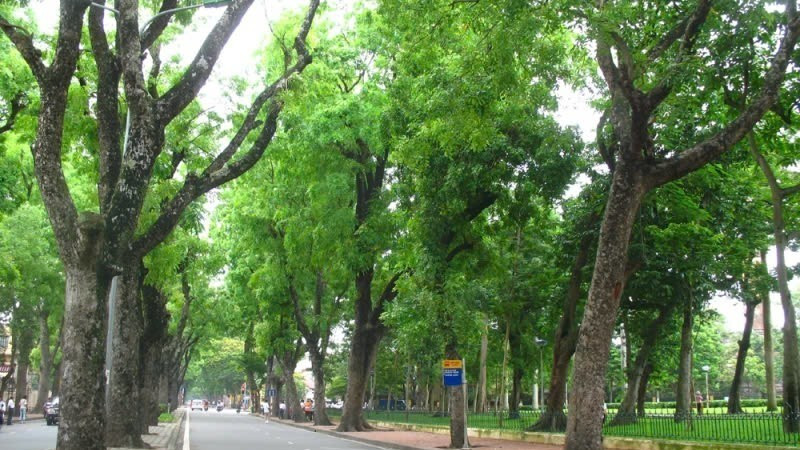
This reality requires that the development of the green system be incorporated into the planning and management of the capital region, from the city level down to the commune level, in a scientific and systematic manner.
At the launch ceremony of the 2026 Tree-Planting Festival, held on the grounds of the Communist Party of Viet Nam Museum project in Ha Noi, General Secretary To Lam delivered a directive speech reaffirming the Party and state’s consistent viewpoint that economic development must go hand in hand with environmental protection.
He also stressed that tree planting must shift from awareness to practical action and must not become a showy or formalistic activity that wastes resources.
With the spirit of “every planted tree must grow well”, each tree planted must be cared for, protected, and allowed to grow and develop. Tree planting must go hand in hand with planning and be associated with the development of green, smart, and modern urban infrastructure. Particular attention should be paid to developing the urban green system to ensure a high ratio of green space per capita.
Current situation and limitations
From the directions given by General Secretary To Lam, let’s look back at the implementation of the Tet tree-planting movement over the decades. Doing so allows us to compare the level of green coverage in Ha Noi with that of the capitals of several countries in the region and beyond.
At present, the forest canopy coverage in capitals such as Tokyo in Japan is about 75%, the Republic of Korea records around 65%, and Malaysia more than 60%, with their green systems organised in several layers with high canopy coverage. Meanwhile, forest coverage in Viet Nam, not yet canopy coverage, is only about 42%, while the average green space per capita in Ha Noi remains low, at around 1.93 square metres. In the aforementioned countries and many others, this figure has reached between 5 and 10 square metres per person.
When I first went to study in Tokyo in 1993, I was surprised to see that the trees there were relatively small and low compared with those in Ha Noi. However, after witnessing major storms and floods in Japan, I began to understand the reasons behind this. Further research and surveys in Japan, the Republic of Korea, and Malaysia, particularly in Tokyo and Seoul, have revealed the remarkable vision behind their planning, as well as the solutions applied in developing and managing multi-layered green systems.
In the capitals of these three countries, the outer ring consists of forest belts, including watershed forests that protect reservoirs supplying water to the city. This is followed by green spaces in parks located on hills or on reclaimed waste disposal sites. Next come green corridors along riverbanks and highways, followed by green systems in parks in central areas, and finally trees along streets, squares, and flowerbeds.
By examining the selection of tree species, planting techniques, and especially the maintenance of urban green systems in these countries, it becomes clear that Viet Nam still has much to learn. In those countries, anyone who cuts down a tree without permission faces heavy fines and may even be prosecuted under the law.
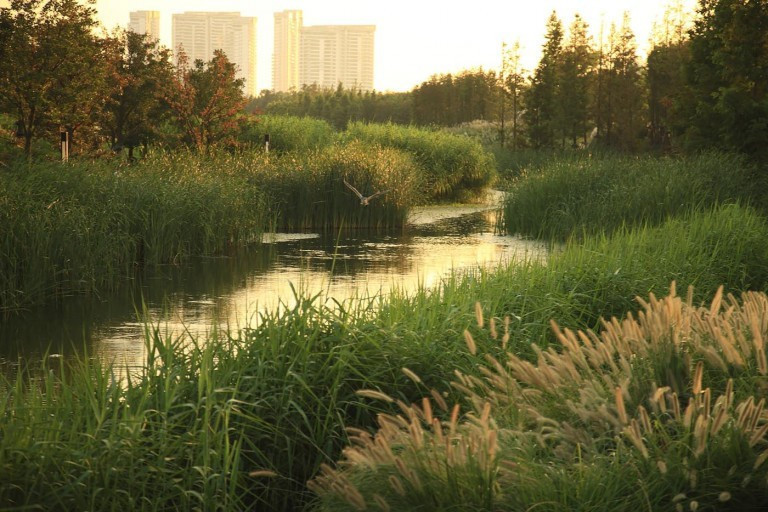
I still remember that several years ago I twice accompanied renowned forestry experts from the Food and Agriculture Organisation (FAO) on visits to the inner-city green system of Ha Noi. They both affirmed that this system is unique and valuable and should be strictly protected and further developed.
Nevertheless, the management and development of Ha Noi’s green system still face many shortcomings. In some cases, authorities have permitted the felling of large trees that had been planted and cared for over several decades in order to construct transport infrastructure. Tree roots have also been cut during urban renovation projects, making many trees vulnerable to collapse during storms.
Moreover, the planting techniques and pruning practices in Ha Noi have not always met technical standards, partly because inappropriate species have been selected, such as the planting of red maple trees along Nguyen Chi Thanh Street. In many places, trees have been planted improperly, with holes dug too shallow or trees planted when already too large. In parks, pruning practices often fail to achieve the intended goal of creating shaded landscapes for residents.
At present, urban planning in Ha Noi has not given sufficient attention to the development of the green system and lacks a genuine long-term vision. The role of this system in maintaining the ecological balance of the capital region, particularly in protecting the environment in the city’s core areas, has not been clearly defined.
Evidence of this can be seen in planning schemes over the past two decades, which have not clearly specified how the green system should be developed and managed. Meanwhile, protective forests and special-use forests have still been cleared to build housing and entertainment facilities.
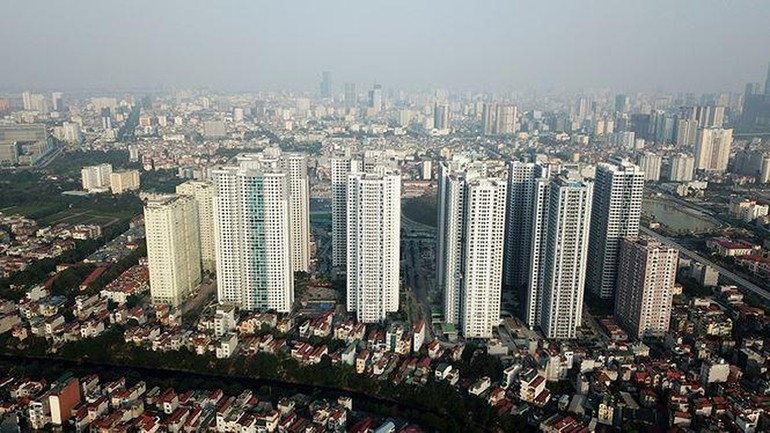
In recent years, when constructing some new urban areas, Ha Noi has paid greater attention to planting and managing green spaces in line with urban and environmental standards. However, such developments remain modest in number, while the implementation in many other places has been superficial and has failed to meet national standards due to rather rudimentary planning.
Suggestions for long-term directions and solutions
New thinking, planning vision, and the development and management of Ha Noi’s green system should be based on reorganising spatial structures while integrating the development of green, smart, and modern infrastructure. This must ensure a balance within the human-ecological system, with residents placed at the centre.
At the same time, existing shortcomings and inadequacies must be systematically addressed in line with international standards, tropical conditions, and the specific context of Viet Nam and Ha Noi.
Based on the above analysis, several suggestions can be proposed to contribute to the long-term planning, development, and management of Ha Noi’s green system.
For the entire capital region (the outer ring), planning, development, and management of protective forests and special-use forests should ensure canopy coverage exceeding 75%, and even as high as 85% in places such as the Nui Luot research forest of the Viet Nam National University of Forestry, Ba Vi National Park, the Soc Son protective forest, Tam Dao National Park, Perfume Temple Nature Reserve, and the Tam Chuc-Bich Dong limestone mountain conservation area. At the same time, afforestation should be promoted in northern areas, including hilly and mountainous regions in Bac Ninh, Hai Phong, and Hung Yen.
In these areas, forest planting, cultivation techniques, and maintenance, especially forest management, must strictly follow established procedures and regulations. It is also necessary to diversify tree species instead of relying mainly on pine and acacia so as to enhance environmental protection while creating more attractive landscapes.
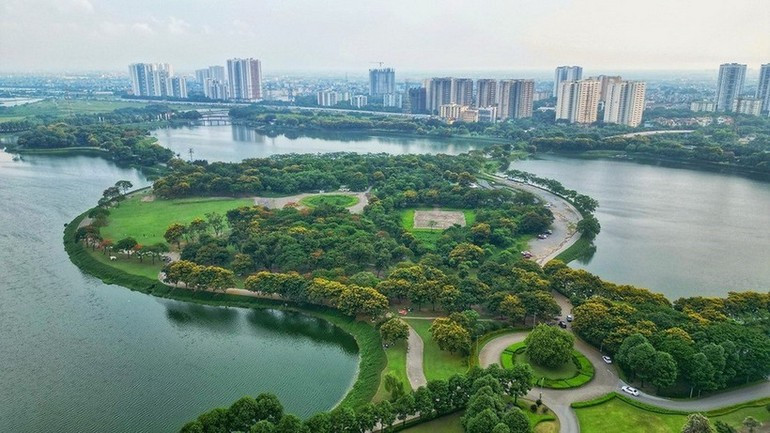
For the transitional zone connecting the outer region with the inner city, attention should be given to planning and developing green systems in suburban communes of Ha Noi to ensure ecological balance and environmental protection.
Land use for green systems and new parks should account for up to 35% of the total natural area, thereby increasing green space per capita to levels much higher than those in the inner city.
In new urban areas, industrial zones, industrial clusters, and service areas, regulations should require that green space accounts for at least 40% of the total area, with suitable tree species properly planted, protected, and managed.
Given that this area already contains hundreds of urban zones, industrial parks, industrial clusters, and service areas, achieving such a green system will remain only a dream unless authorities exercise close direction and management.
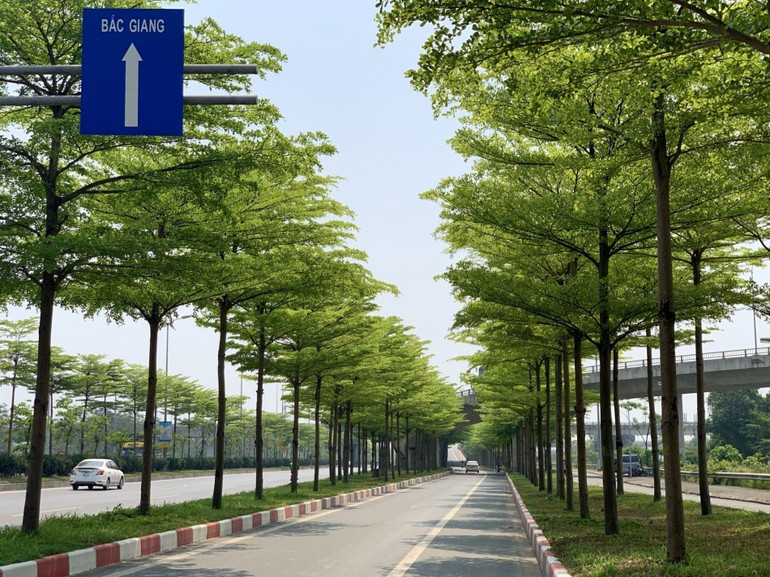
Secondly, green systems should be planned and developed along the city’s rivers and surrounding waterways, including the Red River, Duong River, Ca Lo River, and Day River, as well as lakes, streams, and major transport corridors such as expressways, national highways, provincial roads, and rural roads in Ha Noi.
Planting should prioritise diverse native species and planting, maintenance, and especially management must be clearly assigned to responsible entities with specific budgets in accordance with national procedures and regulations, combined with transparent reward and penalty mechanisms.
For the inner urban area (both old and newly expanded zones), the task is particularly challenging due to limited space, high requirements and strong pressures. The first priority is to renovate, develop, and manage the green systems within parks and associated lakes, strictly prohibiting arbitrary tree felling. Procedures for selecting species, planting, maintenance, and pruning should be revised to enhance natural landscapes and better serve residents.
Another necessary step is to renovate and develop green systems along lakes such as West Lake, Hoan Kiem Lake, and Truc Bach Lake, as well as rivers such as To Lich and Kim Nguu. Over many years, water surfaces in Ha Noi’s inner-city rivers and lakes have been reduced, so further filling of lakes and rivers must be avoided. Water bodies and green trees are valuable landscape elements and natural regulators for urban environments.
Thirdly, the green system along main streets, smaller streets, and alleyways should be renovated and developed. This must include assessing and removing dead trees, protecting trees at risk of collapse that could endanger lives, and planting additional trees where necessary.
Fourthly, green spaces in office compounds, villas, and private houses in urban areas should be renovated and managed under stricter regulations that prohibit indiscriminate tree cutting while promoting conservation, development, and effective management. Traffic circles and flower gardens should also undergo renovation to ensure that green systems are harmoniously integrated with suitable flower species.
It should be emphasised that planning, developing, and managing the green system must be incorporated into the broader planning and management of the capital region, from the city level down to the commune level.
Author: NDO
RECOMMENDED TOPICS