VN
VN
 EN
EN
26/07/2026, 02:00
Investment
Two main scenarios for the VN-Index
Many analysts said the Middle East conflict would continue its strong impacts on oil prices as well as the Vietnam stock market.
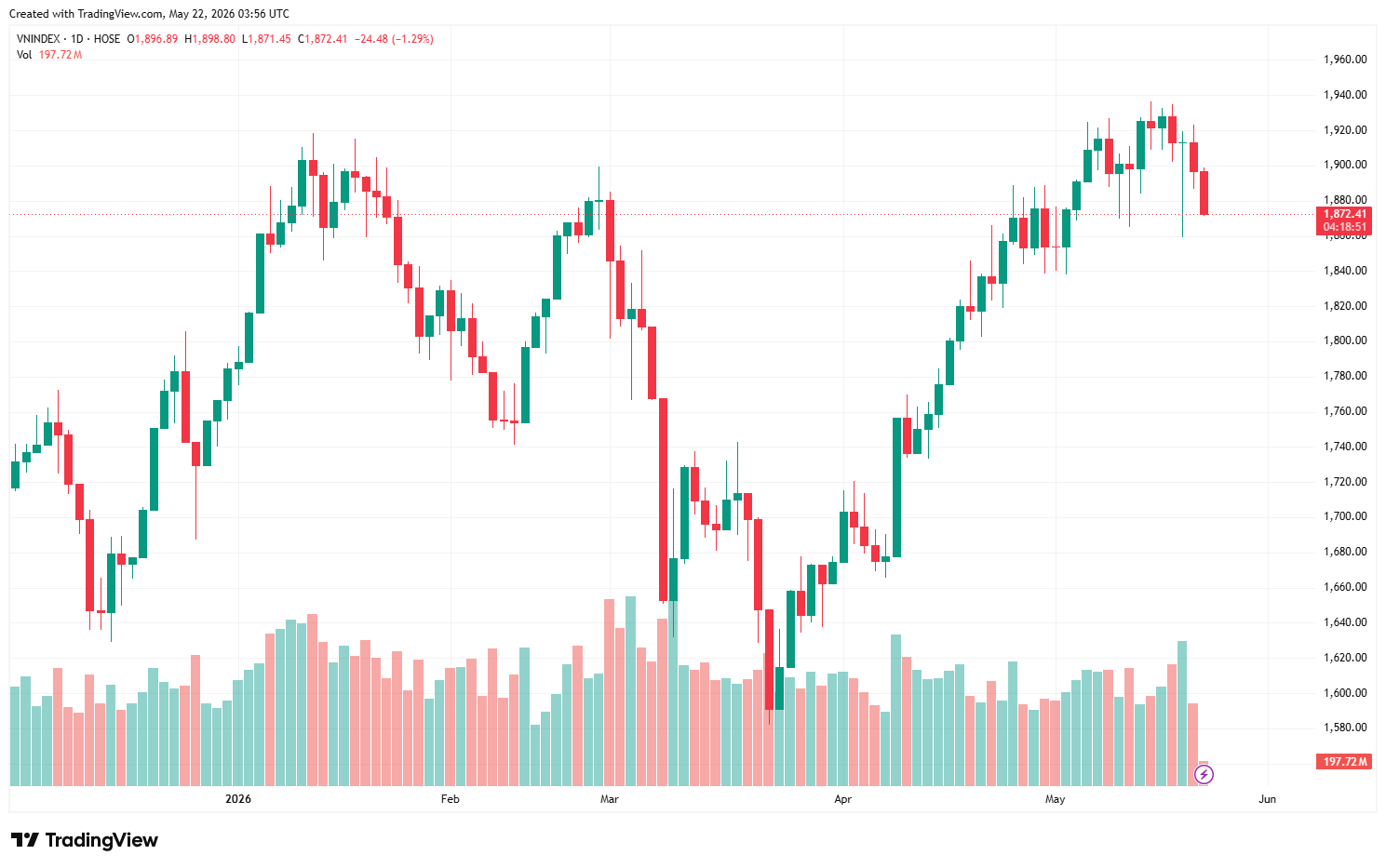
The VN-Index is moving sideways
Impacts from Middle East conflict
Despite easing hostilities, disagreements between the US and Iran over peace proposals continue to cloud the outlook for the global energy supply chain. Although the US and Iran initially showed signs of consensus on a ceasefire and a willingness to resolve disputes through negotiations, tensions quickly resurfaced due to deep and irreconcilable differences in their strategic demands. While Tehran remains determined to use the strait as leverage to push Washington to lift sanctions and soften its stance on Iran’s nuclear program, the US has rejected these conditions, causing early compromises to collapse rapidly.
Diplomatic efforts remain deadlocked as both sides continue to take sharply opposing positions. While Washington has sought to rally international pressure by submitting draft resolutions to the United Nations Security Council condemning Iran’s blockade of the strait, Tehran has dismissed such pressure, reaffirmed its sovereignty claims over the strategic waterway, and moved to legitimize transit fees of up to USD1 million for cooperating vessels. As retaliatory actions persist, traffic through the Strait of Hormuz has been reduced by 95%, further deepening the global energy crisis and fuel shortages.
Most recently, the Trump–Xi summit in mid-May 2026 failed to produce any meaningful breakthrough in easing tensions in the Strait of Hormuz, disappointing expectations that the two superpowers would cooperate to restore access to this critical shipping route. Beijing’s reluctance to pressure Tehran has further increased the risk of a prolonged conflict in the Middle East. Even if the Strait of Hormuz fully reopens, Brent crude prices are unlikely to decline sufficiently to bring the 2026 average below USD90/barrel.
In the short term, the steep positive spread across Brent crude futures curves suggests that countries are aggressively securing alternative supplies to rebuild inventories despite elevated costs. Meanwhile, unblocked US light sweet crude is unlikely to fully substitute for Middle Eastern sour crude, the key feedstock for many Asian refineries.
In the long term, oil production across the Middle East is expected to remain constrained over the next 2–3 years, as repairing damaged energy infrastructure will require substantial investment and time, delaying any meaningful recovery in supply lost during the conflict.
What prospects for VN-Index?
Amid the said context, KBSV gave two main scenarios for the VN-Index:
As for the bull case (60% probability), geopolitical tensions remain elevated before gradually easing toward the end of 2Q26, allowing oil prices to correct meaningfully and bringing the 2026 average to around USD90–95/barrel. Based on this assumption, KBSV maintained its forecast for Vietnam’s inflation at 4.5–5.0% in 2026. While policy room would remain limited, the State Bank of Vietnam (SBV) would still retain some flexibility to ease monetary policy and contain upward pressure on interest rates, thereby supporting a recovery in the VN-Index toward the 1,950–2,000 range.
Regarding the bear case (40% probability), if tensions escalate further, causing additional damage to energy infrastructure or extending into 3Q26, supply chain disruptions could intensify significantly, pushing oil prices beyond the previous peak of USD120/barrel and keeping the 2026 average above USD100/barrel. In this scenario, inflation could exceed 5% by year-end, leaving the SBV with very limited room to ease monetary policy. Interest rates would likely continue to trend upward, pushing the VN-Index into a medium-term correction and potentially back toward the 1,600 level.
Author: NGOC ANH
RECOMMENDED TOPICS