VN
VN
 EN
EN
10/07/2026, 15:29
Culture- travel
Why Da Nang and Phu Quoc are becoming “worth every hour” destinations for Korean travelers
As the micro-trip trend rises in South Korea, travelers are no longer just looking for value-for-money destinations, but ones that are worth every hour. With a flight time of around five hours, Da Nang and Phu Quoc are becoming ideal alternatives to long and costly journeys to Hawaii or Europe for Korean tourists.
According to Yanolja Research, 971 USD is the average spending per overseas trip by Koreans in 2025. With this budget, traveling to expensive destinations such as Singapore or Hawaii requires careful calculation, while long-haul trips to Europe are nearly impossible.
Pressure to optimize costs is quietly triggering a “destination shift,” with Vietnam emerging as a highly attractive option. Last year, among nearly 29.6 million outbound Korean travelers, Vietnam ranked second with more than 4.3 million arrivals, leading Southeast Asia and far surpassing Thailand, the Philippines, and Singapore. Within this shift, Da Nang and Phu Quoc are becoming comprehensive answers to the demand for “smart luxury” travel among Korean tourists.
When “value” is measured in every dollar spent
Korean travelers are known for being demanding customers with high expectations for service quality. In recent years, they have also shown a clear tendency toward rational consumption. According to Outbox, 41% of Korean tourists consider “cost efficiency” the top criterion when choosing a destination.
At traditional tourism hubs, hotel prices during peak seasons range from 250 to 700 USD per night on average, not to mention the substantial cost of long-haul flights. Meanwhile, with the same budget, Da Nang and Phu Quoc offer a clear “value leverage” in the eyes of Korean travelers.
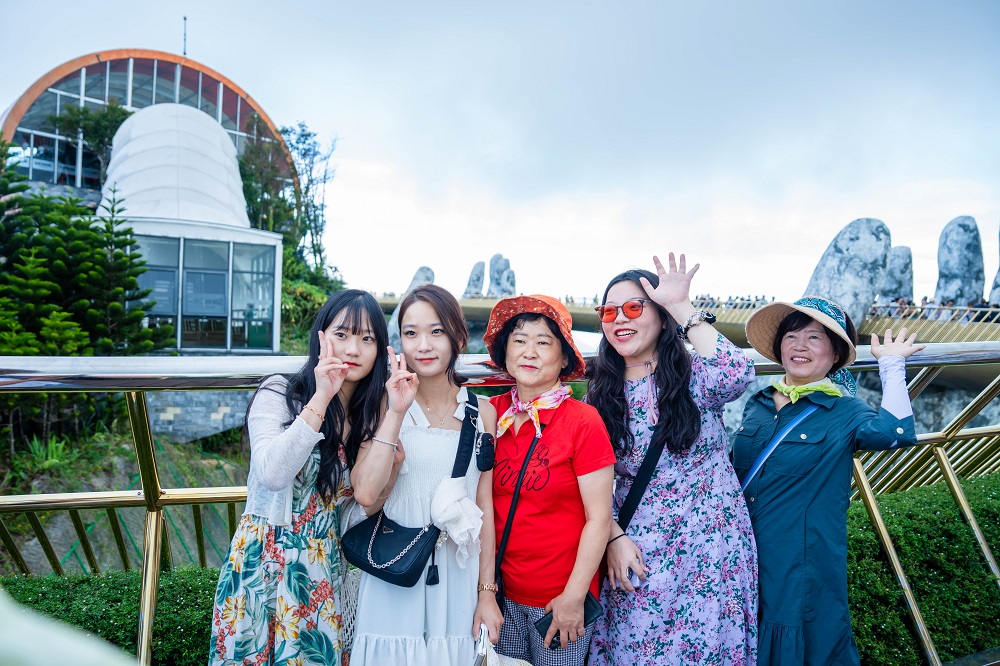
Da Nang and Phu Quoc are among the most “value-for-money” destinations for Korean tourists
With a budget equivalent to a mid-range hotel in Tokyo, travelers can enjoy a five-star beachfront stay along My Khe Beach, experience Sun World Ba Na Hills, savor seafood at prices lower than Thailand, and immerse themselves in vibrant nightlife. For Korean visitors, a trip to Da Nang is increasingly becoming the definition of a luxurious yet convenient getaway.
Further south, Phu Quoc is demonstrating strong appeal in optimizing travel spending. Compared to many “luxury hotspots” around the world, the island offers a more accessible standard of high-end resort experiences, with premium resorts and private pool villas.
This represents a “psychological discount rate” for Korean travelers, as they are only willing to spend when they clearly perceive emotional value matching each dollar. Instead of accepting cramped spaces in expensive cities, more travelers are choosing to enjoy “smart luxury” at Vietnam’s leading destinations such as Da Nang and Phu Quoc. This is no longer an emotional decision, but a calculated value equation of modern travelers.
The rise of the “micro-trip” trend
Once cost optimization is achieved, the next metric for Korean travelers is time efficiency. A destination today must not only be “worth the money” but also “worth every hour.”
Recent trend data shows that short international trips are increasingly favored by young Korean travelers, who maximize experiences over weekends or short holidays. Traditional 10–15 day vacations are gradually giving way to compact “micro-trips” lasting just 3–5 days.
Vietnam holds a geographical advantage that seems tailor-made for this new demand. With flight times of around five hours from Seoul or Busan, Da Nang and Phu Quoc are ideal choices. Instead of flying intercontinentally to Europe or Hawaii and needing one or two days to recover, landing in Da Nang or Phu Quoc International Airport allows travelers to step almost directly into their holiday.
Beyond proximity, Vietnam’s appeal is strengthened by an increasingly dense flight network. South Korea is currently the largest source market for Da Nang, accounting for over 35% of international flights with around 11 airlines operating regularly. Growth is also evident in Phu Quoc, where data from Booking.com shows that searches from South Korea increased by 71% between October 2025 and mid-January 2026, pushing the island from 15th to the top 5 most searched destinations among Koreans for the Lunar New Year 2026 holiday.
Amid a wave of new airlines entering the market, Sun PhuQuoc Airways stands out as its international connectivity continues to expand for greater convenience. From March 2026, the airline plans to operate routes from Phu Quoc to Seoul and Taipei, before adding Busan in September 2026.
For Korean travelers seeking a quick weekend escape, direct flights without transit are a decisive factor. They can leave Seoul on a Friday morning and be swimming in the waters of My Khe Beach or Kem Beach by the same afternoon. Notably, Phu Quoc also offers a visa exemption of up to 30 days for international visitors, allowing travelers to significantly reduce preparation time and make spontaneous travel decisions.
When every frame becomes a statement
However, optimizing cost and time is only a necessary condition, not sufficient for young Korean travelers. For them, a destination is truly worth visiting only if it can generate visually compelling, shareable moments on social media.
According to Yanolja Research, for Korean Millennials and Gen Z, travel is considered a life milestone in accumulating “experience capital” and a tangible investment in building a personal image on social media.
As each trip becomes a lifestyle statement, destinations must be fresh, aesthetically appealing, and distinctive enough to create potentially viral visuals.
In Da Nang, dramatic natural landscapes combined with iconic architecture create a dense concentration of photogenic spots within a short travel radius. From standing on the Golden Bridge above the clouds at Sun World Ba Na Hills, strolling among European-inspired structures, checking in at vibrant flower gardens along mountain slopes, to immersing in the dynamic world of Fantasy Park, the experience unfolds seamlessly and emotionally. Along the journey, visitors can also visit Linh Ung Pagoda – Ba Na to find a sense of inner peace.
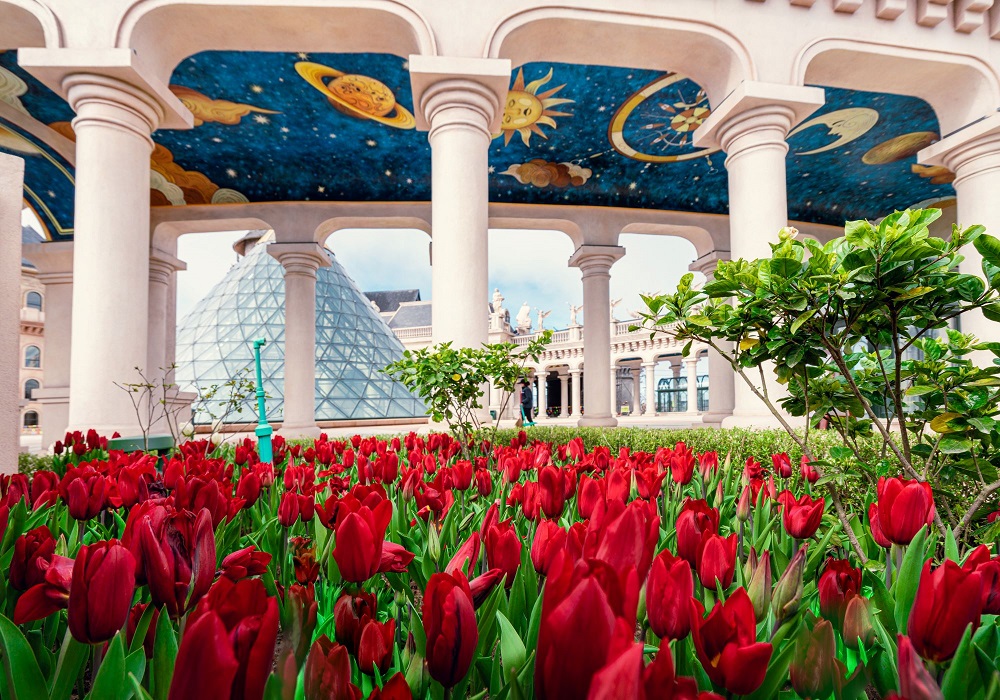
Every corner of Sun World Ba Na Hills can become the perfect backdrop for million-view photos
In Phu Quoc, Asia’s most beautiful island is being shaped into a “global city” in the tropics. A convergence of cultures and architectural styles creates a vibrant coastal resort space.
Within a short journey, travelers can encounter Santorini-inspired white at Santo Port, Mediterranean-style buildings in Sunset Town, the image of a Roman amphitheater at the Hon Thom cable car departure station, or the iconic Kiss Bridge. Each structure represents a slice of the world, forming ideal visual backdrops for check-in moments.
Behind these symbolic landscapes lies a distinctive architectural approach. Structures are reinterpreted and redesigned to adapt to the island’s climate, terrain, and cultural context. European-inspired arches, plazas, and bell towers, when placed against the blue sea and tropical sunlight, take on an entirely new character. They are no longer mere replicas, but reinterpretations where global architectural languages are transformed to harmonize with the rhythm and landscape of Phu Quoc tourism.
Beyond architecture, the lifestyle here is gradually taking on the character of an international destination. Along tourist streets, Korean can be heard frequently, alongside tours tailored specifically for this market. This diversity is also reflected in the service ecosystem, with an increasing number of Korean restaurants creating a sense of familiarity for visitors to the island.
As evening falls and the sunset paints the sky, the atmosphere becomes more enchanting, leading visitors into a sensory nightscape. Phu Quoc is one of the rare destinations in the world to host up to two fireworks shows every night, alongside world-class performances such as “Kiss of the Sea” and “Symphony of the Sea.”
With momentum from resort hubs like Da Nang and Phu Quoc, Vietnam is steadily positioning itself as a new growth pole in regional tourism, where each holiday is not only worth the money but also capable of elevating the expectations of modern Korean travelers.
Author: DUONG NAM HOANG
RECOMMENDED TOPICS