VN
VN
 EN
EN
02/07/2026, 02:00
Legal environment
A policy lever for biofuel adoption in Vietnam
Improving energy efficiency has become an urgent priority for Vietnam to mitigate energy volatility risks, stabilize growth, and maintain macroeconomic balance.
Recent global economic and geopolitical turbulence has intensified pressure on Vietnam’s domestic energy security. In this context, enhancing energy efficiency is no longer optional—it is a strategic necessity to reduce dependency risks and support sustainable economic stability.
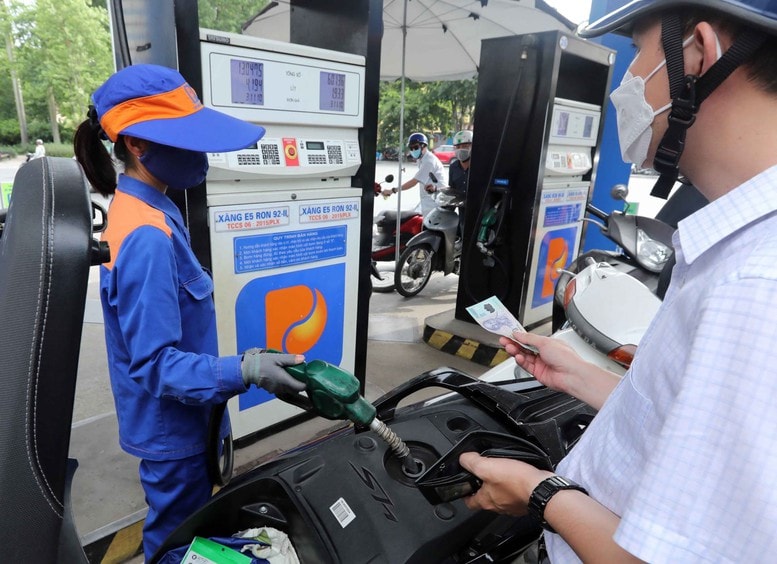
Policy adjustments—particularly in taxes and fees—are seen as a critical “lever” to accelerate the transition toward E10 biofuel.
Strengthening endogenous energy security
Under the Prime Minister’s directive, the roadmap for adopting E10 gasoline has been significantly accelerated—from the originally planned June 1, 2026 timeline to implementation as early as April 2026. This shift is expected to reduce mineral gasoline consumption by around 10%.
Policy adjustments—particularly in taxes and fees—are seen as a critical “lever” to accelerate the transition toward E10 biofuel.
The objectives are multi-dimensional. First, improving energy efficiency by reducing waste and enhancing consumption performance. More importantly, replacing approximately 10% of fossil gasoline with biofuel will significantly reduce reliance on imports, which currently account for roughly 70% of total fuel supply. At the same time, this transition aligns with Vietnam’s emission reduction commitments and its long-term green mobility strategy.
Unlike conventional gasoline, ethanol—the main component of E10—can be produced domestically from agricultural feedstock. This creates a value chain linking energy and agriculture, ensuring stable demand for agricultural output while enhancing fuel supply autonomy.
Experts describe this as a transition from dependency-based energy security to endogenous energy security, where part of the supply is controlled domestically, reducing exposure to external shocks.
To ensure effective implementation of the E10 roadmap, a coordinated policy approach is required. This includes continued investment in logistics infrastructure to expand distribution capacity and system flexibility. At the same time, long-term linkages between businesses and raw material zones must be established to stabilize ethanol supply and minimize input price volatility.
In parallel, production and blending technologies need to be continuously optimized to prepare for higher blending ratios in the future. Tax and pricing policies should also remain flexible to maintain the competitiveness of biofuel in the market.
Trinh Quang Khanh, Vice Chairman of the Vietnam Petroleum Association, emphasized that pricing remains the key driver of consumer adoption. In a context where household income and living costs are under pressure, consumers will only switch to biofuel if there are clear economic benefits. Therefore, adjustments in tax and fee policies should be considered a crucial lever for accelerating this transition.
Specifically, he proposed reducing the special consumption tax on the fossil gasoline component used in E10 blending from 10% to 7%. In addition, the environmental protection tax on E10 should be aligned with that of E5, at VND 1,800 per liter instead of the current VND 1,900.
These adjustments would directly lower retail prices, thereby improving the competitiveness of biofuel relative to conventional gasoline. As the price gap widens in favor of E10, consumer behavior is likely to shift more rapidly, helping policy move beyond encouragement toward tangible impact.
Optimizing energy consumption efficiency
Beyond expanding supply, Vietnam is increasingly shifting its focus toward demand-side management and optimizing energy use efficiency.
From an economic perspective, reducing waste in both consumption and production not only helps businesses improve profit margins but also alleviates pressure on energy infrastructure investment, thereby optimizing national resource allocation.
Ha Dang Son, Director of the Center for Energy Research and Green Growth, noted that daily electricity and fuel consumption often occurs as a reflexive behavior. However, seemingly minor actions—such as leaving devices running unnecessarily, forgetting to turn off equipment, or inefficient driving habits like rapid acceleration and harsh braking—represent typical “leakage points” of energy.
At a system level, energy waste can be broadly categorized into two groups: behavioral inefficiencies and lack of technical operating skills. In the transport sector in particular, suboptimal vehicle operation not only increases fuel consumption but also generates a dual impact—higher emissions and increased maintenance costs.
Importantly, these effects extend beyond the individual level. When aggregated across urban systems, they place significant pressure on national energy budgets and degrade environmental quality.
In this context, energy labeling is considered an effective cost-management tool that remains underutilized. In practice, most consumers still prioritize upfront purchase prices rather than evaluating total lifecycle costs.
“Low-cost, unverified products may reduce initial investment costs but often carry substantial hidden costs through higher energy bills. In contrast, certified energy-efficient products, although more expensive upfront, quickly reach break-even due to superior performance efficiency,” Son explained.
From an economic standpoint, this is not merely a consumption issue but a resource allocation problem. Choosing high-efficiency equipment translates into optimized long-term cash flows and reduced pressure on the national energy system.
According to Son, if energy labeling is a necessary condition, then new technologies—particularly the Internet of Things (IoT)—are the sufficient condition to fundamentally address energy waste.
Smart systems today enable real-time monitoring of energy consumption, automatic adjustment of power usage based on demand, and automatic shutdown when not in use. The core value of IoT lies not only in the technology itself but in transforming how people interact with energy—from “remembering to save” to “systems that self-optimize.” This reduces reliance on human behavior, which is often the weakest link.
Ultimately, energy efficiency should not be seen merely as a supporting measure but as a “source of fuel” for the economy—reducing operating costs, protecting the environment, and improving overall resource efficiency.
Author: DIEM NGOC - TRUONG DANG
RELATED TOPICS
RECOMMENDED TOPICS