VN
VN
 EN
EN
22/07/2026, 02:38
Investment
Bac Ninh: Logistics and inland container depots create a new advantage
Bac Ninh is shaping a multimodal logistics ecosystem, positioning inland container depots (ICDs) and transport connectivity as new competitive advantages to attract investment and drive industrial development.
With its dense network of industrial parks, substantial import-export cargo volumes, and the presence of numerous global corporations, logistics has become a critical component of the province's competitiveness. It determines the speed of cargo movement, the efficiency of supply chain connectivity, and the overall attractiveness of Bac Ninh's investment environment.
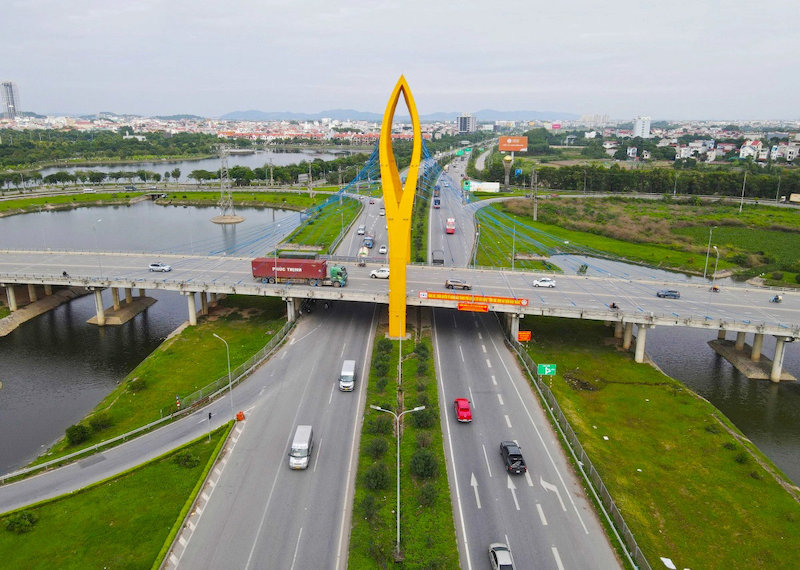
Bac Ninh possesses strong advantages thanks to its strategic location and well-connected transport infrastructure linking it with neighbouring localities.
Leveraging geographic advantages
Following the recent administrative merge, Bac Ninh's development space has expanded significantly, encompassing an integrated transport network of roads, railways, inland waterways, and the under-construction Gia Binh International Airport. These advantages provide a solid foundation for developing a logistics network that serves industrial parks and clusters while connecting the province with Hanoi, Thai Nguyen, Hai Phong, Quang Ninh, and northern border gates.
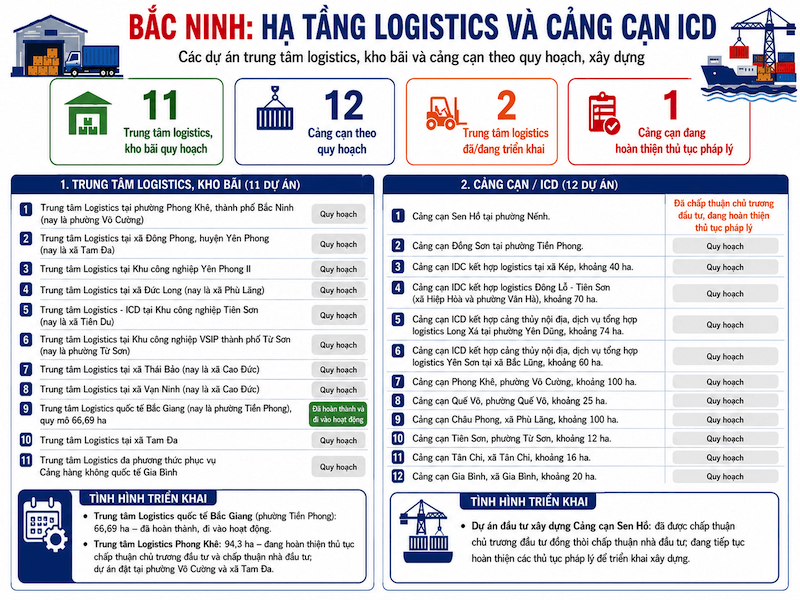
According to a review by the Bac Ninh Department of Construction, the province has plans for 11 logistics centers and 12 inland container depots (ICDs). These facilities are strategically distributed across key industrial zones, urban areas, and major transport hubs, including Que Vo, Yen Phong, Tien Son, Phong Khe, Gia Binh, Sen Ho, Dong Son, Long Xa, and Yen Son.
If implemented in a coordinated manner, this network will establish integrated hubs for cargo consolidation, warehousing, distribution, customs clearance, and multimodal transport operations. Instead of transporting goods directly to seaports by road, businesses will be able to complete many logistics procedures locally before shipping cargo to gateway ports via road, rail, or inland waterways.
Mr. Nguyen Viet Hung, Director of the Bac Ninh Department of Construction, emphasized that logistics development must be integrated into the province's overall transport, urban, and industrial planning. Logistics infrastructure cannot develop in isolation but must be directly connected to industrial parks, national highways, expressways, ring roads, railways, waterways, and Gia Binh International Airport.
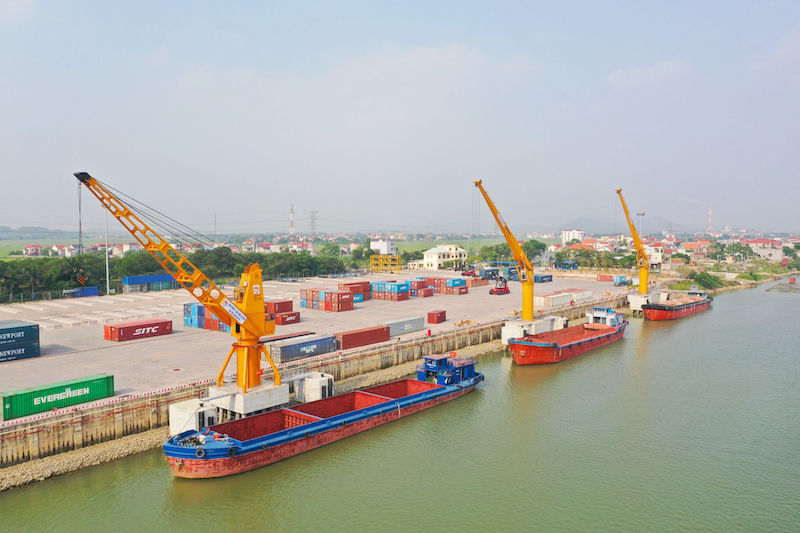
Notably, Bac Ninh boasts approximately 405 kilometers of waterways across five major river systems. Of these, 273 kilometers belong to the national inland waterway network and can accommodate vessels of up to 500 tons. This represents significant potential to ease pressure on road transport, reduce fuel costs, and promote greener logistics operations.
In practice, Tan Cang Que Vo ICD has already demonstrated the value of an integrated logistics hub. Located along National Highway 18, the depot enjoys convenient connectivity with Bac Ninh, Bac Giang, Thai Nguyen, Hanoi, and the Hai Phong seaport system. By providing container consolidation, warehousing, customs clearance, and distribution services, the ICD effectively brings port services closer to manufacturing facilities.
However, a considerable gap remains between planning and operational capacity. To date, only the Bac Giang International Logistics Center (now located in Tien Phong Ward) has been completed and become operational. The Phong Khe Logistics Center is currently finalizing investment procedures, while the Sen Ho ICD project continues to undergo legal approval processes.
This indicates that although Bac Ninh has established a relatively clear development framework, it needs to accelerate the transformation of planned projects into fully operational logistics hubs capable of providing integrated logistics services and seamless connectivity.
Bringing the "seaport" closer to the factory
For transport companies, the value of logistics infrastructure is not reflected on planning maps but measured in every hour trucks spend waiting, every empty kilometer traveled, and every additional cost incurred during cargo delivery.
Mr. Tran Van Phong, Director of Phong Sinh Manufacturing and Trading Co., Ltd., based in Kep Commune, observed that demand for container transport in Bac Ninh is extremely high, as goods from industrial parks are continuously shipped to seaports and distribution centers. However, when warehouses, ICDs, and transport links are not developed in sync, logistics operators face traffic congestion, prolonged waiting times, higher fuel costs, and difficulties optimizing transport routes.
Drawing from the operational experience of managing nearly 100 container trucks, Mr. Phong believes that a well-developed network of inland container depots and logistics centers would enable transport companies to reorganize their operations more efficiently. Goods could be consolidated, sorted, processed through customs, and transshipped within Bac Ninh, reducing the need for vehicles to converge on seaports simultaneously.
Under such a model, ICDs would function as key coordination hubs within the supply chain. Transport companies could reduce empty backhaul mileage, optimize delivery schedules, improve fleet utilization, and minimize the risk of delayed deliveries.
This is particularly important for foreign-invested manufacturers operating lean production systems, where the timely delivery of components and finished goods must be tightly controlled. Even a minor disruption in the logistics chain can affect an entire production line.
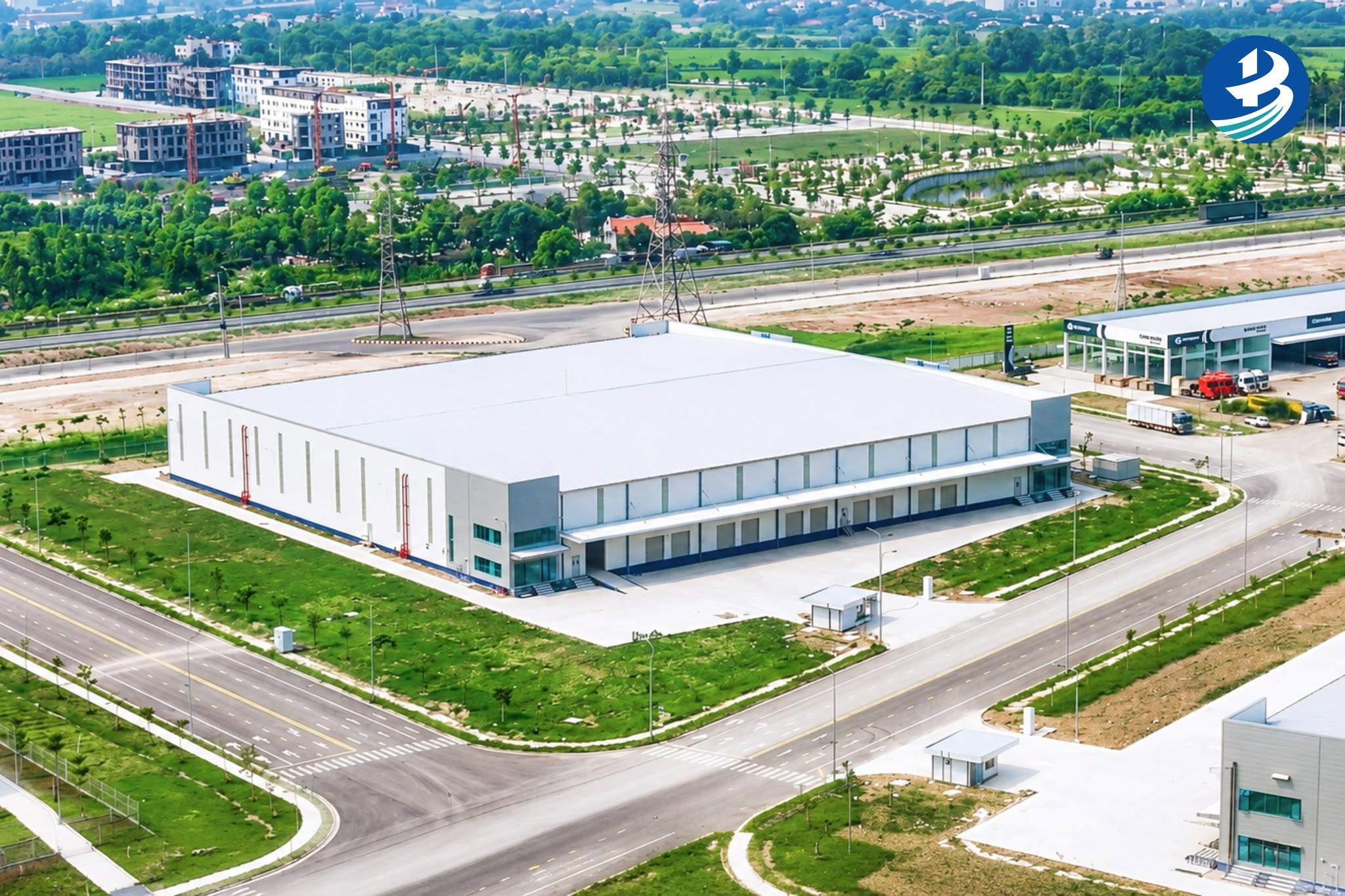
According to Mr. Do An Huy, Director of Que Vo IDICO Urban and Industrial Park Development Investment JSC, logistics infrastructure has become an integral component of an industrial park's competitiveness.
For manufacturers, the physical distance between a factory and a seaport is only one consideration. More importantly, they assess whether transport routes are prone to congestion and whether warehousing, customs clearance, transportation, and distribution services are readily available. Industrial parks with strong connectivity to ICDs and multimodal transport networks enable investors to reduce inventory levels, shorten delivery times, and improve capital efficiency.
Experience in attracting investors to Que Vo II Industrial Park shows that international manufacturers are placing increasing emphasis on supply chain resilience and sustainable development standards. Consequently, logistics infrastructure within industrial parks should evolve toward an integrated model featuring standard warehouses, bonded warehouses, distribution centers, customs services, multimodal transport connections, and digital logistics management solutions.
Bac Ninh already possesses many of the essential building blocks: an extensive industrial park network, interregional transport corridors, inland waterways, railways, and Gia Binh International Airport. However, these assets will only become a genuine competitive advantage when they are effectively integrated into a unified logistics ecosystem.
The province's new competitive edge therefore lies in its ability to transform planning into infrastructure, infrastructure into high-quality services, and logistics services into added value for businesses.
As goods move more efficiently, logistics costs decline, and factories become better connected to global markets, logistics will serve as a new engine of economic growth. This transformation is also a necessary step for Bac Ninh to evolve beyond being merely a manufacturing hub and become a modern industrial and logistics center for Vietnam's Northern Key Economic Region.
Author: Kim Dung - Vu Phuong (Cam Anh translate)
RECOMMENDED TOPICS