VN
VN
 EN
EN
22/07/2026, 02:38
Investment
Unlocking the bottleneck in land valuation
Accelerating the determination of specific land prices is expected to resolve legal bottlenecks, unblock capital flows, and create new momentum for the real estate market.
The People's Committee of Ho Chi Minh City has just issued an official document requesting relevant departments and agencies to speed up the determination of specific land prices and issue notices on land use fees and land rental payments for eligible projects, in order to achieve the city's 2026 land revenue budget targets.
The city also requested priority to be given to completing land pricing plans for dossiers that already have draft valuation certificates, accelerating the auction of land funds, and promptly determining the financial obligations of projects.
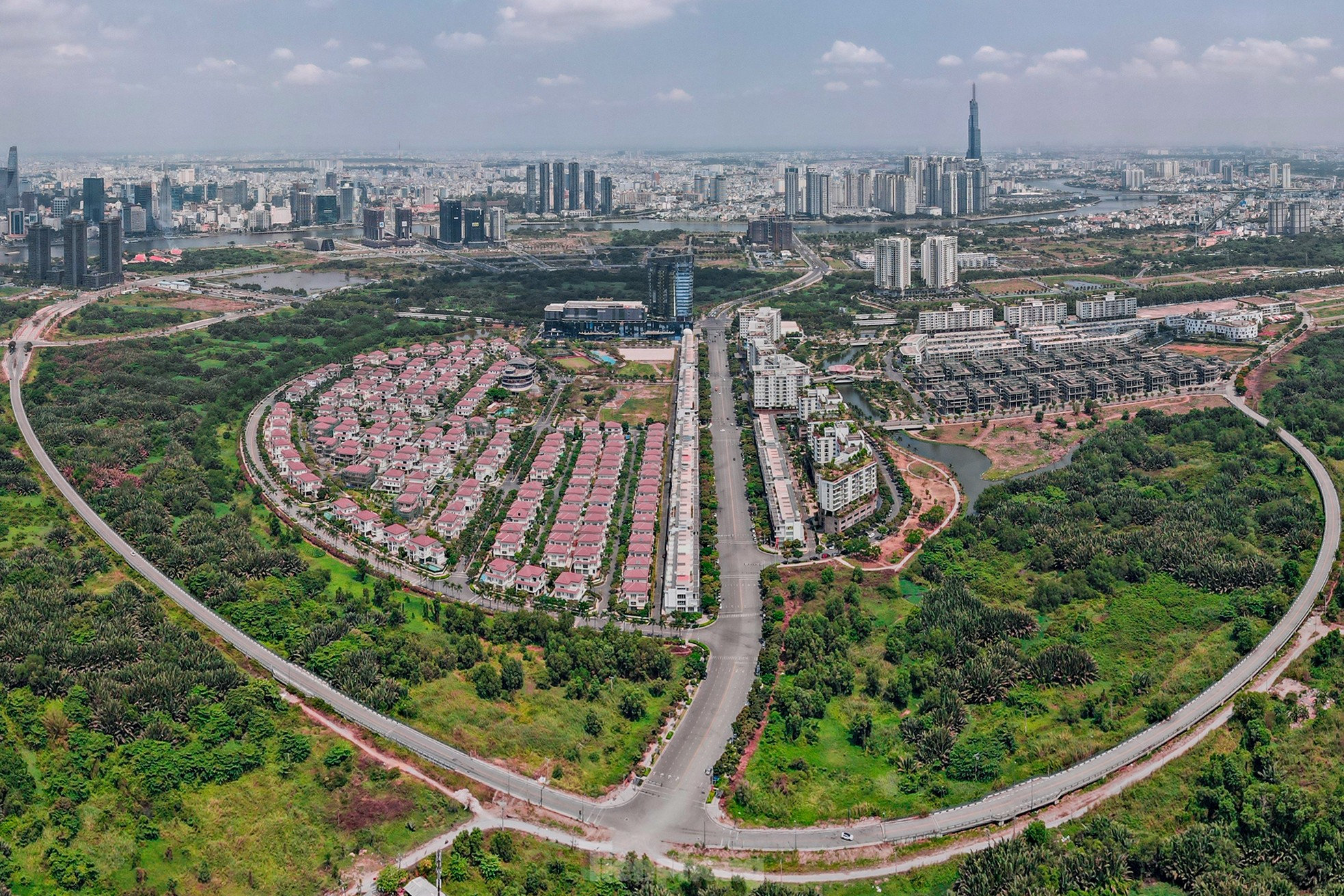
Ho Chi Minh City is accelerating land price determination and the auction of several land plots to effectively exploit land resources and create momentum for urban development.
Supplementing Supply
According to a report from the Ho Chi Minh City Department of Agriculture and Environment, in the first six months of 2026, total land revenue is estimated at around 47,028 billion VND. However, the greater value of accelerating land price determination lies not only in budget revenue but also in the ability to untangle projects awaiting financial obligation completion to move forward. This is considered one of the key solutions to unlock land resources, improve corporate cash flow, and boost supply for the real estate market.
For many years, specific land price determination has been one of the most time-consuming steps in real estate project development. Numerous projects have completed investment procedures and even constructed infrastructure but remain unable to enter the market due to pending financial obligations on land.
Delays in determining land prices prevent enterprises from fulfilling their financial duties, which in turn stalls a series of procedures such as issuing land use certificates, raising capital, handing over products, or putting projects into operation. Meanwhile, the State is unable to collect the land use and land rental fees as prescribed.
Therefore, HCMC's directive to prioritize completing land pricing plans for eligible dossiers, while coordinating with tax authorities to issue payment notices immediately after approval, is expected to significantly shorten processing times.
Prof. Dr. Dang Hung Vo, former Deputy Minister of Natural Resources and Environment, noted that land valuation must follow market principles, ensure transparency, and rely on a comprehensive database. When valuation is conducted correctly and on schedule, it not only secures budget revenue but also prevents project stagnation caused by prolonged land procedures.
In practice, alongside speeding up land price determination, HCMC is simultaneously addressing other land backlogs. In the first six months of the year, the city advised on resolving issues for 143 out of 149 projects slow to put land into use, achieving nearly 96%. Additionally, over 412,000 certificate issuance dossiers for households/individuals and 35,800 dossiers for homebuyers in real estate projects were processed.
These results indicate that administrative reform in land management is being promoted more comprehensively, contributing to shorter processing times and enabling projects to finalize legal status and bring products to market sooner.
Promoting Healthy Market Growth
In the context of the Government urging the efficient exploitation of land resources to serve growth goals, resolving land valuation bottlenecks benefits not only local budgets but also creates a spillover effect across the entire real estate market.
.jpg)
HCMC stipulates that low-rise housing in new projects within TOD areas must not exceed 20% of residential land area. Photo: VA
Resolving land valuation issues is expected to help many projects quickly complete financial obligations and supplement supply for the market. Photo: VA
Land is not only a source of revenue for the state budget but also an input for various economic sectors including construction, materials, finance, banking, and services. When financial obligations are fulfilled on schedule, projects progress faster, companies improve their capital mobilization capabilities, new supply enters the market, and investment capital flows more efficiently.
Mr. Nguyen Van Khoi, Chairman of the Vietnam Association of Realtors (VNREA), expressed that land valuation aims not only at determining the correct financial obligation to the State but also serves as a crucial condition to unlock projects, credit capital, and housing supply. According to him, when valuation work is carried out transparently and on schedule, businesses will have favorable conditions to execute projects, thereby strengthening investor confidence and promoting healthy market development.
However, accelerating progress does not mean streamlining or shortcutting the valuation process. Specific land prices must still be determined based on comprehensive databases, unified methods, and transparent procedures to balance interests among the State, businesses, and citizens, as well as to minimize disputes or frequent adjustments.
In the long term, along with completing land databases, improving valuation quality, and expanding technology applications in management, the land pricing process will become increasingly transparent, stable, and closely aligned with market trends.
Author: MAN NHI - TRUONG DANG (translates)
RELATED TOPICS
RECOMMENDED TOPICS