VN
VN
 EN
EN
26/07/2026, 02:00
Investment
Bac Ninh: Unlocking resources to cement its position as a global industrial and technology hub
Bac Ninh has firmly established itself as a “prime destination” for foreign direct investment (FDI), driven by remarkable breakthroughs. This success stems from innovative governance thinking and a steadfast commitment to “accompanying businesses.”
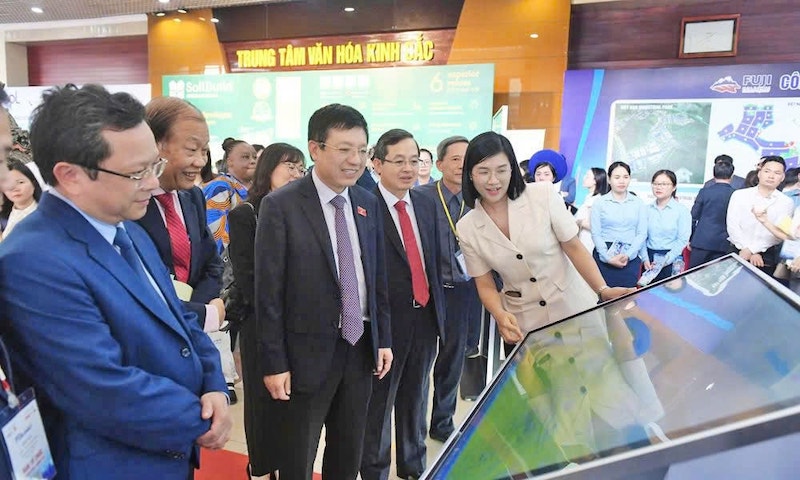
VCCI President Ho Sy Hung, Chairman of Bac Ninh Provincial People's Committee Pham Hoang Son, VCCI Vice President Hoang Quang Phong, and Deputy Head of the Central Policy and Strategy Commission Nguyen Duc Hien visited booths at the 2026 FDI Connectivity Forum under the theme "Towards Sustainable Global Supply Chains.”
With the fifth-largest economy nationwide and a strong influx of FDI into high-tech sectors, Bac Ninh is emerging as a modern industrial hub, maintaining a leading position in Northern Vietnam.
To unpack the underlying drivers behind this impressive momentum, Business Forum Magazine conducted an in-depth interview with Mr. Vu Van Cuong, Deputy Director of the Department of Finance, shedding light on the province’s strategy to create a transparent investment environment and its long-term development vision.
- In your view, what are the key “drivers” enabling the province to sustain its strong growth momentum and maintain its leading position nationwide, particularly following the merger?
It can be affirmed that Bac Ninh is entering an accelerated phase of development, marked by clear breakthroughs. To date, the province has attracted 7,062 investment projects with total registered capital exceeding USD 87.8 billion, including 3,579 FDI projects worth over USD 49.6 billion, ranking second nationwide in terms of capital scale, with investors from 42 countries and territories. These impressive figures not only reflect the growing attractiveness of the investment environment but also provide a solid foundation for Bac Ninh to realize its ambition of becoming a leading industrial and technological center in northern Vietnam and the country as a whole.
In 2025, Bac Ninh’s GRDP per capita is estimated at USD 5,852, while total social investment capital surpasses VND 157 trillion, figures that vividly illustrate the province’s robust growth trajectory. In my view, three key drivers are shaping Bac Ninh’s current economic landscape:
First, the merger of Bac Giang and Bac Ninh has created a larger development space for the newly expanded province, offering greater room for synchronized and modern planning while strengthening direct connectivity with Hanoi and international logistics gateways.
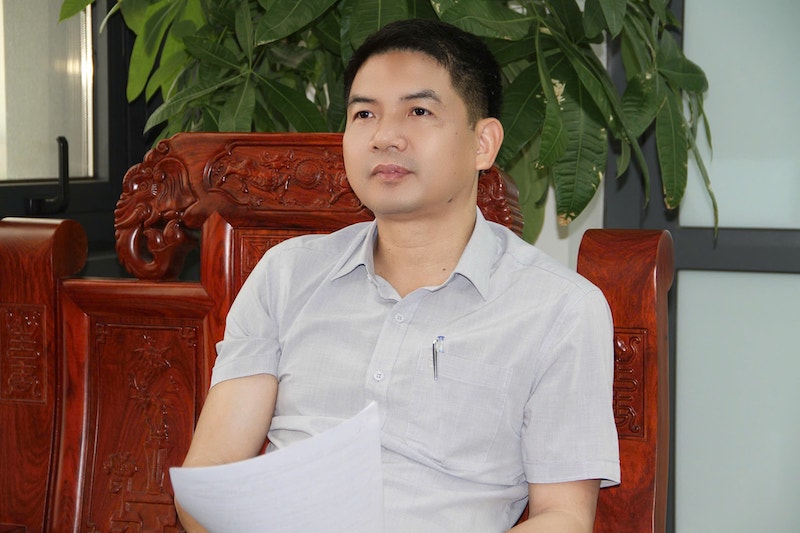
Mr. Vu Van Cuong, Deputy Director of the Department of Finance
Second, breakthroughs in governance thinking and institutional reform. Bac Ninh views improving the business and investment environment not merely as a commitment, but as a consistent and overarching course of action.
The Provincial Party Committee and People’s Committee have proactively issued and implemented comprehensive and robust solutions aligned with the Government’s Resolution No. 02/NQ-CP, thereby clearly positioning Bac Ninh as a proactive, action-oriented administration, one that is bold, decisive, and steadfast in accompanying businesses and investors, placing them at the center of all policymaking.
At the same time, the province has focused on identifying and decisively removing bottlenecks and barriers, unlocking resources for development to the fullest extent; actively researching and proposing competitive preferential mechanisms and policies; and accelerating substantive administrative reforms to significantly reduce time, costs, and risks for businesses. Bac Ninh takes pride in being a pioneer in implementing the “24-hour green lane” and “60% green lane” mechanisms.
In a modern business environment, time equates to cost; therefore, minimizing processing time for key projects represents the most practical incentive, directly enhancing investment efficiency and competitiveness.
Third, outstanding advantages in synchronized and modern infrastructure. Bac Ninh boasts a large-scale industrial ecosystem, with 39 approved industrial parks covering over 11,600 hectares and 64 industrial clusters spanning 2,172 hectares, providing a powerful launchpad to attract large-scale, high-tech, and high value-added investment flows.
In parallel, the province places strong emphasis on planning and developing social housing for workers in industrial parks and urban areas. Currently, 100 projects are underway, including 30 completed or partially completed projects with 22,485 apartments eligible for sale, and 70 projects under development, gradually strengthening the social welfare foundation and ensuring stable living conditions for workers to remain committed long-term.
Bac Ninh is also accelerating investment in strategic transport infrastructure, with key projects such as Ring Roads 4, 4.5, and 5, as well as major corridors directly connecting to Hanoi; alongside vital railway lines including Lao Cai - Hanoi - Hai Phong, Hanoi - Quang Ninh, and an urban railway network. On this basis, the province is proactively developing urban areas, high-tech industrial zones, R&D centers, free trade zones, and smart logistics hubs linked to airport areas, maximizing infrastructure advantages and elevating its role as a regional production and service center.
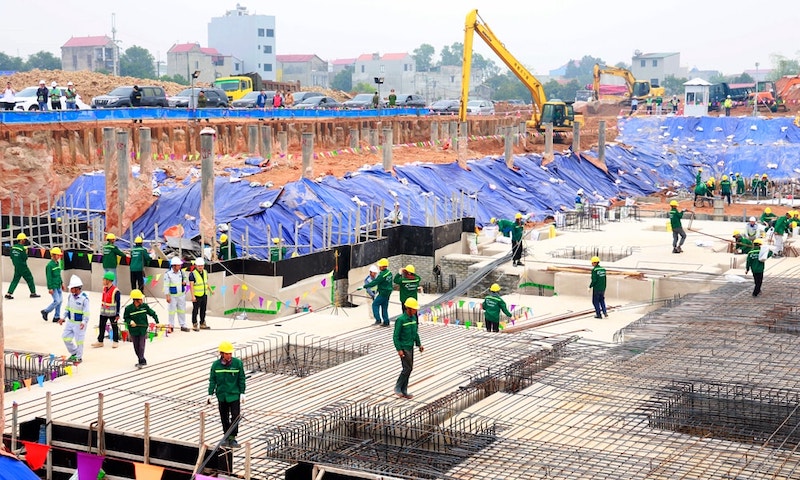
Contractors are accelerating construction works at Gia Binh Airport.
The groundbreaking of Gia Binh International Airport—the country’s second-largest airport—not only completes a critical infrastructure link but also provides a strong impetus for a new growth pole, enhancing northern Vietnam’s position on the regional economic map.
The synergy between a dynamic, transparent government apparatus and modern infrastructure has reinforced investor confidence, creating strong appeal for multinational corporations such as Samsung, Amkor Technology, and Foxconn to continuously expand their investments in Bac Ninh.
– Has the province placed strong emphasis on investment promotion and international cooperation with a business-centric approach?
Bac Ninh has directed its agencies and units to intensify investment promotion in a proactive, in-depth, and targeted manner, focusing on strategic markets while carefully analyzing capital flow trends to identify priority sectors. Based on this, the province flexibly organizes outbound investment promotion missions and conducts both in-person and online investment conferences tailored to specific markets, thereby enhancing its ability to attract high-quality projects.
Notably, Bac Ninh consistently adheres to the principle of “placing existing enterprises at the center.” Corporations such as Samsung and Canon serve as the most persuasive “brand ambassadors.” When investors are satisfied, they actively spread positive messages about the province’s investment environment globally, forming the most effective, sustainable, and cost-efficient promotion channel.
With a spirit of genuine partnership with businesses, the Bac Ninh People’s Committee has instructed relevant agencies to maintain regular dialogues at provincial, departmental, and local levels, focusing on resolving core issues such as administrative procedures, land, technical infrastructure, labor, investment conditions, and market expansion. Dialogue is followed by concrete action: clear assignment of responsibilities, defined timelines, and rigorous monitoring of outcomes.
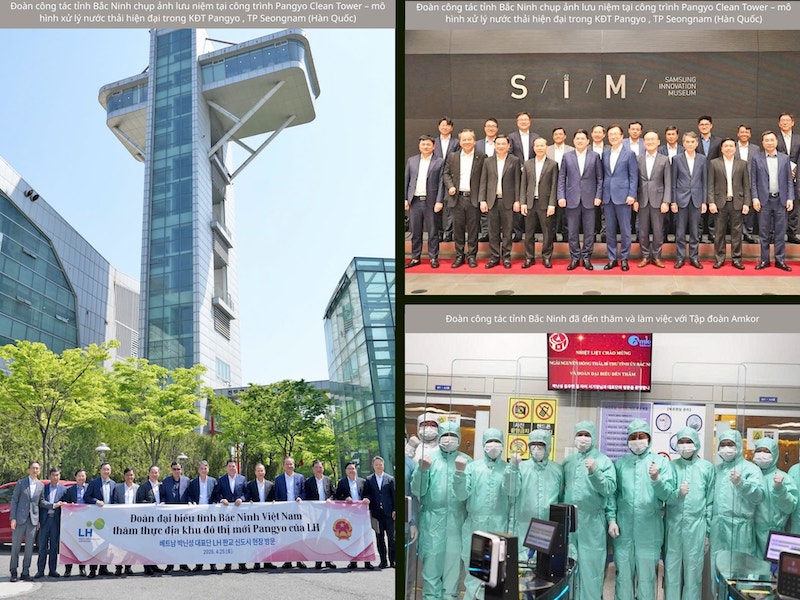
A Bac Ninh provincial delegation, led by Mr. Nguyễn Hồng Thái, Secretary of the Provincial Party Committee, visited South Korea to conduct site surveys and study development models and projects.
– One of the highlights of Bac Ninh’s investment attraction strategy is the “1 No, 2 Less, 3 High” model associated with “4 Readiness.” Could you elaborate on the economic philosophy behind this model?
In the early stages of industrialization, the priority was to attract investment in volume to quickly fill industrial parks. However, as land resources become increasingly limited and environmental and sustainability requirements grow more stringent, Bac Ninh must transition to a new phase,
- “1 No”: No trade-off between environmental protection and economic growth—this is a long-term commitment to future generations.
- “2 Less”: Less land use and less reliance on low-skilled labor—prioritizing projects with high value-added density per unit of land.
- “3 High”: High technology, high investment capital, and high economic efficiency—towards a modern, sustainable, and globally competitive industrial base.
Why selective screening? Because Bac Ninh is positioning itself as a regional hub for semiconductors and artificial intelligence. These sectors do not depend on large volumes of low-skilled labor but require highly qualified experts and advanced technological systems. By selecting “clean” and “high-quality” investors, the province not only improves growth quality but also ensures sustainable budget revenues while minimizing long-term environmental and social costs.
To realize this orientation, Bac Ninh steadfastly adheres to the “4 Readiness” principle:
(1) Ready land: Industrial parks and clusters maintain a proactive supply of cleared land with fully developed technical infrastructure up to project boundaries.
(2) Ready human resources: The province focuses on developing a “University Village” and specialized training centers in semiconductors and microchips to meet high-quality workforce demands.
(3) Ready investment environment: Maintaining top-tier rankings in governance indices such as PCI, PII, and DTI, affirming a transparent and competitive institutional framework.
(4) Ready investor support: Providing genuine, consistent support—treating business challenges as government responsibilities, addressing them promptly, thoroughly, and effectively.
Bac Ninh has introduced a range of practical policies, including tuition support and scholarships for key industries such as semiconductors and microchips, while investing in high-quality amenities and services to attract and retain international experts. Notably, attracting prestigious institutions such as Hanoi University of Science and Technology and Foreign Trade University to establish campuses locally is seen as a strategic move, helping to build an on-site supply of high-quality human resources to directly serve high-tech industries.
Digital government in Bac Ninh is being shaped as an open and transparent data platform for planning and policies in the digital space, enabling businesses to easily access information, minimize risks, and eliminate “informal costs,” thereby strengthening investor confidence and long-term commitment.
On that foundation, Bac Ninh is accelerating planning and investment attraction for research zones and centers in AI, Big Data, IoT, and beyond, not only serving production but also acting as incubators for emerging technologies. With strong conviction, Bac Ninh is not merely a destination but a convergence point for capital, technology, and high-quality human resources, a place where bold ideas are realized and enterprises are nurtured to grow into global brands. The province stands ready to welcome and partner with investors to create new value, enhance growth momentum, and shape its position in a new era of development.
- Respectfully thank you!
Author: Kim Dung - Vu Phuong (Cam Anh translates)
RECOMMENDED TOPICS