VN
VN
 EN
EN
22/07/2026, 02:00
Business economics
Business community determined to achieve economic growth targets
Entering the 2026–2030 period, the 14th National Party Congress has set an average growth target of 10% or higher. This is not merely an economic indicator, but also a “call of the nation”, requiring the concerted engagement of the entire political system, the business community and society as a whole.

Immediately after General Secretary To Lam outlined the “four core principles” for achieving double-digit growth at the second plenary session of the 14th Party Central Committee, the Vietnamese business community, from state-owned groups and corporations to the private sector, responded swiftly with a proactive, resolute spirit, determined to act without delay in 2026.
Taking the lead in contributing to reform and institutional development
With the expectation that the business community should serve as a key driver contributing to growth, in just the final two years of the 2021–2026 term, the Politburo has issued a series of important resolutions on economic development, enterprises and entrepreneurs, aimed at creating momentum for national economic growth.
However, no matter how sound policies and institutions may be, without the efforts of enterprises, success cannot be achieved as desired.
Chairman of the Board of Members of the Viet Nam National Industry–Energy Group (Petrovietnam), Le Ngoc Son, affirmed that to realise the double-digit growth target in 2026 and throughout the 2026–2030 period, Petrovietnam will focus on three key strategic directions. First, enhancing governance capacity and ensuring safety and efficiency based on core foundations. The entire system will tighten production discipline, strengthen management order, control risks and costs, while completing a modern and transparent governance model in line with Resolution No. 79-NQ/TW dated January 6, 2026 of the Politburo on developing the state economy, placing people at the centre. Second, promoting key investments to create new growth drivers, with the spirit of investing ahead, removing bottlenecks and seizing opportunities; in which oil and gas exploration and production continue to play a core role. Third, accelerating strategic transformation associated with innovation, expanding development towards green and sustainable directions; proactively participating in the energy transition, increasing investment in offshore wind power and applying artificial intelligence and smart management.
To achieve high growth, enterprises must boldly expand globally. Currently, FPT is intensifying investment in digital technology, artificial intelligence and global digital transformation services, seeking new opportunities and promoting a spirit of innovation. With its advantage in high-quality technology human resources, FPT targets double-digit growth in both revenue and profit, while expanding international markets, especially in regions with high demand for digital transformation. At the same time, FPT recommends that the Government continue to support the development of high-quality human resources, complete the legal framework for emerging technology sectors and further accelerate digital transformation in the public sector, thereby creating a “locomotive” for the private economic sector.
Chairman of FPT Corporation Truong Gia Binh
The private sector, an important driver of the economy, has also demonstrated strong determination. Chairman of FPT Corporation Truong Gia Binh stated that to achieve high growth, enterprises must boldly expand globally. FPT is currently stepping up investment in digital technology, artificial intelligence and global digital transformation services, seeking new opportunities and fostering a spirit of innovation.
With its advantage in high-quality technology human resources, FPT aims for double-digit growth in both revenue and profit, while expanding into international markets, particularly in regions with strong demand for digital transformation. However, FPT also recommends that the Government continue supporting the development of high-quality human resources, complete the legal framework for new technology sectors and further accelerate digital transformation in the public sector, thereby acting as a “driving force” for the private economy.
A need for new development thinking
It can be seen that the double-digit growth target is no longer merely an aspiration but has become a firm commitment, translated into concrete actions by the business community. However, to turn determination into results, close coordination and support between the State and enterprises are essential.
The double-digit growth target is not only an aspiration but has become a firm commitment and concrete action of the business community. However, to translate this determination into results, close coordination and support between the State and enterprises are required.
In the agricultural sector, particularly the dairy industry, Chairwoman of TH Group Thai Huong proposed that policies should be tailored to each sector and stage of development. When markets become saturated, the Government must promptly adjust strategies to maintain sustainable growth.
According to Chairwoman of Ho Guom Group Joint Stock Company Ninh Thi Ty, the State should continue to introduce mechanisms encouraging research and development of new varieties with high value and productivity, with priority given to breeding.
In addition, although policies are increasingly aligned with practical realities, implementation still needs to be improved to become more unified, transparent and efficient. Enterprises propose further simplification of administrative procedures, increased tax incentives for investment in technology and human resources, and expanded credit support, particularly for manufacturing enterprises in the agricultural sector.
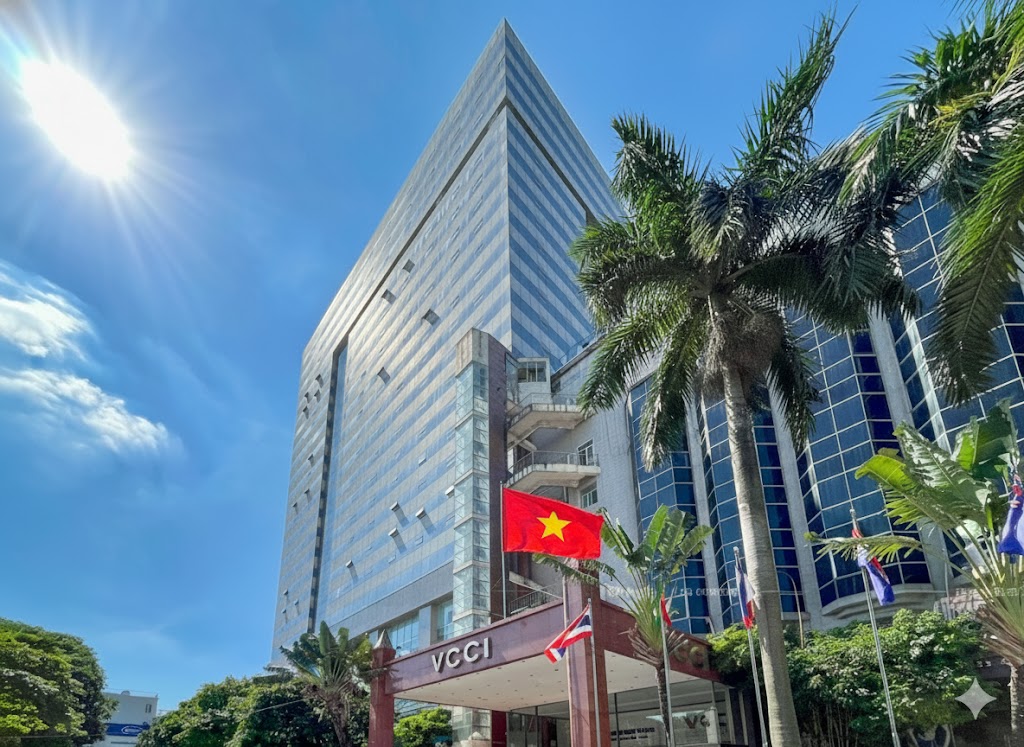
Chairman of the Viet Nam Chamber of Commerce and Industry (VCCI) Ho Sy Hung also proposed several key solutions to achieve double-digit growth, including assigning specific growth targets to each locality to enhance accountability, thereby encouraging local authorities to proactively support and attract enterprises. It is also necessary to continue unlocking resources, especially in the private sector, through transparent mechanisms for access to capital and land, and by shortening investment procedures; promoting the development of large economic groups in line with Resolution No. 68-NQ/TW dated May 4, 2025 of the Politburo on private economic development; encouraging enterprises to proactively propose initiatives and collaborate, with connectivity support from VCCI.
There is also a need to accelerate investment in essential infrastructure such as logistics, energy and telecommunications to reduce business costs and create a foundation for growth. Attention should be paid to developing high-quality human resources in line with international standards to meet productivity enhancement requirements. In particular, it is essential to strengthen linkages among domestic enterprises, while removing barriers between Vietnamese enterprises and foreign direct investment (FDI), enabling domestic firms to participate more deeply in global value chains.
These views show that the business community is not only ready but also proactive in proposing concrete solutions. Therefore, businesses expect the State to promptly identify and resolve existing challenges, and to create a favourable, safe and transparent business environment so that enterprises can fully play their pioneering role.
Only then will the double-digit growth target have a solid basis for realisation, creating a strong foundation for Viet Nam to enter a new stage of development with a higher position and standing in the international arena.
Author: NDO
RECOMMENDED TOPICS