VN
VN
 EN
EN
06/07/2026, 02:38
Investment
Can Tho transitions towards green, circular production
Following the merger with Hau Giang and Soc Trang, Can Tho City is now home to more than 640 agricultural cooperatives. Many of them have been operating effectively by diversifying products, expanding markets and linking up with businesses for product sale, thereby raising incomes for their members.
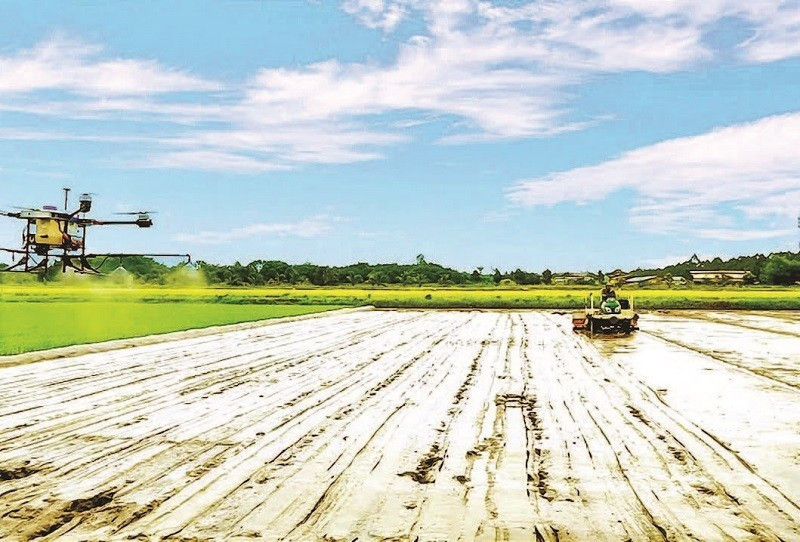
The city’s Department of Agriculture and Environment has also supported farmers and cooperatives in shifting their production and business activities towards green and circular models.
The Hoa De agriculture and fisheries cooperative in Hoa Tu Commune, whose core product is shrimp and which also provides input and output services for shrimp farming, has since 2019 introduced a number of products to the market, including shrimp crackers, tilapia floss and tilapia fish cakes. These products help make better use of available labour and raw materials.
According to Ma Van Hong, Director of the Hoa De Cooperative, its products have been well received by the market. Orders have increased in both volume and frequency, and production and business efficiency has improved markedly.
Similarly, the Hoa Nghia shrimp-farming cooperative (also in Hoa Tu Commune) previously sold shrimp to agents and was sometimes forced to accept unfavourable prices. As a result, the cooperative’s management board and members agreed to switch to shrimp farming in line with ASC standards. Since then, harvested shrimp have always been sold under contracts at prices 15-20% higher than the market average.
The signing of an ASC-standard shrimp off-take contract between the cooperative and Stapimex marked a new phase in successful value-chain-based cooperation in shrimp farming and consumption.
For cooperatives engaged in high-quality, low-emission rice production, the Can Tho Department of Agriculture and Environment has rolled out a range of programmes to support farmers and cooperatives in transitioning towards green, circular production and business models, helping to increase farmers’ incomes.
In 2023, New Green Farm Cooperative in Tan Hung Ward (with 40 members and more than 40 hectares under cultivation) received support from the city’s agricultural sector to develop a circular agriculture model and to manage and utilise rice straw in line with a circular economy approach.
To produce organic fertiliser from rice straw on a large scale, the cooperative has mechanised multiple stages of the process, achieving output of dozens of tonnes per batch and saving around 40-60% in labour costs.
Using straw-based organic fertiliser for rice, combined with fertiliser application under the technical process known as “one must, five reductions”, farmers have cut chemical fertiliser use by 40%, reduced input costs, and increased profits from rice cultivation by more than 3.4 million VND per hectare.
According to Dong Van Canh, Director of New Green Farm Cooperative, its members use straw residues from mushroom cultivation, together with other agricultural by-products such as rice husk ash, coconut coir and cattle manure, to produce organic fertiliser.
These results have been achieved thanks to active technical guidance from relevant authorities and experts from the International Rice Research Institute (IRRI), as well as support in designing packaging and product labels to make the fertiliser easy for farmers to identify and use.
Building on the initial successes of New Green Farm’s circular agriculture model, the Can Tho Department of Agriculture and Environment has continued to provide mechanised equipment to Tien Thuan Cooperative in Thanh Quoi Commune to process rice straw into organic fertiliser.
However, cooperatives and their members are currently finding it difficult to access bank credit. Their main assets are land, most of which has already been mortgaged to banks for earlier loans, leaving little collateral for further borrowing.
The Cooperative Development Support Fund and the city’s Credit Guarantee Fund for Small and Medium-sized Enterprises have limited capital, while loan procedures are complicated, meaning that very few cooperatives are able to borrow from these sources.
Many cooperatives focus mainly on input services (such as supplying seeds, materials and irrigation) and have yet to effectively fulfil their role in product off-take, deep processing or market development.
Linkages between cooperatives and enterprises for guaranteed product off-take remain risky, and in some cases cooperatives act merely as intermediaries earning commissions. Production remains fragmented, failing to generate large, consistent volumes of high-quality goods that meet market requirements.
Products are largely sold to traders, with a lack of stable off-take contracts with formal distribution channels, leaving cooperatives vulnerable to price fluctuations.
Vo Van Khai, Director of Chien Thang Cooperative in Vinh Phuoc Ward, proposed that the government introduce more preferential and flexible mechanisms on capital and interest rates for cooperatives (including concessional loans and interest-rate support), especially for those applying high technology or participating in value chains.
He also called for the Cooperative Development Support Fund to simplify loan procedures for members and cooperatives, and for authorities at all levels to supplement and refine policies related to land, taxation and trade promotion, creating more favourable conditions for cooperatives.
Support is also needed for trademark registration, labelling, and the building and protection of brands for distinctive local agricultural products.
Cao Xuan Thu Van, President of the Viet Nam Cooperative Alliance, emphasised that for cooperatives to operate effectively and for the cooperative economy to develop in a stable manner, it is essential not only to shift thinking from agricultural production to agricultural business, but also for cooperatives and their members to move from providing input services to performing core business functions.
These include guaranteeing product off-take for members, processing and market development, and strengthening close, long-term contractual linkages with large enterprises, supermarkets and exporters under closed value-chain models.
Author: NDO
RECOMMENDED TOPICS